
 English
 Español
Trump Urges House to Vote Quickly to End Partial Government Shutdown
especiales
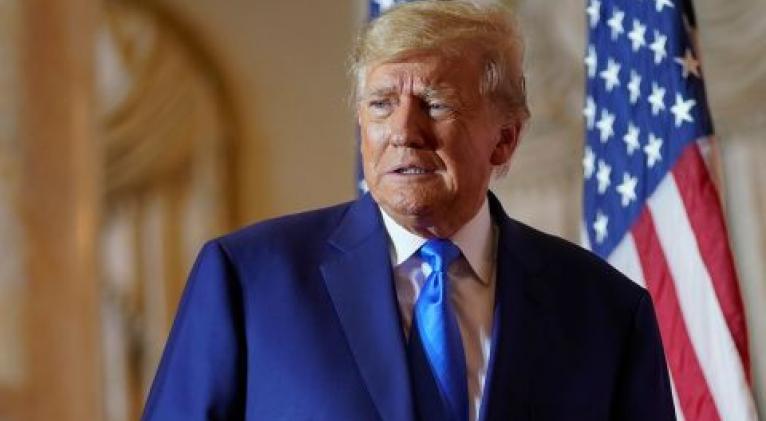
Stalemate Continues as Democrats and Republicans Clash Over Immigration Demands
US President Donald Trump urged the House of Representatives on Monday to end the partial government shutdown, but neither Republicans nor Democrats appeared willing to quickly approve the federal funding package he negotiated with the Senate without first debating their own demands regarding immigration raids.
Democrats are refusing to provide the votes that House Speaker Mike Johnson needs to advance the package, as they attempt to curb the Trump administration's operations to deport immigrants following the fatal shooting of two Americans in Minneapolis. This forces Johnson to rely on his slim Republican majority, which has its own grievances about the package, to align with Senate Democrats in support of Trump's deal.
Timing and Impact of the Shutdown
The vote could begin as early as Tuesday, which would be the fourth day of the partial shutdown. Funding for the Pentagon, the Department of Homeland Security (DHS), and other agencies expired on Saturday. While many operations in these departments are considered essential and continue to function, some workers could go without pay or be temporarily furloughed.
"We need to open the government, and I hope all Republicans and Democrats will join me in supporting this bill and sending it to my desk without delay," the President wrote on social media.
"There can be no changes at this time," Trump insisted. "We will work together in good faith to address the issues that have been raised, but we cannot have another long, useless, and destructive shutdown."
Democratic Leverage and Demands
The stalemate points to a difficult week ahead. Johnson is relying on Trump to help push the package toward approval.
The President reached a deal last week with Senate Democratic Leader Chuck Schumer in which DHS would only be funded temporarily, until February 13, while Congress debates changes to immigration enforcement operations. The upper chamber overwhelmingly passed the package with the rest of the government funding before the deadline expired on Saturday.
House Democratic Leader Hakeem Jeffries made it clear Monday that his caucus sees no reason to help Johnson advance the bill in a procedural step, something the majority party usually handles on its own.
At a time when Johnson faces a revolt from his own Republican ranks, Jeffries is leveraging the advantage this gives Democrats to demand changes in immigration operations.
"On rare occasions we have stepped in to deal with Republican dysfunction," Jeffries stated at the Capitol.
Specific Democratic Demands on Immigration
Democrats are demanding restrictions on Immigration and Customs Enforcement (ICE) that go beyond the $20 million for body cameras already in the bill. Homeland Security Secretary Kristi Noem announced Monday that agents in the field in Minneapolis, including those from ICE, will immediately receive body cameras, and the program will be expanded nationwide as funding becomes available.
But Democrats are pushing for more. They want to require federal immigration agents to unmask themselves, noting that few, if any, police agencies routinely wear masks in the United States, and they want agents to act based on judicial warrants, rather than administrative orders, in their operations.
Additionally, they want to end roving patrols, among other changes.
Jeffries indicated that the administration needs to begin negotiations now, not in the next two weeks, on changes to immigration operations.
Internal Divisions and Republican Pressure
However, some Democrats are distancing themselves from the leader, pushing for quicker approval of the funding package to avoid government disruptions.
At the same time, House Republicans, along with some allies in the Senate, are making their own demands as they work to support Trump's crackdown on immigrants in the United States.
The House Freedom Caucus has insisted on more complete funding for DHS, while certain Republicans are pushing to include other measures, including the SAVE Act, a Trump priority with little chance of success that would require Americans to provide proof of citizenship before being eligible to participate in elections and vote.
Leadership Efforts and Broader Concerns
Johnson and Republican leaders said they would speak with lawmakers to see what is needed to gain support.
"Obviously, the President really wants this," said Majority Leader Steve Scalise at the Capitol.
"We always work until the last hour to get the votes," Scalise noted. "You never start the process with all the votes. You work hard."
Meanwhile, several federal agencies are caught in the funding stalemate after the government entered a partial shutdown over the weekend.
Defense, health, transportation, and housing are among those that received shutdown guidance from the administration, although many operations are considered essential and services are not necessarily disrupted. Workers could go without pay if the impasse drags on. Some could be temporarily furloughed.
FEMA Operations and Historical Context
Lawmakers from both parties are increasingly concerned that the shutdown will disrupt the functioning of the Federal Emergency Management Agency (FEMA), which they rely on to assist constituents after deadly snowstorms and other disasters.
This is the second time in a matter of months that federal government operations have been disrupted, after lawmakers used the annual funding process as leverage to obtain policy changes. Last fall, Democrats triggered what became the longest federal shutdown in history, at 43 days, while protesting the expiration of tax benefits for health insurance.
That shutdown ended with a promise to vote on proposals to extend Affordable Care Act tax credits. But due to Republican opposition, Democrats were unable to achieve their goal of keeping the subsidies in place. Insurance premiums increased in the new year for millions of people.
Negotiations and Sticking Points
Trump is already working on an immigration deal to ensure the shutdown does not drag on.
Johnson indicated he was in the Oval Office last week when Trump, along with border czar Tom Homan, spoke with Schumer about changes to immigration control measures.
Body cameras for agents, which are already planned in the package, and ending roving patrols are areas where an agreement could be reached, Johnson noted.
But the House Speaker drew a line regarding other Democratic demands. He said he does not believe requiring immigration agents to remove their masks would have Republican support because it could lead to problems if their personal images and private information are published online by protesters.
"I don't think the President would approve it, and he shouldn't," Johnson said over the weekend on 'Fox News Sunday'.
And Senate Majority Leader John Thune pushed back on the Democratic demand to require agents conducting searches to have judicial warrants, saying it would likely be part of the negotiations ahead.
"It's going to be very difficult to reach an agreement in two weeks," Thune stated at the Capitol.
However, Democrats said immigration operations are out of control and must come to an end in Minneapolis and other cities.
A growing number of lawmakers are also calling for Noem to be fired or impeached.













Add new comment