
Cuban Families: Homes Transform, but Affection Remains
Discussing the transformation of the Cuban family requires beginning with an observation: the main statistical snapshot available on households belongs to another historical period.
The 2012 Population and Housing Census revealed how domestic units in the country were organized. It showed who lived together, what kinship relationships existed within the household, and what was the position of each member in relation to the head of the household.
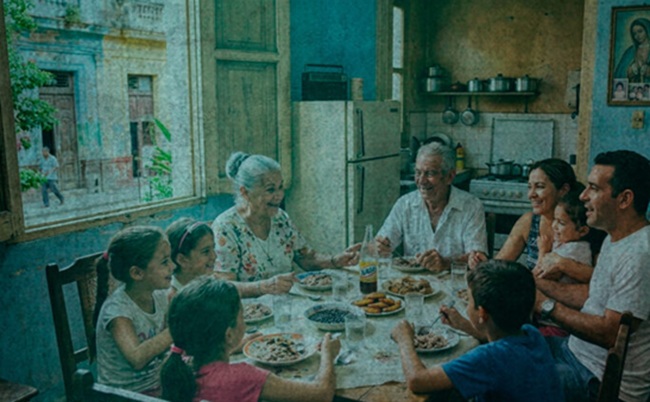
That information allowed researchers to confirm a characteristic feature of Cuban society up to that point: the importance of homes where several generations lived together and where family ties functioned as support networks.
But that image belongs to Cuba from more than a decade ago.
Since then, the country has experienced an acceleration of three processes that profoundly modify family organization: an increasingly marked aging population, persistently low fertility rates, and a migratory movement that has physically separated numerous family units.
Therefore, the current question is no longer just how many people make up a household, but what roles each generation fulfills within a family, which may be distributed across different territories.
Cuba's demographic structure is modifying the relationship between generations.
For decades, the family could distribute responsibilities among several young adults and intermediate generations. But when there are fewer births and the proportion of elderly people changes the internal balance, as there are fewer descendants available to take on support roles, and more people who may require assistance.
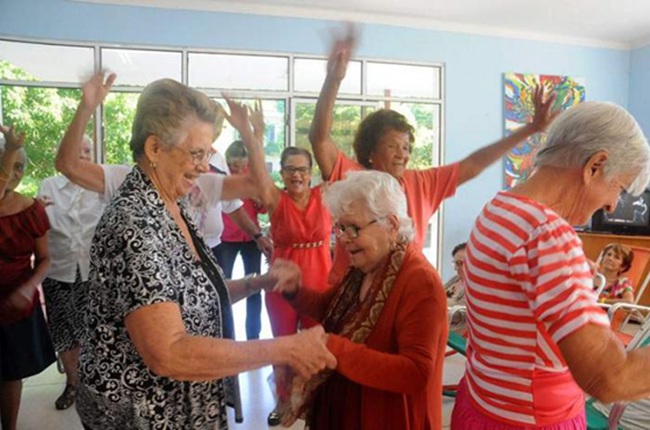
Cuba is among the countries with the fastest-growing populations in Latin America. More than a quarter of the Cuban population is 60 or older, and this transformation means not only more elderly people, but also a shift in the economic and emotional organization of the household.
And it’s this organization that determines who cares for a sick elderly person, who looks after a young child, who contributes income, who manages a household, and who provides emotional support to those facing difficulties.
Aging thus transforms families into spaces where responsibilities are constantly being redistributed.
Family Bonds in Transformation
To understand this transformation from within, we must turn to one of the country's most authoritative voices, Dr. Patricia Arés Muzio, a specialist in Psychological Sciences.
For nearly five decades, this expert has researched Cuban families and has emphasized that there is no single Cuban family, but rather a diversity of families with different circumstances, resources, and organizational structures.
Arés explained that family structures have changed due to demographic transitions, social dynamics, the consequences of the pandemic, economic crises, and especially emigration.
Her contribution is essential because it allows us to understand something that statistics don't fully capture: The Cuban family is not only changing in size, but also in its functions.
One of the phenomena that has most modified the recent Cuban family structure is emigration.
From a demographic perspective, it means population loss. But from a family perspective, it means a redistribution of roles.
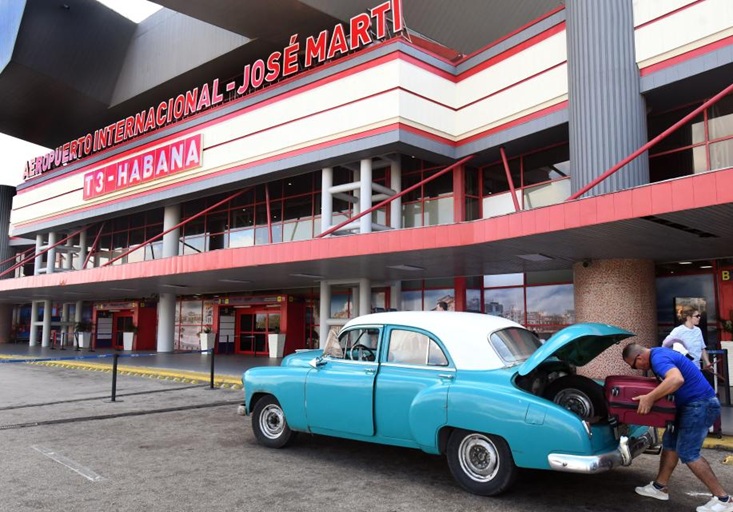
Patricia Arés has pointed out that this latest wave of migration has generated significant absences of parental figures and has weakened some protective and supportive functions within households, thus creating a new reality: Families geographically separated, but connected economically and emotionally.
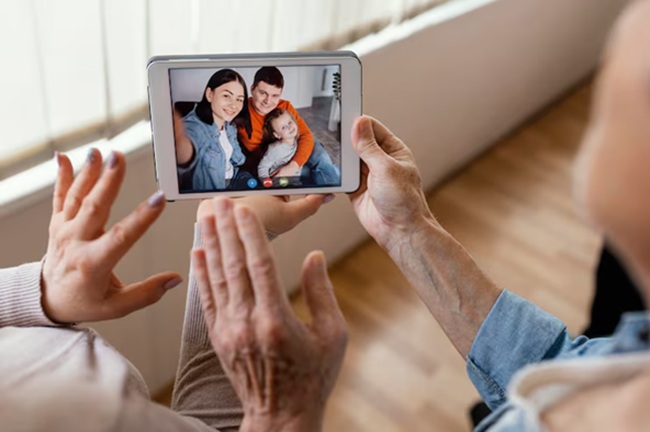
A mother can live abroad and continue making decisions about her children; an emigrant child can contribute to the expenses of their elderly parents; a grandmother can become the daily figure of nurturing.
Physical distance doesn't eliminate the family, but it does modify its mechanisms of operation.
When kinship is also a survival strategy
Relationships between generations are not only emotional. In present-day Cuba, they also constitute an economic network.
Family ties allow for the redistribution of scarce resources: an elderly person can contribute income through their pension; a family home can become a space where several generations live together; an emigrant child can contribute to the support of parents or children; while a grandparent caring for grandchildren allows other adults to work.
This family economy—still marked today by the existence of small and medium-sized family businesses, and where caregiving also has economic value even if it is unpaid—is fundamental to understanding how many households survive, especially in the current and very difficult situation.
The traditional image of the elderly as passive recipients of help is insufficient for the Cuban reality.
Research on active aging and intergenerational relationships https://revistas.uh.cu/novpob has highlighted the importance of recognizing the abilities, experiences, and contributions of older adults.
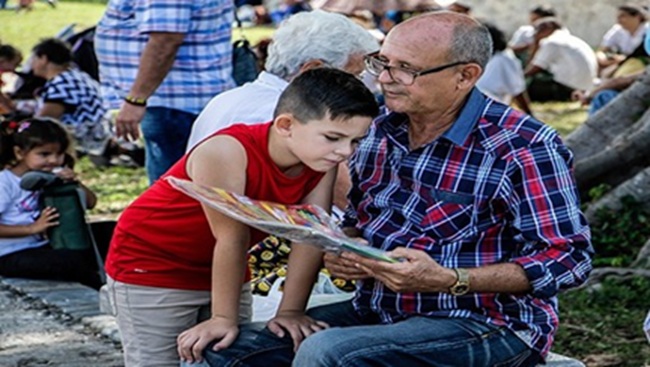
Because in everyday Cuban practice, many grandparents fulfill multiple roles, ranging from assisting in raising children, transmitting knowledge, and helping to provide emotional support to the family, to, on occasion, temporarily replacing absent parents.
But in the daily lives of grandparents, a contradiction throbs, because the same elderly person who supports others may, in turn, need support for themselves. This is one of the great challenges of an aging society.
A New Way of Understanding Coexistence
The traditional concept of home is increasingly limited in explaining the Cuban reality today.
Because a family doesn't always coincide with a dwelling. It can be divided between countries and yet maintain constant economic and emotional ties.
It can have members who never share a physical space daily, but who continue to participate in fundamental decisions.
Therefore, the next statistical update of Cuban households will have the major challenge of not only counting people, but also... understanding family networks.
To do this, it will be necessary to know more precisely how many elderly people live alone; how much single-person households have increased; how many households maintain multigenerational cohabitation; and how family composition has changed after the recent migration cycle.
The transformation of the Cuban family brings one word to the forefront: care.
Aging, migration, and economic hardship have made the question of who sustains daily life more complex.
Patricia Arés has pointed out that families also need conditions to fulfill their protective function, since economic crises affect cohabitation, the care of children and adolescents, and the daily ability to respond to basic needs.
Undoubtedly, the family remains one of the main social safety nets, but it cannot shoulder all the accumulated stress alone.
Aging Cuba needs to think not only about how many people it will have tomorrow, but also about how it will ensure that those people can care for one another.
The great Cuban demographic shift is not only happening in statistical records; it’s also, and perhaps above all, happening behind closed doors.
It's in the house where a grandmother raises her grandchildren because her children emigrated, in the home where an elderly person lives alone, in the family that communicates through a screen, in those who remain connected even though they can no longer live together.
Even so, the contemporary Cuban family is no less of a family for having changed. It's a family that adapts to its new reality: older, more dispersed, and forced to create new ways to support itself and maintain its bonds.
Translated by Amilkal Labañino / CubaSí Translation Staff
Add new comment