
Use of National Platforms and Apps, Greater Security and Sovereignty
In the current international context, dependence on foreign companies for the management, exchange, and hosting of information represents a significant risk, as it leads to a loss of privacy and control over data and metadata.
Several countries are developing their own applications and platforms on internet to become independent of similar services owned by US companies such as Meta, Google, and Microsoft.
The issue is not only technological and involves the sale of data to intelligence, security, and commercial entities, but also legal, since these companies violate national laws protecting the information of individuals and legal entities.
According to the 2018 US Cloud Act, also known as the Cloud Act, US authorities are permitted to request data from cloud service providers, regardless of the geographic location of the storage, even if it’s outside US territory. Of course, this has generated diverse reactions due to its implications in the spheres of defense and national security, economic and political espionage, and the legal systems of various countries.
One of the first to react was China, which, as part of the implementation of its Cybersecurity Law in 2018, suspended the operations of US technology companies in its country and created similar digital networks and platforms for use by Chinese entities and individuals.
In several European countries, applications have been developed with the aim of preserving data privacy, such as ProtonMail, based in Switzerland, and Tutanota in Germany, both alternatives to Google's Gmail. Nextcloud is a tool developed in Germany that replaces Google Drive for storing documents and all types of files, and is also a collaboration suite that competes directly with Office 365 or Google Workspace. As an alternative to WhatsApp, Threema, an instant messaging app with its own servers located exclusively within Switzerland, was created.

Ecured, the Cuban online encyclopedia
Meanwhile, Russia introduced the Max instant messaging service, owned by the VK internet platform, designed to simplify and improve citizens' lives and boasting some 89 million registered users. By law, Max is required to be pre-installed on all smartphones and tablets sold in Russia and will be available in the Russian app store, RuStore, similar to the Google Play Store.
For several years, Cuba has prioritized the development of national applications. In December 2010, the Collaborative Online Encyclopedia, EcuRed, was launched as an alternative to Wikipedia, providing Cubans with a search engine for knowledge created primarily by academics, specialists, and students in the country. It has 280,000 articles, received nearly 10 million visits last year, and is used in Cuban schools. The Young Computer and Electronics Clubs manage the national blogging platform Reflejos, with content on various topics hosted on Cuban servers.
In 2015, Transfermóvil and later EnZona emerged, two national electronic payment gateways widely used by people of all ages. The former has more than 5.6 million clients, an average of 46 transactions per second daily, and a user experience score of 4.75 out of a maximum of 5.

Transfermóvil, the Cuban payment gateway
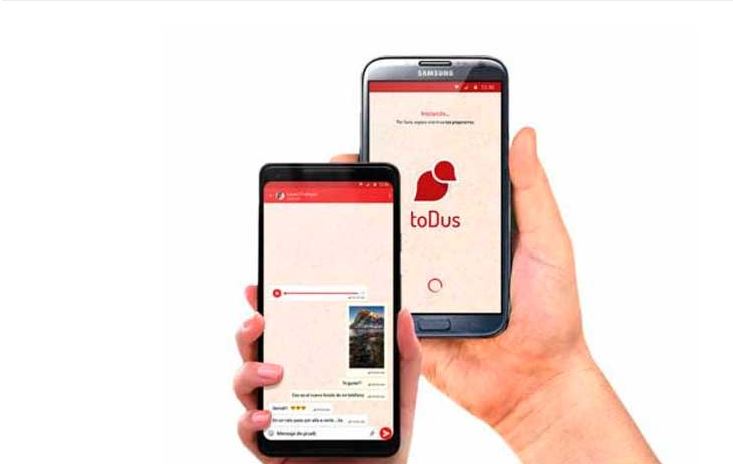
The mobile application store, Apklis, operates with high user acceptance and allows developers to market their creations on the platform. Cuba has an alternative to YouTube: Picta, which is growing in services, some subscription-based, and in users steadily. Special mention goes toDus, an instant messaging application currently under development with the participation of engineers from the subsidiary company Z17, ETECSA, and the University of Computer Sciences (UCI).
The relevance of toDus lies in its projection as an alternative to WhatsApp, used by more than 50% of Cubans. This platform is known for its history of handling user data and metadata in accordance with the national security policies of imperialist powers. There are several examples where WhatsApp has been used as a subversive platform to overthrow governments that are inconvenient for the US empire; anyone who doubts this should review its role in the recent Venezuelan elections.
WhatsApp's architecture allows access to information through Groups, profiles, and data traffic. They use application trackers that search users for their name, gender, country, city, network operator, device type, storage, memory, email address, CPU data, and countless other parameters. This information is processed with Artificial Intelligence and Big Data tools on servers belonging to security agencies like the NSA, taking into account the areas of interest of the US government, particularly international relations, defense and internal security, and the economic and financial sectors.
As a result, they profile people, conduct psychological influence analyses, track different individuals, extract information of interest, implement active measures, and much more.
Mark Zuckerberg, CEO of Meta, has himself acknowledged that the CIA and NSA can access WhatsApp users' correspondence and directly hack users' devices to gain access and extract information.
All of this confirms the need to advance the development and implementation of national platforms, update legal provisions in this area, and raise awareness throughout society about the risks posed by the irresponsible and unsafe use of these foreign technologies.
Add new comment