
José Martí: Revolutionary and Poet
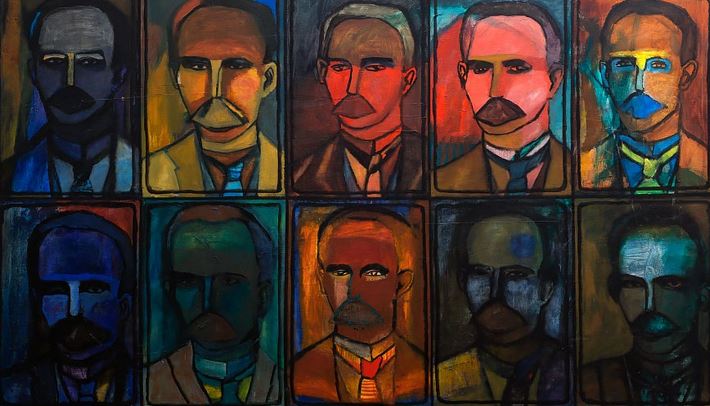
José Martí is rightly remembered as the National Hero of Cuba, the great organizer of the Necessary War, the ideologue of a republic for all and by all. Martí was also one of the greatest exponents of 19th-century Latin American poetry, a journalist with vibrant prose, and a thinker of astonishing lucidity. His words were not mere embellishment or an escape, but rather part of his liberating arsenal. In him, literary creation and political action were not contradictory; they reinforced each other.
However, there have been those who have tried to separate the poet from the revolutionary, the essayist from the conspirator, as if these were mutually exclusive roles or disconnected phases. It is worth asking, then: did his political vocation limit the quality or scope of his literary work? In light of his texts—letters, articles, poems, speeches—the answer is clear: not only did it not limit it, but it enriched it. Martí made language an instrument for good, a tool to educate, move, and mobilize.
His work reveals a man who did not separate beauty from duty. Martí's style is not merely ornamentation: it’s revelation, it’s commitment. In his prose and poetry beats the urgency of one who knows he writes to transform. His journalism was not neutral, but rather imbued with ethical intent. For him, aesthetics is not a mask, but a way to touch the soul and awaken consciences. And what is admirable is that, even amidst the revolutionary turmoil, Martí remained faithful to the word as a form of resistance and construction.
The coherence between thought, word, and action defines his greatness. Martí was not a writer who occasionally dabbled in politics, nor a politician who dabbled in literature. He was a complete being whose vocation for service was expressed both on the battlefield and in the pages of Patria. His work is not an addendum to his political life, nor is his struggle a marginal episode in his writing. In him, everything is intertwined: love, justice, truth, beauty.
It’s no coincidence that he is recognized as a classic of Latin American literature. His enduring relevance rests not only on his historical role, but also on the depth, originality, and universality of his thought. Martí has not aged. His ideas on education, racism, imperialism, culture, and ethics continue to speak powerfully to current generations. In times of uncertainty, his voice offers clarity. His example offers direction.
131 years after his death in combat, Martí remains a timeless thinker. His legacy defies reductionist categorization. Cuba is privileged to have its highest figure in the field of politics also be one of the pinnacles of its literature. Reading Martí is not just an exercise in memory: it is an act of spiritual renewal. We must read him, yes, but we must read him better. Because in his words lie the keys to understanding the past… and building the future.
Translated by Amilkal Labañino / CubaSí Translation Staff
Add new comment