
Festival de la Salsa: Cuba Bets on Culture
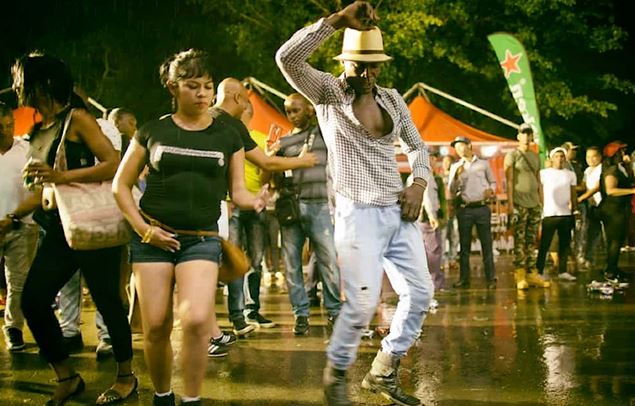
Cuba's decision to maintain the Festival de la Salsa in a format adjusted to the country's current economic situation reflects a strategic commitment to sustaining its cultural programming and guaranteeing recreational spaces for the population.
The event's redesign responds both to its broad popular appeal and to the institutional will to preserve cultural life, even in complex circumstances. Days before the festival's opening, many are remembering one of the voices Cuba lost last year in a fatal accident.
The festival, which reduces its run from four to three nights — February 27 and 28 and March 1 — also relocates from its traditional venue at Club 500 to the Estación Cultural Línea y 18, a move that lowers production costs and improves access for audiences from surrounding municipalities. Each night will feature four top-tier ensembles, all drawn from the Cuban popular dance music scene.
Culture as Investment and Management Model
One of the central elements of this edition is its self-funded nature. The event carries no cost to the state budget and, on the contrary, is expected to generate revenue in both national currency and foreign exchange for state and non-state economic actors.
This model reflects a sustainability strategy aimed at positioning culture not only as a right, but as a sector capable of generating income and stimulating the broader economy.
The festival's redesign also seeks to establish a replicable management model for other cultural events across the country, combining organizational efficiency, cost reduction, and the active participation of diverse economic stakeholders.
The Central Role of Local Artists
The festival also reaffirms the central role of Cuban artists. Leaders and members of the country's top popular dance music orchestras have expressed their interest in sustaining these performances as a special offering for audiences in the capital, underscoring the artistic community's commitment to the nation's cultural life.
The spotlight falls on national ensembles, strengthening local talent and providing visibility to musicians who form the backbone of Cuba's musical identity. This participation not only ensures artistic quality but also reinforces the broader cultural production chain — sound engineers, producers, technicians, and other workers in the sector all benefit from the event's realization.
International Impact and Tourism Stimulus
The Festival de la Salsa maintains its international standing, with more than 600 foreign tourists confirmed for this edition. Visitors will remain in Cuba for one week or longer, combining attendance at the concerts with tours of various tourist destinations throughout the island.
This flow of visitors illustrates how culture can serve as a complementary driver of tourism, generating revenue and projecting the country's image as a global musical reference point.
In a challenging economic landscape, holding the festival in an optimized format represents a commitment to culture as a strategic investment, as a space for social cohesion, and as a platform for local talent. Cuba thus reaffirms its dedication to music and to the sustainability of its cultural projects through financing models that seek a balance between popular access and economic viability.
Add new comment