
The World's Youth in 2026: A Generation at a Crossroads
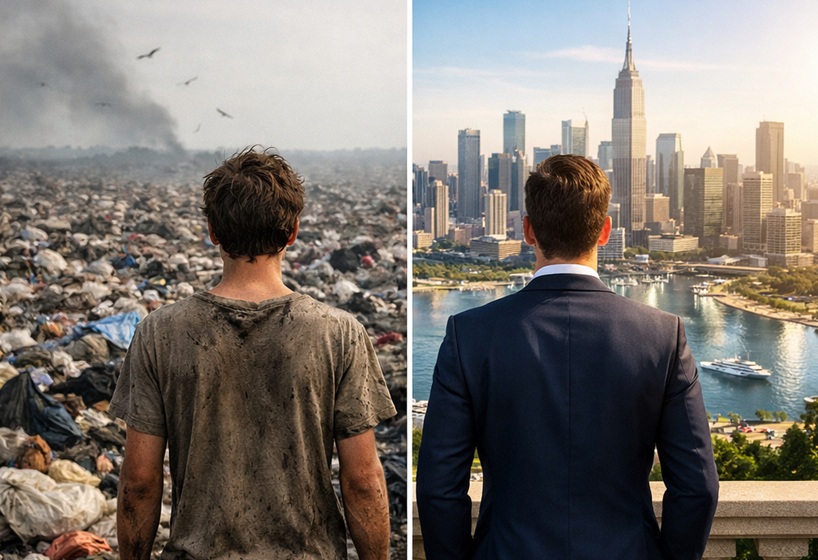
Walking the streets of Santo Domingo, Buenos Aires, New Delhi, or Kinshasa today is to stumble upon the face of the future: a tide of young people who, with the urgency of conquering everything, defy the statistics.
The report World Population Highlights 2026: Youth, launched on March 2, 2026, by the UN Population Division, is more than just a collection of figures; it’s an atlas of an unprecedented demographic divergence.
While the Northern Hemisphere and the most robust economies are beginning to show signs of aging, the Global South is seething with youthful energy that, paradoxically, is concentrated in the regions with the fewest resources to channel it.

A UN Population Division document reveals that the world's youth population is shifting towards a scenario of sharp contrasts.
In high- and upper-middle-income countries, the proportion of young people relative to the total population falls at a dizzying pace. Today, in this group of nations, there is practically one 65-year-old for every young person between ages 15-24.

On the other hand, nations with high fertility rates, mainly in sub-Saharan Africa and parts of Asia, face a youth population increase that demands a massive investment in per capita resources to prevent the most vulnerable from being left behind.
The Puzzle of Causes
Understanding why the world has fragmented in this way requires looking beyond simply counting births. While the UN report points to economic disparities as the main driver of these trajectories, other sources, such as the World Economic Forum's Youth Pulse 2026, emphasize that the cost of living and financial instability have become architects of generational stress.
In developed economies, precarious housing and inflation delay household formation and births, deepening the demographic winter.

On the other hand, climate change has ceased to be an abstract threat and has become a driver of migration. In regions where the youth population is growing exponentially, environmental degradation is eroding traditional livelihoods, forcing millions to seek opportunities in already saturated urban centers or to cross borders.
This combination of economic pressure and climate urgency is redefining the values of a generation that, according to analysis by TechSci Research, now prioritizes resilience and holistic well-being over traditional consumption models, fostering a "do more with less" mentality.
Health and Rights: Unfinished Business of the 21st Century
The UN report also sheds a stark light on mortality and well-being for young people in 2026. Youth mortality is no longer solely driven by disease, but is now largely dictated by external and preventable causes.
The five leading causes of death among young people aged 15-24, according to the most recent data, are, first and foremost, traffic-related injuries, which disproportionately affect males, whether they are pedestrians, cyclists, or drivers.
Interpersonal violence also stands out as a persistent threat, with an alarming incidence in regions such as the Americas. It not only claims lives directly but also fuels cycles of trauma that affect long-term mental health.

Another cause of youth mortality worldwide is self-harm (suicide), the only non-accidental cause that ranks among the top causes, and it’s particularly critical among young women aged 15-19.
Drowning is also a significant cause of death, often ignored in public agendas, but claiming tens of thousands of lives annually, especially in countries with large bodies of water and a lack of water safety programs.
Finally, maternal mortality completes this regrettable list and is concentrated primarily in low- and lower-middle-income countries, where pregnancy and childbirth can remain deadly. One in four young women who die in these regions does so from pregnancy-related complications.

The solution to this labyrinth of deficiencies lies not in a single recipe, but in a paradigm shift in countries' internal policies and humanitarian aid, among other things.
The UNESCO report on youth leadership in education, from January this year, warns that, although formal consultation mechanisms exist, this supposed youth leadership rarely translates into real influence on public policies.
For the "demographic dividend" not to become an unpayable debt, political will, investment in technical education, mental health, and the creation of spaces where the young voice carries executive weight, constitute the only path toward a future that is not only younger, but also more objective.
Translated by Amilkal Labañino / CubaSí Translation Staff
Add new comment