
Tripping Twice Over the Same Stone.
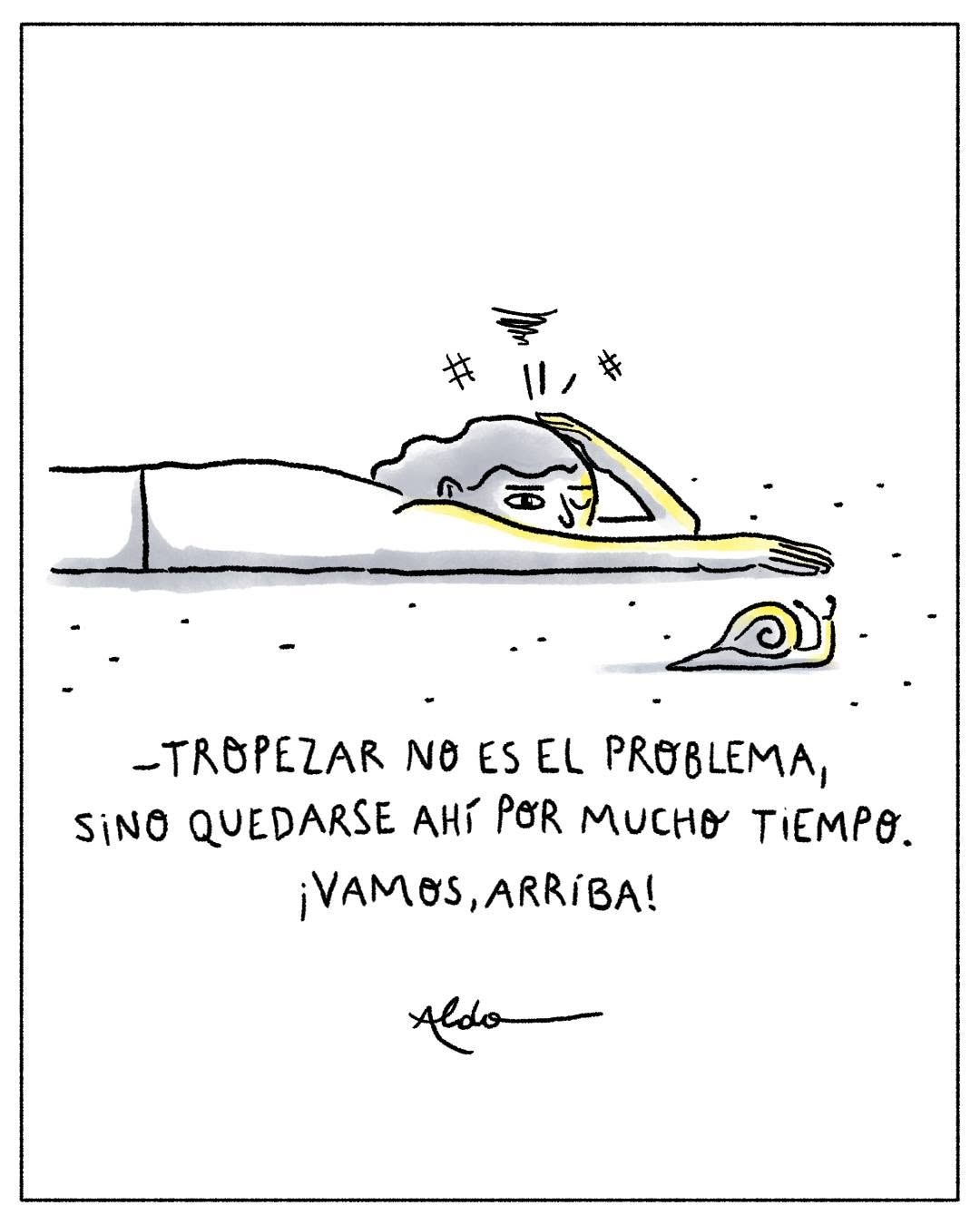
It happens to all of us. Why do we repeat certain behaviors even when we suspect the outcome? Of course, initially we believe the result might be different because that's what we want, but in reality, if we think about it carefully, given the past and acting similarly, we should be able to assume we'll probably get the same result as before.
But no, we try, we stumble again, and we fall. We return to a romantic or "friendship" relationship that has already hurt us in the past, we start the same business with the same tools, we trust again the acquaintance who betrayed our trust, or we react the same way to a conflict and are then surprised to get the same response. It's not chance; it's probably us, stubbornly clinging to something pointless despite the many signs to give up, or at least change our strategy.
Some will say that perseverance pays off. It's possible, but have you heard the phrase "if you want different results, don't keep doing the same thing," attributed to the eminent German physicist Albert Einstein (1879-1955)? You can persist in a goal—and it will depend on the situation—but changing your approach can be a positive option when things have gone wrong before.
The expression "to stumble over the same stone" quite accurately describes one of the most human contradictions: knowing that something doesn't work and yet wanting to do it again and suffering the consequences, defeated, without learning.
This behavior is very normal; it doesn't mean we're stubborn simply out of obstinacy. Psychology explains that many behaviors become habits because repetition makes them increasingly automatic.
Related studies assert that "repeating an action in a given context strengthens the association between that context and the response," and, furthermore, they indicate that rationally understanding the consequences isn't always enough to modify a behavior. Research on human behavior also suggests that habits demonstrate that specific places, situations, or cues can trigger learned responses even after conscious goals have changed.
Do we then act automatically? Perhaps that's the case with our first impulse in some situations, if we understand what experts suggest about not always choosing from scratch, because we often respond based on what we've internalized. However, expectations also play a role.
The brain doesn't just evaluate what happened; it focuses on what it expects to happen, on obtaining a response, without thoroughly analyzing the process. That's why an experience that might occasionally seem rewarding can lead us to maintain a behavior that, generally speaking, is harmful.
Furthermore, when there's a strong emotional factor, we tend to be stubborn. While one part of us knows what's happening, another, stronger part insists on denying it, on trying to hide the truth, and repeats the behavior. We already know this, and it has nothing to do with maturity. We often don't want to admit that a choice was wrong. That step of acceptance can be quite difficult.
Before we accept it, anything can happen. In the blink of an eye, we go from stumbling and falling once to trying again, truly believing that it will be different. Thousands of warnings may come from the outside, but it will take a very hard analysis—or a real wake-up call—before we accept that it won't work if we don't change our strategy.
The positive thing is that, although psychology confirms that we act according to experience, learned behaviors can be modified because we also learn from them. The World Health Organization (WHO) emphasizes that human behavior is conditioned by cognitive, social, and environmental factors, and that understanding them allows us to design better strategies for change.
Stumbling over the same stone is human. And if the stone is there, immovable, perhaps the difficulty lies in realizing not only that we have stumbled, of course, but in asking ourselves what leads us to the same stone, again and again. We must accept that changing our behavior doesn't always mean a breakdown of willpower, but in the face of repeated and unhealthy scenarios, it's helpful to vary the context, identify what triggers the "stumble," interrupt the automatic response, become aware of it, and search for an alternative.
Remember that it's not unusual to make the same mistake twice; it's part of life. Let's learn from the experience and break the cycle.
Translated by Amilkal Labañino / CubaSí Translation Staff
Add new comment