
Cuban Medical Brigades: Modern Slavery?
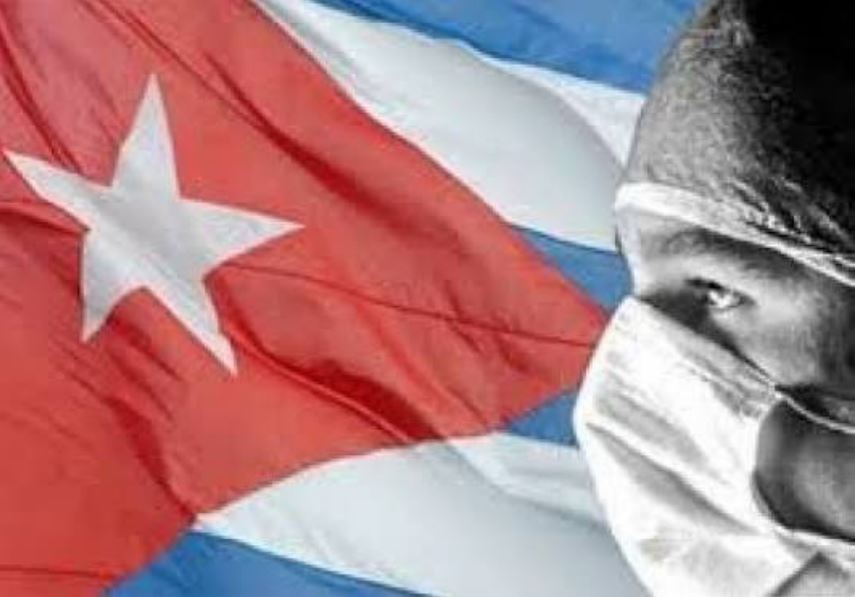
In recent years, Cuban medical brigades have been the subject of an intense discrediting campaign driven from the United States and replicated by media outlets and some governments. The term "modern slavery," loaded with controversy and negative connotations, has become a recurring label to refer to the island's health cooperation, despite the fact that millions of patients across all latitudes have found in it their only possibility of medical care.
The narrative presenting Cuban professionals as victims of exploitation did not emerge spontaneously. It was constructed with political intent, as part of a strategy to undermine one of the pillars of the Cuban Revolution's external projection: solidarity in health matters. In this sense, more than a debate on human rights, what has been installed is a discourse that seeks to delegitimize Cuba's international cooperation and reduce its influence in scenarios where its presence has been decisive.
Under international law, for the purposes of the Forced Labour Convention, the category of "forced or compulsory labour" designates "all work or service which is exacted from any person under the menace of any penalty and for which the said person has not offered himself voluntarily." Meanwhile, according to information from the United Nations website, despite "not being defined in law, modern slavery is used as an umbrella term covering practices such as forced labour and forced marriage." The term refers "to situations of exploitation that a person cannot escape due to threats, violence, coercion, deception, or abuse of power."
The technical assumptions described by international law and contemplated in the United Nations system are not present in the case of Cuban medical brigades. There is no coercion, violence, or deception preventing professionals from deciding on their work; what exists is a cooperation scheme that has been recognized in multiple countries for its social impact. The label of "modern slavery" and others of similar connotation respond, rather, to a politicized use of the term by actors seeking to delegitimize Cuba's international health practice. Politicians, U.S. congressmen, non-governmental organizations, and media outlets have repeated that slogan since the previous decade, in an attempt to transform an exercise of cooperation into an ideological battleground.
According to research from the Faculty of Communication at the University of Havana titled Cuban Medical Brigades or Modern Slavery?, the latter is a "suggestively controversial epithet" with its antecedents in 2010. Until that year and since 2004, fundamentally during the mandates of George W. Bush, health professionals "were represented as government agents, incompetent, exporters of communism, and spies." According to the aforementioned investigation, under the Barack Obama administration, the State Department included the largest Antillean island in its unilateral 2010 Trafficking in Persons Report and explicitly began to describe Cuban medical brigades, from those political instances, as a form of "modern slavery."
With Donald Trump's first arrival at the White House, the issue gained notable visibility. It became one of the guidelines of his foreign policy regarding U.S. relations toward Cuba, with verifiable repercussions in other countries of the hemisphere. The new Republican president and the anti-Cuban lobby promoted actions that led to the closure of several medical agreements signed between the largest Caribbean island and governments in the region.
Examples of the interruptions of the Cuban medical presence occurred in Brazil at the end of 2018, and in Ecuador and Bolivia in 2019. Although each case had its own particularities, the actions of the U.S. government, congressmen, anti-Cuban groups, and the role of media outlets that habitually promote the notion of "modern slavery" as a qualifier for Cuban medical brigades decisively influenced those outcomes.
From that period comes a statement in which Cuba's Ministry of Foreign Affairs denounced that the U.S. government was deploying "an intense and injurious campaign against the medical collaboration that Cuba offers, combined with the threat of sanctions against Cuban leaders and pressure on recipient states to do without it."
More recently, during Trump's second term at the helm of the northern country, the false narrative of "modern slavery" has not dissipated. It continues as part of the discourse of those who seek to destroy the symbol of Cuban collaboration abroad and, at the same time, hinder political and exchange relations between the island and other nations. Governments complicit in the hostility of U.S. imperialism or subdued by pressure and discrediting campaigns have put an end to the presence of Cuban doctors in their territories.
However, the accusation of "modern slavery" against Cuban medical brigades does not withstand serious analysis, either from international law or from the concrete practice of the cooperation carried out by the largest Antillean island. It is, on the contrary, a political resource used maliciously. Ultimately, reality demonstrates that wherever the presence of Cuban doctors has been interrupted, what remains is a health vacuum, unfulfilled promises, and unprotected communities.
The bachelor's thesis Cuban Medical Brigades or Modern Slavery? Analysis of the Hypermedia Journalistic Discourse of The New York Times and CiberCuba Regarding Cuban Medical Agreements (2025) was developed by colleague Daniela Estevan Polo under the co-tutelage of professor Zenaida Costales and the author of this material.
Translated by Sergio A. Paneque Díaz / CubaSí Translation Staff
Add new comment