
Militant Solidarity Collective Sends Three Tons of Supplies to Cuba
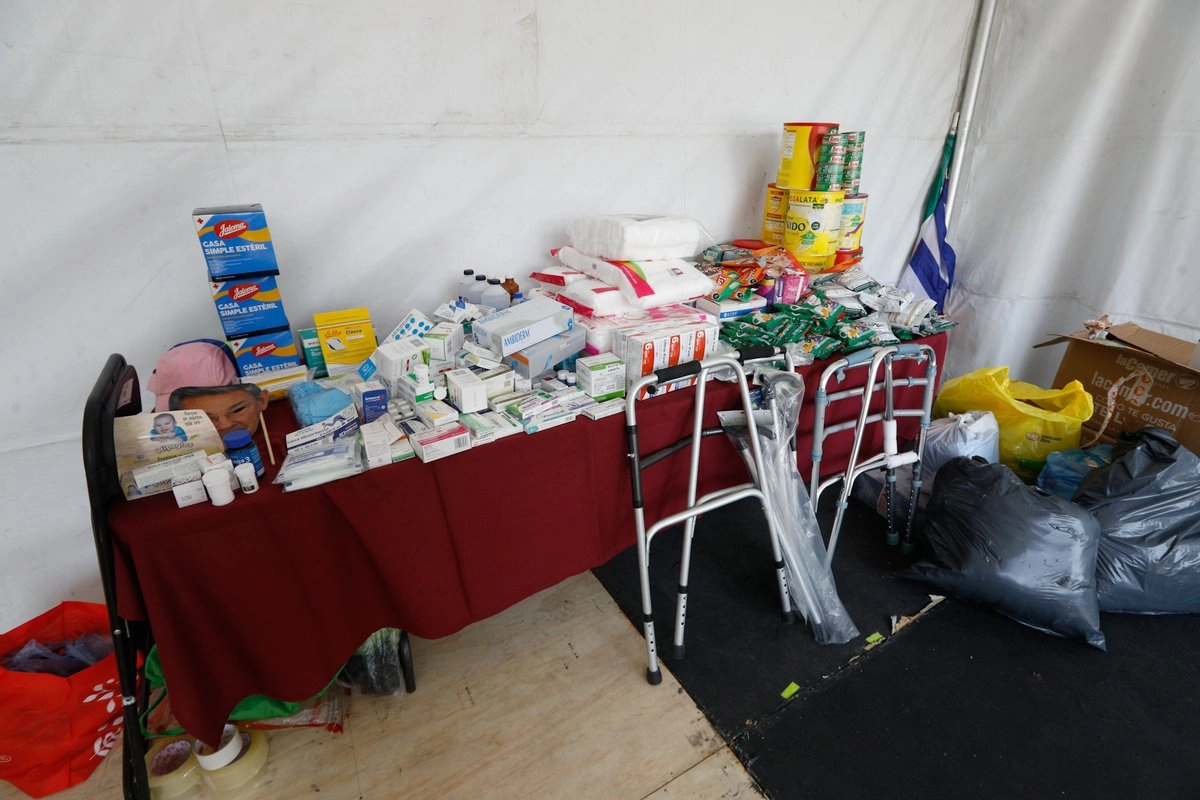
Foto: Germán Canseco
In the coming days, the Militant Solidarity Collective "Va por Cuba" will send approximately three tons of supplies to the island, collected since last Thursday as part of the activities for the Centennial of Fidel Castro, leader of the Cuban Revolution.
The collection drive for food and medical supplies concluded at Mexico City's Constitution Plaza (Zócalo), held from August 13 to 16 and featuring a variety of artistic activities.
María Mónica Ramírez Vázquez, a participant in the collective, said the public responded by donating medicines, including those for dialysis and diabetes. They also sold various products such as mugs to raise funds for additional pharmaceuticals.
"The people have been responding, although there was a lack of promotion. Right now, we have approximately more than two and a half tons over these four days. People have brought things like solar panels, canes, quite a bit of powdered milk, and medicines."
She lamented that the U.S. blockade and sanctions against Cuba exacerbate fuel shortages and limit the arrival of ships and containers carrying food, medicines, and vital supplies, directly hindering internal transport and distribution of provisions on the island.
"The main problem is transportation to get things there, because the United States, through the blockade, prevents us from even hiring private companies to bring in all the supplies."
Nevertheless, she insisted on the importance of continuing to cooperate with Cuba through humanitarian support.
"When President Trump says Cuba is a threat, we must read that as indeed it is a threat to the empire; it is a threat to fascism. We have seen how it is intervening in the Americas, and not precisely in its narrative of saving the world or fighting communists."
"I have maintained that Cuba is not poor because it has dignity and a resilience in something we could call genocide, because no country has endured a blockade for over 60 years. Cuba is not poor. Cuba was the first country to eradicate illiteracy. The social prevention among the population is tremendous. People are long-lived because from birth they receive care. And finally, education and culture—what can we say? And above all, the enormous solidarity it has, even at this moment, sending specialized rescue teams and doctors to disaster zones in Venezuela and Colombia, speaks of a country with a different vision of life."
Collective Highlights Mexican Response During Collection Drive
Yeni García Urquiza, Second Secretary of the Cuban Embassy in Mexico, expressed that she is surprised by the support from Mexicans. "Since I arrived in this country as part of the diplomatic mission, I have been surprised. We always knew that the affection and ties with Mexico were historic and very deep, but it is not the same to know it as to live it, and this is something we have constantly experienced."
She recalled that the collective and other solidarity organizations, primarily the Association of Cubans collective, had organized a similar drive in February of this year, which collected over 200 tons.
"As an embassy, although we are not the promoters of this type of initiative, we always like to support all friends, and especially when we know these are expressions of solidarity aimed at reaching the Cuban people to help them cope with the difficult situation we are currently experiencing due to the unprecedented tightening of measures by the U.S. government—the current U.S. administration—which has been one of the objectives of the U.S. government for many years. These solidarity initiatives are always encouragement for the Cuban people and for the government as well, to know that we are not alone and that we are accompanied in our struggle to be capable of deciding our own destiny and our own laws, and our future, of course, as a sovereign and independent people capable of being independent of other objectives and interests that may exist around the world."
She noted that Mexico and Cuba are deeply intertwined, "not just now, but for many, many years, even during the wars of independence—we could say there was both Mexican presence in Cuba and Cuban presence in Mexico, with generals and other nationals fighting in our own independence wars. So in a way, we could say that we have both traveled a historically similar path, and I believe the Mexican people know this, feel it, and that is also reflected in all the expressions of solidarity—there are initiatives that even surprise us sometimes, many initiatives that emerge throughout Mexico and have always been to support the Cuban people."
She thanked Mexico for continuing to support Cuba. "Our eternal gratitude. I believe there are no words to thank the people of Mexico for everything they have done, not just now but for many years. We have always felt that closeness—not so much as neighbors, but as brothers. And brothers are always there to support each other in both good and bad times. And Mexico has been an example of that. So our eternal gratitude to the Mexican people, to President Claudia Sheinbaum, who has remained firm throughout this period despite the pressures from the United States. And all we can say is thank you, thank you, and thank you. We will never tire of saying thank you to the people of Mexico."
Añadir nuevo comentario