
Sheinbaum: Achievements and Challenges
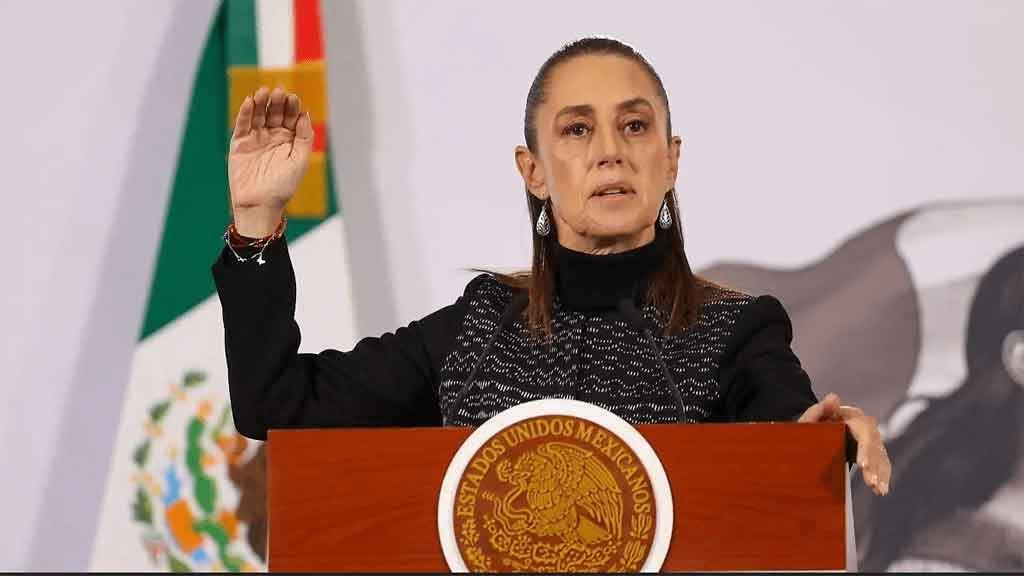
A year and a half after assuming the presidency, the least favorable polls show that Claudia Sheinbaum has the approval of seven out of every ten Mexicans, reinforced these days by her policy of humanitarian aid to Cuba in the face of the United States blockade.
She characterized as unjust the Trump administration's demand and threat to impose additional tariffs on countries that sell oil to the island. "Yes, there will be more support. The people of Mexico are always in solidarity. No one can be oblivious to the situation the people of Cuba are currently experiencing due to the sanctions being imposed on any country that sends oil by the United States, in a very unjust manner," the president stated, emphasizing "We are going to help the Cuban people just as we have always helped peoples in need at any time," as two Mexican ships with more than 800 tons of humanitarian aid arrived in Cuban territory.
Furthermore, as she has stated in recent days, she indicated that Mexico is undertaking diplomatic efforts to be able to continue sending oil to Cuba without being affected by potential U.S. tariffs, calling on that country not to adopt such measures.
The previous president, Andrés Manuel López Obrador, also highly popular, had predicted that Sheinbaum would be an even better president. With extensive experience as head of government of Mexico City from 2018 to 2023, becoming the first elected female mayor of the city, her administration prioritized urban security, environmental initiatives, and social programs, including notable expansions in public transportation and educational support systems—something that has marked the pace of her current administration.
Thus, she has achieved structural reforms, record investment, and new challenges in security, economy, and governance, establishing the narrative that Mexico can have accessible justice, protected social rights, and a more active State.
Sheinbaum has managed to maintain governability in a polarized country with historical resistance from economic and political elites.
The installation of the new Supreme Court of Justice of the Nation with nine ministers elected by popular vote marks a change of era: it breaks the historical capture of the Judicial Branch by the opposition Institutional Revolutionary and National Action parties; it places emblematic cases on the agenda, such as that of Salinas Pliego, with 40 billion pesos in disputed taxes, and legitimizes judicial decisions: now, rulings on taxes, corruption, and rights carry a real political cost. For Sheinbaum, the Judicial Branch Reform seeks to convey that neither money nor elite pacts are above the law.
The government elevated direct transfers and universal pensions to constitutional rank: 26 million households receive federal support; Benito Juárez scholarships cover 12.4 million students; and the minimum wage has been increasing in a year like the present one when high growth is not expected, alongside the decline in family remittance inflows—in which Trump's repressive anti-immigrant policy plays a significant role.
Security remains a serious problem despite the reduction in cases; hence she accepted that U.S. military personnel are advising members of the army and police.
GROWTH AND INCLUSION
One of Sheinbaum's main achievements has been the transformation of security policy. Faced with challenges such as drug trafficking and migration, her administration reinforced bilateral cooperation with the United States, maintaining direct communications with President Donald Trump. Among the most notable results are the deployment of 10,000 National Guard elements on the northern border, the extradition of 55 organized crime members, and the 50 percent reduction of fentanyl trafficking to the United States, recognized by international authorities.
Furthermore, she continues to promote mechanisms to guarantee transparency and accountability. Relevant investigations and concrete actions have reinforced the fight against corruption and strengthened citizen trust.
Sheinbaum is aware that she must face structural weaknesses such as labor informality, which affects 32.6 million people (54.8 percent of the workforce); that only 46 percent of women are in formal employment compared to 75 percent of men; and that social support does not substitute for dignified employment. The challenge is not only to grow, but to include: integrating historically marginalized sectors into productive development, she indicated, according to La Jornada.
In short, her administration has strengthened social programs aimed at vulnerable communities, with special attention to women, youth, and marginalized sectors. These policies seek to reduce inequalities and guarantee greater social cohesion.
Sheinbaum has worked to position her country as a strategic partner in issues such as security, economic development, and sustainability, building mutually beneficial relationships—thanks to which she has sustained a safer, fairer, and more sustainable Mexico, laying the foundations for a clear vision and objectives for the remainder of her second year in office.
Translated by Sergio A. Paneque Díaz / CubaSí Translation Staff
Añadir nuevo comentario