
International Cooperation Strengthens Child Nutrition in Cuba
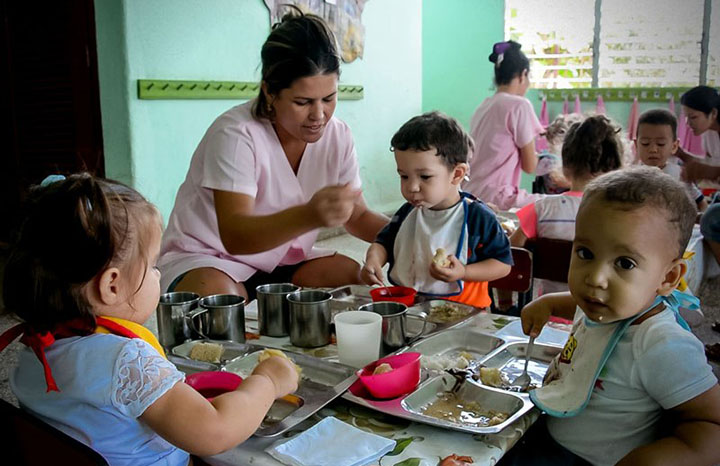
Foto: Juan Pablo Carreras
A project from the World Food Programme (WFP) to support school meals is strengthening nutrition and child development in eastern Cuba through the enhancement of local capacities.
According to a press release from the United Nations agency, the initiative, funded through the Cuba-Spain Debt Conversion Program, seeks to bring locally produced food closer to educational institutions and promote direct links with the productive sectors of each territory.
During its first month of implementation, the project benefited more than 6,700 students and staff members from the 74 selected institutions across 19 municipalities in that region of the country, according to the source.
Etienne Labande, WFP Representative in Cuba, stated that the project demonstrates how international cooperation can translate into concrete solutions for communities by supporting national efforts and promoting a model of mutual cooperation.
The initiative will be carried out during an initial six-month period, during which, in coordination with the Ministry of Education, local purchases of supplies will be supported through financial transfers to the territories, with the goal of improving availability at each educational center.
The organization indicated that the project is expected to benefit more than 12,000 children in early childhood education, primary education, and special education, as well as more than 3,000 workers in the sector, with the participation of 42 productive entities.
Among the priorities is ensuring the timely delivery of fresh and safe supplies to schools, a process that will receive technical assistance, monitoring, and accountability support from the WFP, the organization concluded.
With more than six decades of presence in Cuba, the WFP promotes food and nutrition security through the strengthening of agroecological resilience, disaster response efforts, and support for social protection networks.
Añadir nuevo comentario