
Trump: Power, Confrontation, and Challenge
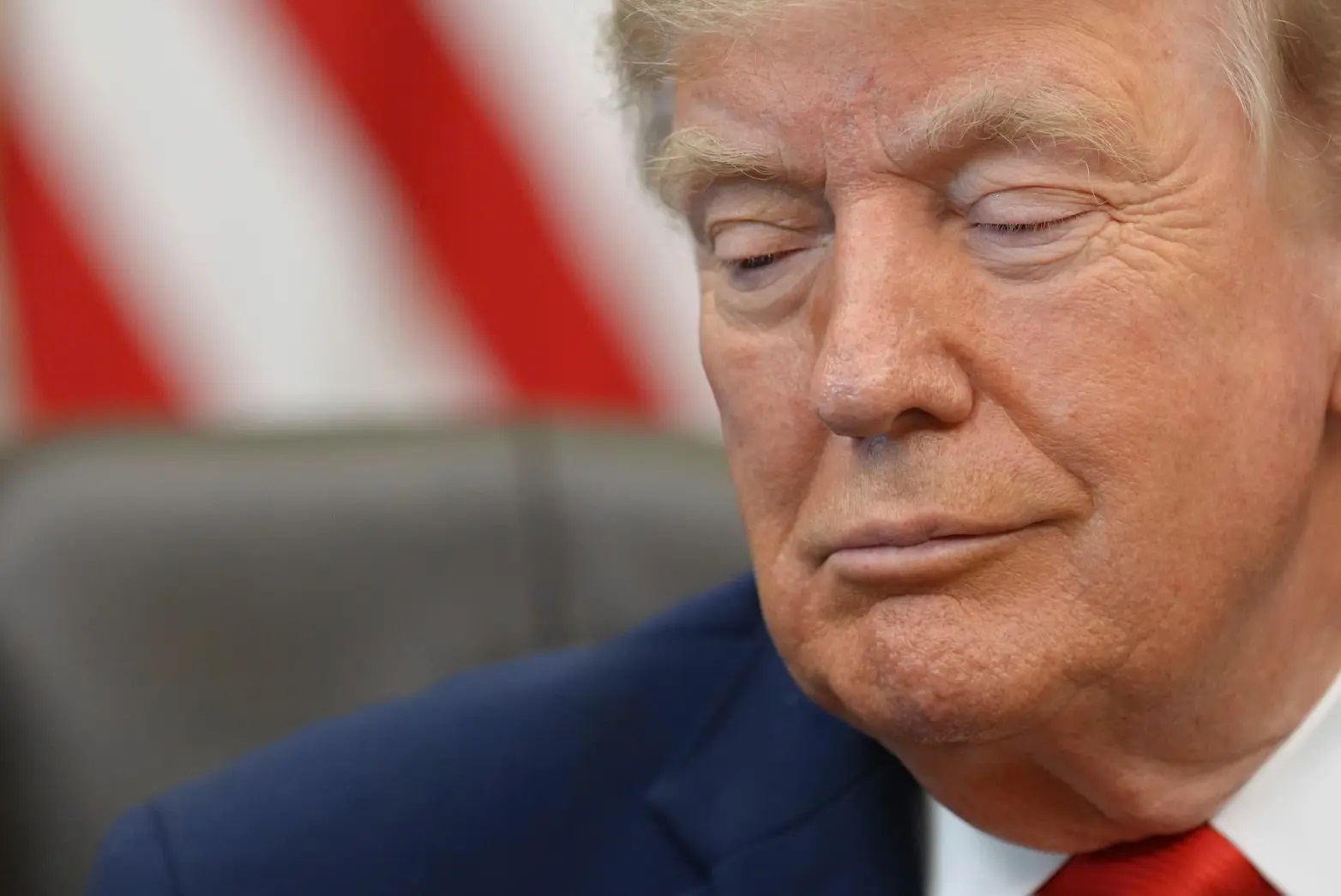
Donald Trump continues to be one of the most controversial figures in contemporary international politics. Everything about him is a show we must follow closely because, although his actions may seem absurd, they have serious consequences. He's not just a buffoon, but a very resourceful one.
His return to the White House didn't reduce polarization in the United States; quite the opposite happened: it deepened a debate that transcends the country's borders and forces the world to ask itself what the exercise of power means today in the world's leading superpower.
Let's examine a matter of utmost importance that should be alarming to everyone. The recent rejection by the U.S. Supreme Court of a request to review the civil judgment stemming from the lawsuit filed by writer E. Jean Carroll upheld the ruling issued by lower courts. This means that Trump remains liable for sexual assault—according to the applicable law in the case—and for defamation, in addition to being obligated to pay millions in damages. And we're talking about the president of the world's leading nation, who has repeatedly been embroiled in such conflicts, but only now has justice done its part and recognized that he is an arbitrary man accustomed to abuse and intimidation.
According to press reports, although the jury did not find him guilty of the crime of rape, the judge presiding over the trial stated that the proven facts fit what many people commonly understand as rape. It's as if they both wanted to and didn't want to admit perhaps out of fear, but it's perfectly understandable. It's an important legal distinction, which doesn't diminish the profound political and ethical impact of the case.
This news probably won't be repeated by word of mouth, suggested on social media, or grab headlines in mainstream media. However, it's a fact, not a rumor or a story. If a court rules against him, it's because there was an investigation and solid evidence.
How is it possible that a person holding the most powerful political office on the planet maintains his leadership intact while "pending" a sentence of this nature? What message does this send to society? How can we avoid normalizing the idea that one can commit a crime and remain unscathed if one has sufficient resources? How do we explain that there are individuals who can brazenly endure "punishments" based on their influence?
There are no easy answers. The uncertainty generated by the knowledge that legal controversies carry less weight than political or ideological affiliation is quite unsettling. What will his electorate think? Will he approve of such behavior? To what extent will he forgive the scandals?
Beyond his approval rating almost a year and a half after occupying the Oval Office for the second time, for many, concerns about Trump go beyond his legal troubles, his eccentricities, his impulsiveness, and his unchecked arrogance. The Carroll case is just one more entanglement linked to Trump's name, and the fact that it has been handled this way and its results diminished helps us understand why his behavior is the way it is, in every sphere.
Since Trump set out to disrupt American politics, he has managed to build a style of government based on constant confrontation, discrediting and pressuring adversaries, and a narrative that presents any criticism as a political attack. Such freedom does not exist in the supposed "land of the free."
This is not a random attitude but a calculated one, and as a consequence, this strategy erodes public trust in fundamental institutions such as the electoral system, the courts, the press, and federal agencies.
On the international stage, his foreign policy is marked by unpredictable decisions and the same old tools of confrontation, discrediting, and pressure. We see it all the time: Trump's language is mocking as he abuses economic and trade threats. He seems to relish his dominant position, wielding the scepter, feeling like he's in the spotlight, and, moreover, there's his distinctly transactional view of relations between states.
Tariffs, sanctions, and financial pressure have become standard negotiating tools. His administration is notable for frequently prioritizing the immediate economic interests of the United States over historical alliances or multilateral agreements. And where so many see a bold president, many of us see a capricious, racist, sexist, and meddlesome millionaire who wants to leave his mark at any cost with the idea of boosting his people's economy—a goal he wants to achieve not only by forcing alliances but also by plundering.
Sometimes it seems that Trump doesn't take anything seriously, that he's just playing games. Several analysts agree that, as a businessman, he views politics as just another business where demonstrating strength is acceptable, even if consensus isn't built, because unfortunately, the most powerful almost always wins.
But this is a mistake because this logic can generate tactical advantages in certain circumstances, and, as is evident, it also increases uncertainty and hinders stability in a global landscape already scarred by armed conflicts, trade tensions, and deep geopolitical divisions—a far from favorable context, but one that has simultaneously served as his alibi.
The international community closely observes his actions, which are sometimes impossible to predict. Trump's leadership combines swift decisions, aggressive rhetoric, and a constant pursuit of media attention, even if the methods are unbecoming of a public figure of his stature. The result is a monstrosity that transforms every presidential statement into a potential factor impacting the stock market, diplomacy, and international security.
That's why it might seem pointless, that he behaves like a clown and talks nonsense, but we have to listen to him, especially in countries with fragile economies, like Cuba. We have seen that any escalation of trade tensions, new sanctions, or changes in US foreign policy have direct consequences that transcend political debate and affect the daily lives of millions of people.
The Trump phenomenon represents one of the greatest challenges to current geopolitics. It’s imperative to see to what extent institutions are capable of withstanding the weight of a highly polarizing leadership, and take into account that political charisma, confrontation, and economic power can overshadow traditional principles of public accountability and still remain acceptable to society.
Although belated, we trust that history will judge not only the leader but also the capacity of American institutions to demonstrate that the rule of law prevails over any political figure, however powerful or influential. Strength should not reside in the personality of the ruler but in the independence of the institutions that limit and control their power.
Translated by Amilkal Labañino / CubaSí Translation Staff
Añadir nuevo comentario