
INTERVIEW | Lorena is a Happy Woman
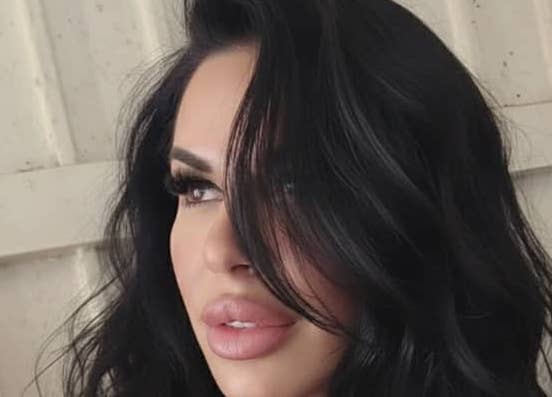
The boy she once was knew from the age of eight that he wasn't attracted to women: “From then on, I was always attracted to men. Later, when I decided to begin my transition, at school they made me shave my head, but I never shaved it, and I had to drop out of school because of it. I was studying to be a culinary technician, and because I'm a trans woman, I didn't graduate, and it was also very difficult for me to find a job.”
Despite everything, even though there are still prejudices that try to stop her, she is happy. Like any human being, she has days when she feels she lacks the strength to go on, perhaps with more reason than many of us, because since she was 15, Lorena has been waging a battle against the mirrors and, unfortunately, she also had to deal with the incomprehension of those she loved most.
And with her family…?
“My family always knew what I was going to be. No family is used to having a gay son or a trans girl. At first, they did reject me, but as time went on, they adapted. Love was stronger, and my family accepted me, ever since I came out to them at fourteen, when I told them: I don't like women, I like men… it shocked them, but little by little, my grandmother and my mother accepted me, and to this day, everything is going very well.”
When did you realize that you didn't just like men, but that you identified with the female gender?
“At fifteen, I decided to transition. I didn’t like dressing as a boy; I wanted to be a girl, and that’s when I started, from fifteen to sixteen years old.”
In Cuba, important steps have been taken in terms of laws guaranteeing all rights for all people; however, prejudices persist…
“That’s right, there have been changes, because it’s now accepted, for example, that we can get married. Trans women can now legally change their names; we can now have a woman’s name. But society doesn’t treat you like a woman, like we truly feel. Even though we were born in the wrong male body, we feel like women. Even today, there’s a lot of phobia against us trans women. They look at us badly, they call us faggots, idiots, they say horrible things to us.”
In the midst of all this, what gives you the strength to face life as you see it?
"I fight and I am who I am because of my grandmother. My grandmother is my whole, my world; she's the one who raised me. I've tried to take my own life many times, but you have to keep going. People make a lot of comments, they touch their shoulders as if to say, 'Look, look,' as if I were a clown, as if I were something rare, but I'm happy. No matter how much they say no, that I'm not a woman, I feel happy as I am. I try to be happy, and let them talk. I can't stop being happy because people want to see me one way and I want to see myself another."
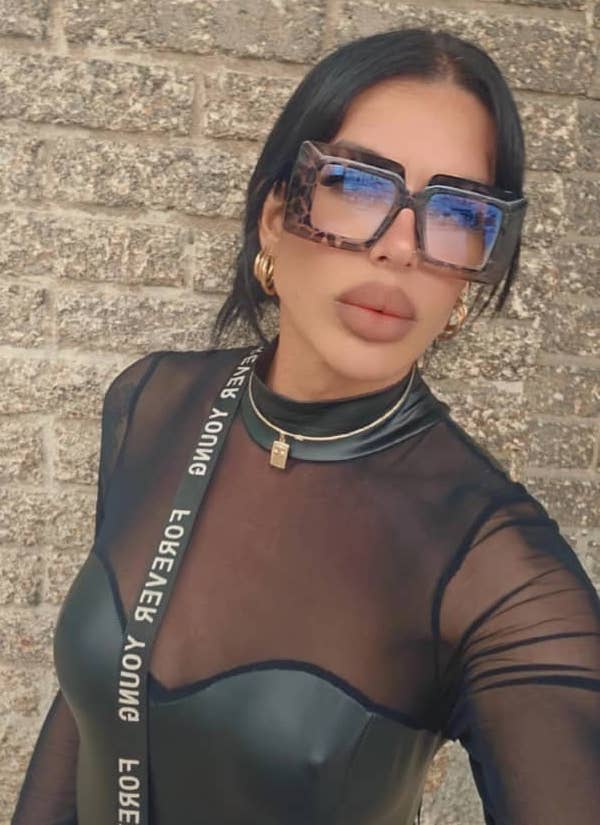
How would you like to be seen?
"I would like the whole world to see me as I am and to accept me as I am, not to see me as gay, as trans, but to see me as a woman and to treat me the way they treat other women."
Have you had a partner as a trans woman?
“I’ve had more trans women than men. Right now I’m in a stable relationship…”
I’ve read about girls who have been victims of both physical and psychological violence of men with whom they have relationships… sometimes because they can't handle the social pressure that also exists on them. Has that ever happened to you?
“Yes, that happens, but it's never happened to me yet. In fact, many of us turn to the easy life, as people say, to prostitution, because we can't get jobs, we're not seen the way we want to be seen, so we try to find an easy life and that's the danger, where they throw stones at us, they throw bottles at us, they jump us from behind and beat us up…
You're from Caibarién, a municipality in the north of the central province of Villa Clara. There's a saying there that goes, “Small town, big hell.” Did you experience it that way?
“Everyone there likes me. Everyone knows me.” Havana, for a city, is rather closed-minded. Back in my hometown, people are open-minded; nobody criticizes anyone, everyone greets you as you are.”
Physically, how much does a trans woman have to undergo to look like the woman she is?
“A lot of sacrifice and a lot of investment: I had laser hair removal on my face, I got hyaluronic acid injections to feminize my face more. I’ve had to take female hormones, and when I lived in Russia, I had breast augmentation…”
And when you saw yourself after the surgery, what did you feel?
“Imagine, that was my biggest dream, to have breasts. To be able to have the surgery someday and get breast implants. When I woke up from the anesthesia, I was crying, like I couldn’t believe it.”
What dreams do you feel you haven’t been able to fulfill because you’re a trans woman?
“I would really like to work in a salon or have my own hair salon.” When I've gone to salons looking for work, they've told me no, because many people don't get along with us. And it's not just in Cuba; I lived in Russia and Mexico, and everywhere I've had a hard time being recognized as a woman when looking for work. I've suffered that rejection and that resistance.”
Would you like to be a mother?
“Yes, of course. I know that being a mother nowadays is very hard because you already have a responsibility, and the things you used to enjoy for yourself you now have to give to your child, but I've been very responsible for as long as I can remember.”
If you could speak to those people who, in the 21st century, are still bound by prejudice, what would you say to them?
“That they should open their minds and hearts, that they shouldn't judge people without knowing them. Because we are just as good human beings as anyone else. That they see us as we are and as we feel, and that they respect us.” And that they judge no more, nor criticize no more, because in the end we also come out of a woman's womb and we have many good things and much love to give.”
Translated by Amilkal Labañino / CubaSí Translation Staff
Añadir nuevo comentario