
Geopolitics: Narratives Surrounding Fascism
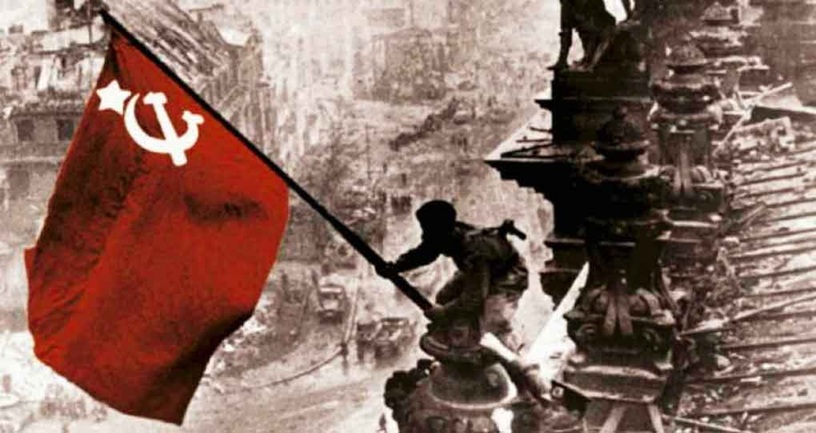
Recently, another anniversary of the defeat of Nazism by Soviet troops was commemorated. The world is not a peaceful place; the international pact from which the UN was born has been broken, the Security Council protects no one, it’s merely a forum for confrontation where the veto prevails over consensus. Western powers have used their position to prolong an order that lacks historical logic in the face of the realignment of the economy and trade toward Southeast Asia. The strength of nations that were once empires—China, India, and Russia—is becoming unstoppable while the United States and NATO attempt to reshape the balance of power through proxy wars. In 1938, no one used this latter term; however, when we analyze it, the creation of an extremist shock force against the USSR by the West was precisely that: wearing down the ideological enemy by supporting adversaries through funding.
We can say that history will not repeat itself exactly, and that is correct, but the structural socio-class power of the world has not changed. There’s a bourgeois core that controls the interests of diplomacy and has rendered the legal framework of the United Nations ineffective. The ineffectiveness of international law was one of the antecedents of the World War of 1939-1945. When the last shot was heard in Berlin, the world concluded that it had all begun much earlier, when in 1933 an Austrian painter, who had been a soldier between 1914 and 1918, decided to foment a movement based on hatred and revenge. The League of Nations was then hamstrung by the aggressions of Italy against Ethiopia, Japan against China, and Germany against Czechoslovakia and Poland (the Rhineland had been remilitarized and Austria annexed previously).
How far or how close are we to that scenario? Movements in Ukraine are claiming allegiance to Nazi sympathizers and posing before the swastika flag. Western leaders have large factions within their political parties that are akin to the racists of the American Civil War South or to ultranationalist and xenophobic tendencies. There’s an emergence of identity politics. Even a resurgence of copyright law—in which belonging to a sexual, racial, or ethnic group places you in a pre-criminal position—is worrying in terms of how democracy itself is built. All of this is being fueled by social media, which instills fear in the masses, creating a cultural other, a different and opposing subject (often nonexistent). This is understood primarily in terms of algorithms and then in terms of elections. The fact that a vice president of a superpower speaks of post-liberal times gives us a measure of how willing those in power are to deny even bourgeois democracy if it means preserving themselves.
In 1938, Hitler railed against democracy and branded it the rule of the weak. Their vision of a strong, corporate state (the axis of fascism) was enthroned in parts of Europe, whether through invasions or direct influence. Countries like Hungary and Romania were subjected to Nazi puppet and satellite governments. It seemed that only through totalitarianism was a new international order possible. This was the era of the German “living space,” which required eastward expansion and the extermination of peoples beyond Poland. Today, with the defense of neocolonial rhetoric and the emerging establishment of “spheres of influence,” that clarion call of war is sounding again. There are nations that believe they possess a manifest destiny over others and that they can treat them with contempt. The norm of respect as a given in international relations has collapsed. In its place, force is considered essential. It is the “I want to and I can” mentality. All of this led, at the time, to an unprecedented clash, with the difference that there were no weapons of mass destruction yet, posing a total threat of global devastation.
Now, as part of the cultural reinterpretation of history, what we have today is a narrative about that past. In this subtext, the United States supposedly defeated Germany, and—without Washington—as Trump has said many times in Paris, they wouldn't have been speaking French. All of this ignores the fact that it was the Soviets and the predominantly Slavic peoples and their allies who bore the brunt of the confrontation, and even that the second country with the highest number of deaths was China, which was also suffering from a civil war that would continue until 1949. The figures, the historical accuracy, are not important if the formation of opinion is based on movies, TV series, social media, and forums where anything but the search for truth prevails, instead favoring confirmation bias. If you try to talk about the decisive effort of battles like Kursk or Stalingrad online today, you will be attacked. If, on the other hand, you turn to the Normandy landings or the Battle of the Bulge (a failure, incidentally, for the Americans against the Germans) or even Operation Market Garden (another fiasco for the British under Montgomery), your reasoning is well-received, approved. All because of the trickle-down effect of cultural influence.
Blockbusters like Saving Private Ryan have contributed to our biased view of what happened. The lack of nuance, the use of shots that appeal to emotion, the sense of closeness, the efficient dramatic construction—all of this has generated a matrix of opinion. The world has not been able to escape Hollywood's impact on shaping the narrative. Even the USSR's presence in the war has been portrayed negatively through the treatment of its participation in other productions like The Pianist, where we are presented with a Poland gripped by two equivalent powers, two totalitarian regimes (Germany and the USSR).
Today, both politically and culturally, the world is subject to constant manipulation of the narrative. This casts a backdrop of noise over us, where truths have been layered until we no longer recognize any as genuine. New generations, educated by social media, possess an even greater bias, based on distrust of academic authority and the construction of alternative truths.
This is not about denying the role of the Western Allies in the victory against Germany, but about taking into account everything that happened, before and after the war. Certainly, while England withstood the German bombing raids alone and counterattacked heroically from the air and sea many times, earlier, during Neville Chamberlain's government, it failed by promoting a policy of concessions and appeasement toward Berlin, which—as Churchill warned—offered only a choice between war and dishonor. It’s also true that, in the case of the United States, many young men died with dignity on the beaches of Normandy, but, moreover, that the American government repeatedly refused to open a Western Front, while the USSR was weakened, losing men and collapsing.
This view is absent from the pamphlets consumed today about Nazism and the war, and this has a significant impact on the distortion of generations, a distortion that serves the narratives of the present, which can also lead to a confrontation on almost the same terms.
Translated by Amilkal Labañino / CubaSí Translation Staff
Añadir nuevo comentario