
Door to Door: MICS7, the survey that gives soul to statistics
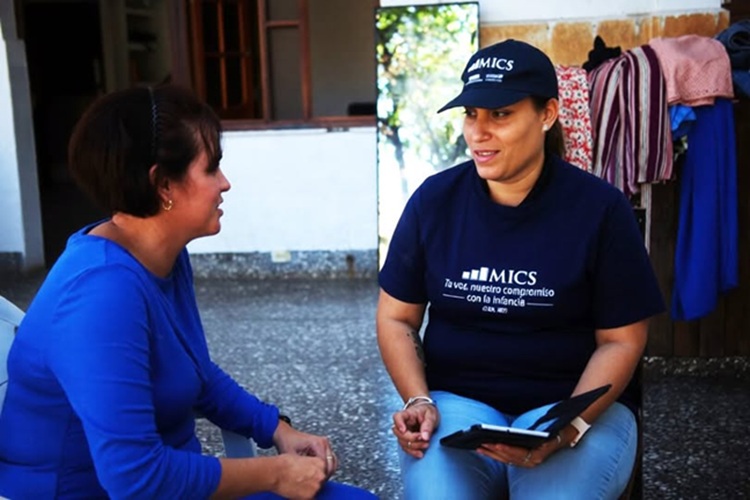
There is a cartography that is drawn with the echo of the voices that inhabit each home. And in Cuba, this work of statistical artistry has come to life again through the seventh round of the Multiple Indicator Cluster Survey (MICS7).
The process, which is one of the most robust tools globally for understanding the realities of childhood and adolescence, was nearing completion of its data collection phase at the time of writing, moving towards information consolidation after extensive fieldwork.
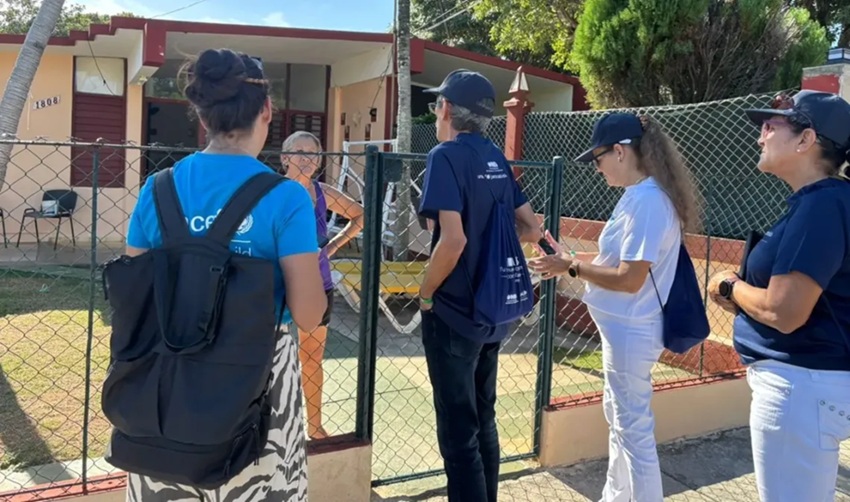
Led in Cuba by the National Office of Statistics and Information (ONEI) with technical and financial support from UNICEF, which promotes it, this research has already been implemented in more than 120 countries since its inception in the 1990s, and allows for obtaining comparable data on the situation of girls, boys, and women. But the goal is not simply to gather numbers, but rather to capture the pulse that defines the well-being of families.
According to UNICEF, this survey constitutes “the most comprehensive and specialized source of information” on children, adolescents, and women, integrating social, economic, and human rights indicators into a single measurement.
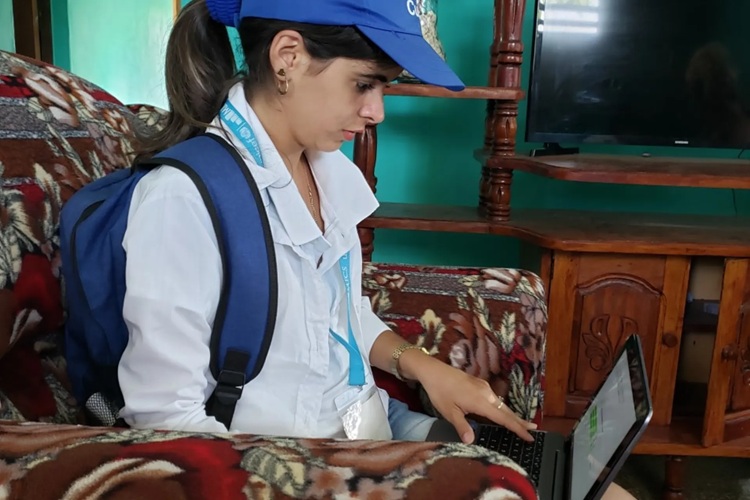
The survey, which began on the island in late 2025 with the training of specialists, has traveled throughout the country with the goal of reaching approximately 12,000 households.
According to this United Nations children's agency, the teams of interviewers have used questionnaires covering more than 250 indicators.
Among the topics addressed in this seventh round are Maternal and Child Health and Nutrition, Early Childhood Education and Development, Access to Safe Drinking Water and Sanitation, Violence against Women and Children, Mental Health and Well-being, and the Impact of Environmental Factors.
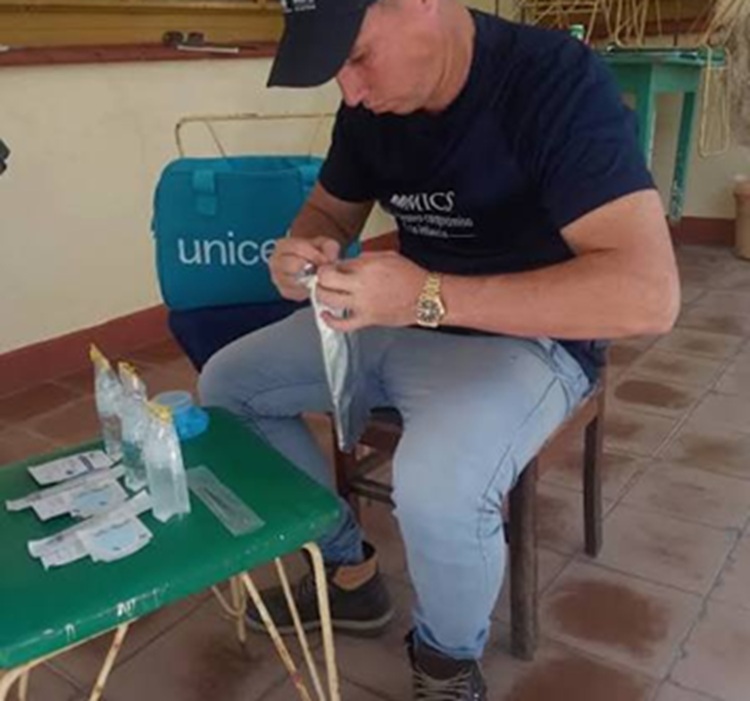
One of the new features of this edition in Cuba is the incorporation of household-level water quality tests and mental health variables, which significantly broadens its analytical scope.
This is not an inventory of deficiencies, but rather a collection of evidence that allows us to understand the present in order to correct the future, especially in a context where children's resilience to climate change and mental health have gained unprecedented prominence in the new survey modules.
The rigor of the data and the closing of the cycle
After beginning data collection in the last months of last year, the fieldwork has reached its final stage at the end of this quarter of 2026. According to progress reports from ONEI itself (https://www.onei.gob.cu/node/2951), the door-to-door work is practically complete, giving way to database cleaning and analytical processing.
This transfer of data from the interviewer's tablet to the central server ensures that the collected information is transparent and internationally comparable, complying with the standards of the Global MICS Program coordinated by UNICEF worldwide.
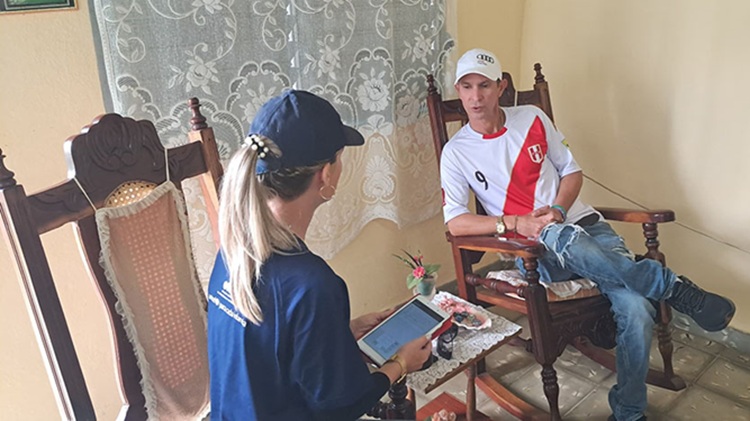
The validation and analysis process for this massive amount of data is expected to extend over the next few months. Following the usual planning for these rounds, the official presentation of the final report and the publication of the detailed results are projected for late 2026 or early 2027.
It will be then that the country will have a clear and up-to-date snapshot, free of assumptions, which will serve as the basis for monitoring the Sustainable Development Goals (SDGs). This waiting period will be a time of scientific refinement where each response is verified to ensure that the reflection of Cuban society is as faithful as possible to its reality.
From Mirror to Compass
The useful perspective of the MICS7 transcends mere documentary archiving. This data will become the compass for designing social protection and public health programs.
By identifying equity gaps and specific vulnerabilities, the State and international agencies can direct resources where they are most needed, optimizing every investment in childhood.
The strength of the survey, which already has a solid track record in Cuba since its second round in 2000, lies in its ability to disaggregate data by region, educational level, and economic stratum.

Ultimately, the MICS7 is a commitment to knowledge sovereignty. In a world saturated with perceptions, hard data, obtained under strict ethical and confidentiality protocols, stands as the only firm ground on which to build laws and strategies.
At the conclusion of this cycle, Cuba will not only have fulfilled an international commitment, but will also have renewed, through this alternative, its pact with younger generations, ensuring that every public policy is based on the reality that lies behind every door opened by pollsters.
Añadir nuevo comentario