
Fascism in the USA as a Method of Governance
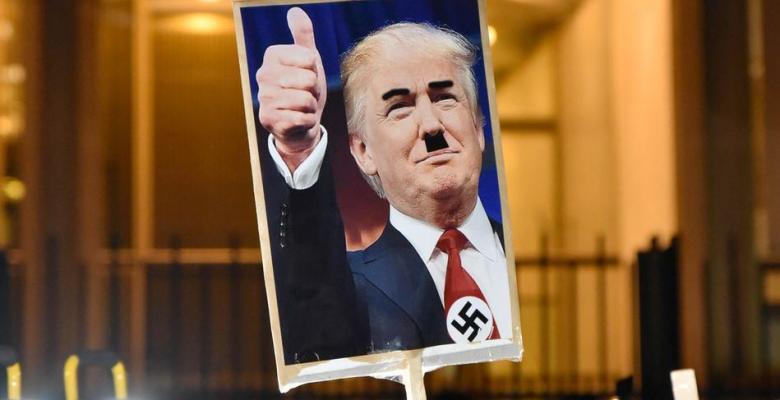
Under the slogan "Make America Great Again," the MAGA project articulates a profoundly reactionary ideology: nostalgia for a lost racial and patriarchal order, hatred of cultural elites, a cult of violence, and the exaltation of a wounded white nation. What George Wallace, the governor of Alabama, could not achieve 30 years ago, Donald Trump, the American president, is carrying out today with inexcusable internal persecutions, the habitual bombing of a smaller nation, Venezuela, and the attempt to subdue the ever-rebellious Cuba through hunger.
All of this responds to the fascist-tinged tradition of the United States, from the Ku Klux Klan and the American Nazi Party of the 1930s to armed groups in a land where the arsenal of death is legal and accessible to everyone from the most violent to the most fearful of becoming victims. This universe, which combines racial supremacism, a cult of guns, and anti-government paranoia, has not only survived but has adapted and strengthened.
Today, it also finds expression in conspiracy theories like QAnon, ultra-evangelical networks, misogynistic "influencers" with millions of followers, and media outlets that whitewash hatred. It is within this social and cultural base that the current authoritarian project led by Donald Trump gestates, exploited and fueled by his main assertive entities, such as the chameleonic Trumpist chancellor, Marco Rubio, much adored by the entire family of the president and in whose shadow the Florida congressional fauna of lamentable Cuban ancestry accommodates itself.
Trump, in this sense, invents nothing, but he capitalizes on it. Already in the year 2000, he attempted a personalist candidacy from the marginal Reform Party, without success. It was his subsequent confluence with these sectors—reactionary, déclassé, and profoundly resentful—that allowed him to construct a narrative capable of condensing them.
He continues to play the anti-establishment card, but he is part of it: a millionaire, predator, accustomed to power, and linked to networks of impunity like those revealed by the Epstein case. Under the slogan "Make America Great Again," the MAGA project articulates a profoundly reactionary ideology: nostalgia for a lost racial and patriarchal order, hatred of cultural elites, a cult of violence, and the exaltation of a wounded white nation. Its connection with the fascistizing tradition is not merely aesthetic but structural: it promotes a hierarchical view of society, dehumanizes the adversary, and legitimizes the use of force as a means to restore order. From there, Trump managed to capture the Republican Party and fulfill his (personal) dream of reaching the presidency.
During his first term, this offensive seemed a limited phenomenon. But on January 6, 2021, the attempt to take the Capitol demonstrated that this was only the prologue to a deeper reconfiguration. In his second term—the one the U.S. is currently experiencing—Trump has returned with broader support. He is no longer just the leader of a radicalized movement but a figure of consensus among diverse factions that include sectors of financial and technological capital that were previously reluctant.
MINNEAPOLIS, A DRESS REHEARSAL
Residents of Minneapolis continued their general strike this Friday to demand that agents of Immigration and Customs Enforcement (ICE) cease violence against protesters and leave the state of Minnesota.
In early January, Renee Nicole Good was killed by an ICE member during an anti-immigration raid, which caused great shock and rejection among the population, who categorized the actions as unnecessary violence.
Since then, several cases of excessive force by immigration agents against the population during raids have been recorded. The murder of the new ICE victim in Minneapolis, Alex Jeffrey Pretti, occurred on Saturday during an operation to locate an undocumented immigrant.
In videos published on social networks, agents can be seen restraining the man on the ground before one of them draws his weapon and shoots him repeatedly. He had ten bullet wounds in his body, according to the Los Angeles Times.
The Minnesota Star Tribune describes that Renee Nicole Good, a 37-year-old American citizen and mother of three, was killed during a highway checkpoint by ICE agents. On January 24, Alex Pretti, an intensive care nurse and worker at the Veterans Affairs Center, was killed by ICE agents while trying to help a woman during another raid.
These are not collateral victims of riots but deaths executed by federal agencies in operations directed against specific individuals. And the location is not irrelevant. Minneapolis was the epicenter of the anti-racist revolt of 2020 after the murder of George Floyd by local police, a crime recorded live that triggered the largest wave of protests in the U.S. since the 1960s and focused attention on structural police violence.
Recall that when that social explosion shook the country, Donald Trump responded with a laconic and brutal "law and order," but this was not just a slogan; it was an invocation of a deep political genealogy. Half a century earlier, George Wallace, the segregationist governor of Alabama, had taken that discourse to paroxysm.
As Dan T. Carter recalls in From George Wallace to Newt Gingrich, Wallace's rallies were violent liturgies where the cult of the wounded homeland, hatred of others, and calls to shoot merged into an undisguised spectacle. In 1968, at Madison Square Garden, he shouted: "In Alabama, the first one who picks up a brick gets a bullet in the brain."
And what Wallace failed to institutionalize, Trump is now turning into a method of governance. Thus, it is no coincidence that, under his leadership, ICE has gained unprecedented prominence, as the operational arm of a new form of governing that combines fear and spectacle.
However, the U.S. did not arrive here from nowhere. The fascistizing tradition is embedded in its political DNA. From the Ku Klux Klan to the American Nazi Party of the 1930s—with public acts in cities like New York—to contemporary armed militias like the Oath Keepers or the Proud Boys, the country has harbored this ecosystem for decades.
For decades, the American oligarchy did not need an open dictatorship. It sustained itself through a series of effective mediations: structural racism, which divided the working class and legitimized unequal violence; anticommunism as a national ideology, which allowed for the persecution of all dissent and alternative proposals; and the myth of social ascent, fueled by consumption, credit, and limited but real upward mobility. To this was added a crucial device: violence projected outward.
That consensus is crumbling. And when that fails, capital needs other tools. This is why Minneapolis is not just a battered city but a dress rehearsal.
Añadir nuevo comentario