
Four Nods to Current U.S. Reality in One Battle After Another, the Big Winner at the 2026 Oscars
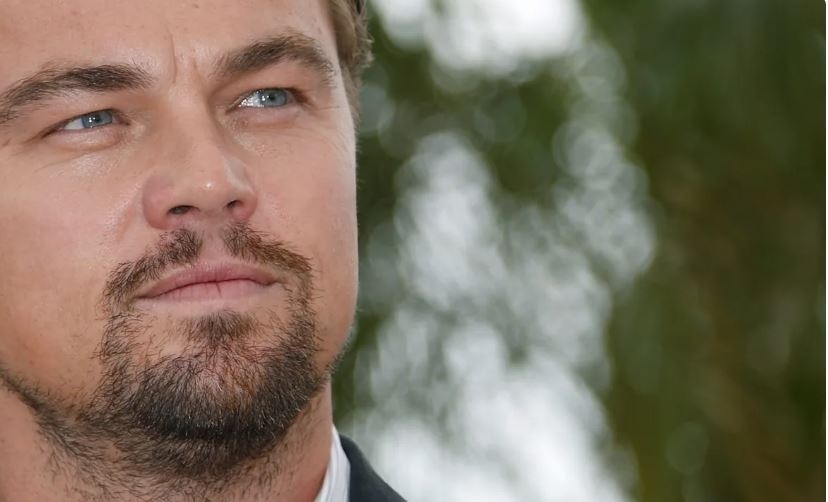
Leonardo DiCaprio protagonista de una batalla tras otra
Technically brilliant, boasting stellar performances and impeccable cinematography, One Battle After Another emerged this Sunday as the biggest winner at the 2026 Oscars.
In addition to claiming Best Picture, the film took home five additional awards at the 98th ceremony of the Academy of Motion Picture Arts and Sciences.
BBC critics had already labeled it a "masterpiece" and "astonishingly timely." Michelle Goldberg described it in The New York Times as the "artistic antidote to fascism," while NPR film critic Justin Chang called it "prophetic and political."
Although the latest film by American director Paul Thomas Anderson — who also took home the Oscar for Best Director — premiered in September of last year, it was conceived and shot before Donald Trump's return to the White House.
The film, a political thriller infused with absurdist humor, contains several scenes that, at the time of filming, felt like pure dystopian fantasy. Today, they appear lifted straight from the evening news.
1. Detention Centers and Mass Raids
One Battle After Another opens with two members of a clandestine organization called French '75 on a mission: freeing a group of migrants held at a military facility near the Mexican border.
The revolutionaries are Perfidia Beverly Hills (Teyana Taylor) — a Black woman with natural leadership qualities, a revolutionary lineage, and a fascination with weapons — and "Ghetto" Pat Calhoun (Leonardo DiCaprio), her methodical partner, an explosives specialist prone to caution, doubt, and excessive planning.
The camera follows both as they break into the facility, where migrants are shown held in cages reminiscent of those at Alligator Alcatraz, the detention center the U.S. government built in a swampy area of Florida and personally inaugurated by Trump.
At other points, the film depicts immigration raid sequences — individuals forcibly removed from their homes and businesses by law enforcement agents who neither identify themselves nor present arrest warrants.
These scenes inevitably call to mind footage captured by citizens in various American cities that have become targets of the Trump administration's immigration offensive. Trump pledged, upon taking office, to carry out "the largest deportation in the country's history."
2. Sanctuary Cities and Immigrant Support Networks
Sixteen years after French '75's operations, the organization has been dismantled and its members maintain a low profile.
Perfidia has exited the scene — details withheld to avoid spoilers — and Pat and their daughter, now going by Bob and Willa Ferguson, live in Baktan Cross, a fictional "sanctuary city."
Beyond the fiction, this term refers to U.S. localities with policies that limit the cooperation of local authorities and agencies with federal immigration enforcement.
Since beginning his second term in January of last year, President Trump has kept these cities in his crosshairs, viewing them as an obstacle to his immigration agenda. As early as April of last year, he asked the Department of Justice to compile a list of them and directed Attorney General Pam Bondi to pursue legal action against local officials who refused to cooperate with the Department of Homeland Security and its agencies, including Immigration and Customs Enforcement (ICE).
In the months that followed, he deployed hundreds of federal agents to cities such as Chicago, Los Angeles, and most recently Minneapolis, turning them into epicenters of mass raids.
In One Battle After Another, Baktan Cross likewise becomes the target of one such operation, ordered by the film's villain — the sinister yet hapless Colonel Steven Lockjaw. Drawing on everything from his tense gait to his haircut and an arsenal of tics and grimaces, veteran actor Sean Penn transforms himself into this grotesque character, earning the Oscar for Best Supporting Actor.
Also competing for that award was Benicio del Toro, who plays Sergio "Sensei" St. Carlos, Willa's karate instructor.
Always composed, Sensei also leads a support network for undocumented immigrants. Taking advantage of streets filled with hundreds of protesters opposing the raids — an image that has repeated itself across multiple American cities — he helps entire families escape through hidden doors and tunnels and find refuge inside a church.
The scenes evoke the civilian networks seen in action across the country: volunteers alerting neighbors to ICE patrols in their neighborhoods, organizing food deliveries to those afraid to leave home, providing healthcare assistance, and accompanying children to school.
3. White Supremacy
The film posits a white nationalist clique at the highest levels of the American establishment, mockingly dubbed the "Christmas Adventurers."
"Our goal and your goal are the same," a member tells Colonel Lockjaw, who aspires to join their ranks. "Find dangerous lunatics, detractors, and punk trash and stop them. No more lunatics" — rhetoric that echoes Trump's own language.
The U.S. government's social media communications strategy has come under scrutiny on several occasions, due to messages and images that multiple experts have linked to white supremacist imagery — something administration representatives have denied.
One such message was an ICE recruitment announcement shared on the official accounts of the White House and the Department of Homeland Security, accompanied by the phrase "We'll have our home again" — the title of a song written by members of a self-described pro-white fraternal order and adopted by the Proud Boys and other white nationalist groups.
DHS spokeswoman Tricia McLaughlin told The New York Times that if the recruitment post were genuinely a reference to the song, "it would be a problem" and "morally repugnant." She maintained, however, that the post had no connection to the white supremacist anthem.
Another controversial post featured an illustration of two Greenlandic dogsled teams pointing in opposite directions — one toward a serene scene with the White House and the South Lawn, the other toward a stormy landscape with the Great Wall of China and Red Square in Moscow. The official White House account accompanied the image with a single question: "Which way, Greenland man?"
The message could be interpreted as a reference to Trump's repeated pressure for Greenland — a semi-autonomous territory under Danish sovereignty — to become part of the United States. However, according to Heidi Beirich, co-founder of the Global Project Against Hate and Extremism and one of the foremost voices tracking American neo-Nazism, the language carries a different ideological weight.
"This is a key concept within neo-Nazi and white supremacist subculture," Beirich explained to The Guardian. She noted that the expression connects directly to Which Way Western Man, a 1978 book that remains a foundational text on the American far right.
A White House spokeswoman dismissed commentary on these social media posts as "an attack line that is boring and tiresome," while a DHS spokesperson told Politico that calling everything one dislikes "Nazi propaganda" is "exhausting."
4. "Domestic Terrorism"
For his screenplay, Anderson drew loosely from Thomas Pynchon's novel Vineland, which follows former hippies and 1960s militants adrift in Ronald Reagan's America. Anderson, however, sets his story around the French '75 organization in a kind of perpetual present.
The revolutionary group does not merely free undocumented migrants from detention centers — it also plants bombs and robs banks.
Although the film does not glorify the organization's actions — the character of Perfidia embodies the lights and shadows of revolutionary movements — its release just days after the shooting death of conservative activist Charlie Kirk drew fierce criticism from right-leaning circles.
"Anderson intentionally provokes the bloodlust of his progressive peers," wrote film critic Armond White in National Review, calling it "the most irresponsible film of the year." Peter Gietl wrote in The Blaze that it is "an insidious piece of propaganda that speaks to the depravity of the left."
Regardless of political persuasion, critics across the spectrum seem to agree that One Battle After Another is the most overtly political film of Anderson's career.
For Missy Molloy, a Film Studies professor at Victoria University of Wellington, its political dimension is nonetheless "lightweight and overly dependent on spectacle."
"Showing people of color in cages between scenes that repeat the well-worn dramas of heroes and villains is not revolutionary," she writes in a piece for The Conversation. "It does not inspire viewers to imagine a society that functions differently from this one."
This Sunday, upon accepting one of the six Oscars awarded to his film, Anderson used the moment to address his children and their generation — and to open a door to hope.
"I made this film to tell my children that I am deeply sorry for the disaster of a world we have left them, and also to encourage them to be a generation that brings some common sense and decency to it."
Añadir nuevo comentario