
Through Rain, Thunder, and Lightning: Science in Cuba
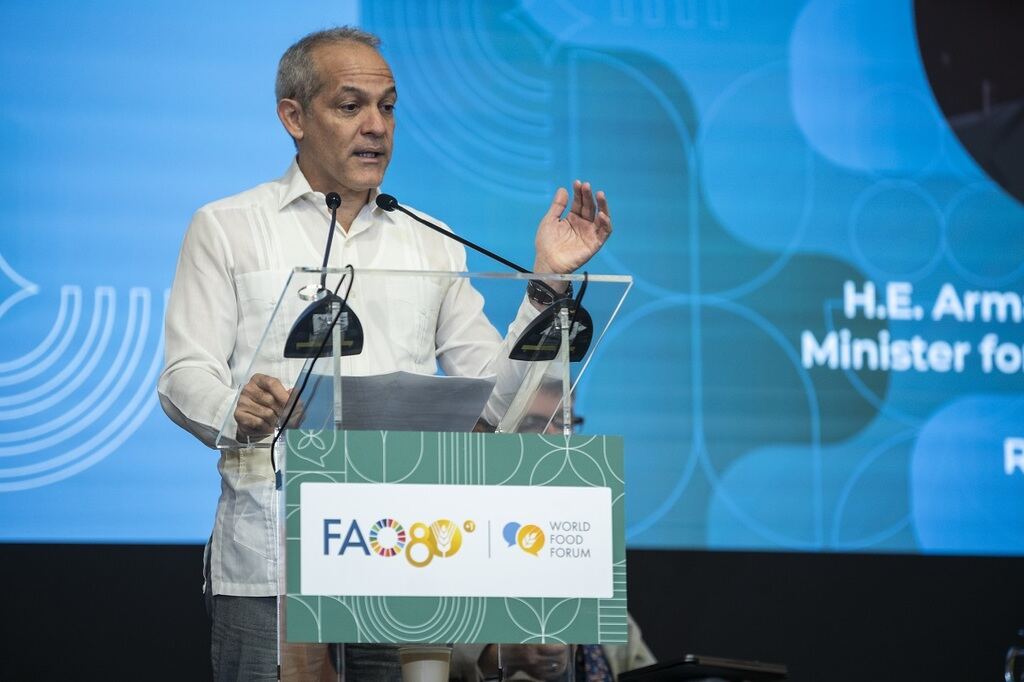
Cuba today seeks to expand international cooperation and diversify funding sources to turn its scientific capabilities into food production, Cuban Minister of Science, Technology, and Environment Armando Rodríguez Batista stated in Rome.
In an exclusive interview with Prensa Latina after participating in the World Food Forum 2026, the minister highlighted the importance of strengthening links between research centers, enterprises, and producers, as well as taking advantage of cooperation opportunities with the Food and Agriculture Organization of the United Nations (FAO) and scientific institutions of other countries.
What are the main obstacles to scientific results reaching farmers and agri-food enterprises?
In the legislative sphere we have made progress. A few years ago, talking about food production was practically equivalent to saying that the Ministry of Agriculture had to take care of it. Today there is a greater understanding that all sectors have responsibility in that task.
Legislation related to food and nutritional security identifies the functions of institutions, while economic transformations have diversified the actors that can participate in agriculture.
Conditions have also been created for research centers to transfer their knowledge in different ways. Some have transformed into enterprises, and mechanisms exist that allow contracts to be established with other entities to transfer technologies and charge for those services.
Many times the production of knowledge is associated only with entities that are subordinate to the sector, which is a rather narrow view of the matter.
The challenge is for researchers and their institutions to be more proactive in seeking users for their results. Science needs funding, and this cannot come exclusively from the state budget.
In other countries there are models that combine government resources, competitive research projects, and services provided by the scientific centers themselves. Cuba also promotes that diversification, which is important to sustain research and facilitate the application of its results.
What role do business innovation and new forms of financing play in that process?
The General Law on Science, Technology, and Innovation includes incentives for researchers and scientific institutions to apply their results, transfer knowledge to enterprises, and promote business innovation.
It is also important to develop a high-technology business fabric and expand science and technology parks, as well as interface enterprises linked to universities.
These structures can help the knowledge generated by basic and applied science move toward new institutions capable of producing goods and services.
In agriculture, that process is particularly complex because numerous economic actors with different forms of organization intervene. The introduction of a new crop variety, for example, requires the participation of producers, enterprises, scientific institutions, and authorities.
That is why, in addition to maintaining the rigor of research, our centers need to strengthen their economic and organizational management capacities to establish links with those who can make use of the knowledge.
What cooperation and investment opportunities did Cuba present during the World Food Forum?
Our Minister of Agriculture, Ydael Pérez Brito, presented two proposals related to the honey and coffee value chains. They are productions with potential for Cuba and that can be attractive from a scientific standpoint, among other reasons for their link to organic practices and environmental protection.
We also consider that the carbon market can open possibilities to mobilize financing. Cuba has an important forested area and has information on emission reductions and carbon dioxide absorption, elements that can contribute to the development of initiatives in that sphere.
We recently approved a policy to intervene in the carbon market, which constitutes a diverse space with possibilities to contribute to the financing of projects.
Another field is agricultural biotechnology, where Cuba has developed its own technologies that contribute to national sovereignty.
Likewise, we want to strengthen our participation in initiatives related to mountains, given their importance for the country. Agricultural development in those territories must be carried out through sustainable practices that allow ecosystems to be protected and, at the same time, their productive possibilities to be harnessed.
The participation of women and rural communities is also an important component of that work and an area in which we can cooperate with the FAO.
How can international cooperation contribute to addressing Cuba's scientific and environmental challenges?
Cooperation allows the exchange of knowledge, the expansion of work networks, and the search for resources for projects that require continuity. Cuba has managed to access international funds aimed at addressing relevant problems of agriculture and the environment.
However, managing those resources requires preparation. Today it is not enough to master the scientific method and publish results; it is also necessary to know how to formulate projects, identify funding sources, and organize their execution.
Sometimes we work on projects that will begin to be executed several years later. That demands anticipation and specific capacities to prepare proposals that respond to national priorities and to the requirements of financing agencies.
During this visit to Italy we have also exchanged with the country's scientific institutions. We visited the National Agency for New Technologies, Energy, and Sustainable Economic Development (ENEA), with which we identified areas of common interest.
In addition, we learned about laboratories related to ionizing radiation and three-dimensional polymer printing, areas in which the Cuban scientific community also has experiences and knowledge to contribute.
Does developing science remain a priority for the Cuban State amid the current economic difficulties?
We continue to think about Cuba's development, and science has an important responsibility in that purpose. Energy limitations and the effects caused by the blockade do not eliminate the need to research or to seek solutions.
Añadir nuevo comentario