
Curse of Money: How Campaign Finance Shapes U.S. Politics
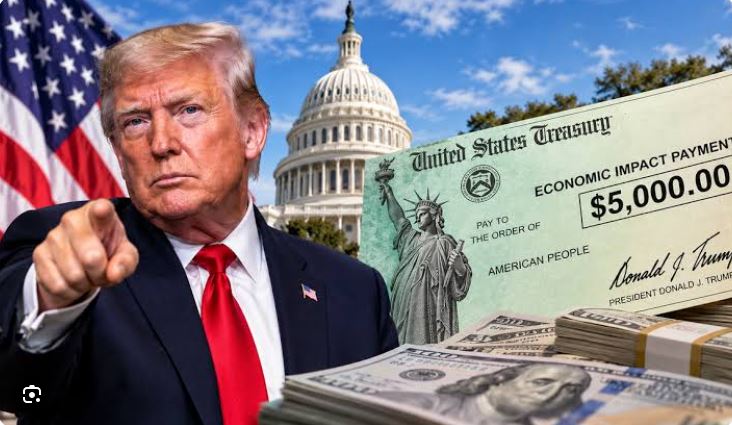
El “Money Honey” es indispensable en una sociedad como la norteamericana para afianzarse en el poder, con un Donald Trump que ofrece 5 000 dólares a cada votante estadounidense (sin importar su filiación) si resulta triunfador su partido ante el Demócrata.
The monetary arsenal of oil companies enriched by United States and Israeli aggression against Iran has been placed at the disposal of the Republican Party's campaign to prevent its Democratic rivals from winning the upcoming November midterm elections, confirming once again that "Money Honey" is essential in American society to consolidate power—with Donald Trump offering $5,000 to every American voter regardless of affiliation if his party triumphs over the Democrats.
It is not the first time we write about how, in this false democracy, an individual can only aspire to public office—whether city councilor or president—if they possess wealth or enjoy financial backing, entering into heavy commitments should they emerge victorious.
Furthermore, the American voter is motivated primarily by their wallet, ignoring the aggressive character of those who entice them with deceptive propaganda, as well as the daily crimes committed against smaller nations and defenseless populations.
However, the dominance of money has substantially intensified the campaign against Democrats, particularly as Trump's opponents warn that they lack sufficient funds for the November midterm elections—risking the loss of seats they could otherwise win despite facing what could be their best political landscape in more than a decade.
This tension has escalated as the president's political machinery and other Republican super PACs unleash a massive wave of spending across key House and Senate districts—an investment Democrats have been unable to match, fueling internal anxiety over limited financial resources as lawmakers and advisors fear ending up with a majority so thin that governing becomes virtually impossible.
Across House and Senate races nationwide, Republicans significantly outspent Democrats on advertising during the final weeks of the campaign, according to AdImpact data. Republicans reserved $682 million in ad buys through Election Day, compared to $491 million by Democrats.
"We need more funds," Julie Merz, executive director of the Democratic Congressional Campaign Committee, told CNN, adding that the party must fight to secure them, prompting lawmakers and governors to travel to New York and other fundraising hubs to request last-minute contributions while increasing pressure on major donors.
Senate Democrats, according to MSN, anticipate being outspent by their rivals in all competitive races this autumn, fearing that the recent influx of Republican cash could place seats like Iowa or Alaska out of reach, or give the GOP a genuine opportunity to win in New Hampshire. The Republican financial advantage is especially striking in the Texas Senate race, where the GOP is on track to outspend Democrats by more than an 8-to-1 ratio through Election Day.
In the House of Representatives, Minority Leader Hakeem Jeffries and his team are strongly pressing members to contribute more funds, even raising the possibility of withholding coveted committee assignments next year from lawmakers who fail to contribute.
The stakes for Jeffries are high. House Speaker Mike Johnson currently governs with a historically narrow majority, a mathematical reality that has complicated key GOP priorities, as a handful of members can effectively paralyze floor activity and derail Johnson's agenda.
"Unless more resources arrive to support House Democrats, we will end up losing seats we could have won," said Mike Smith, head of the primary House Democratic super PAC, to CNN.
In short, a lack of money risks costlier seats, undermining individual programs designed to benefit the public while increasing the danger that misleading propaganda will lead citizens to vote against their own security—particularly regarding public health, where Republicans seek to roll back coverage for over 90 million people enrolled under Obamacare, long viewed with apprehension by Trump.
Blinding Propaganda
In this system self-described as democratic, Republicans inject massive funds into races Democrats previously expected to win easily, overwhelming top-tier candidates like Chris Pappas in New Hampshire with sudden advertising surges.
New Hampshire Republicans reserved $24 million in ad space through Election Day compared to $15 million by Democrats—a substantial sum for a small state.
Even former North Carolina Governor Roy Cooper—a top Democratic fundraiser and standout figure in this election cycle—told Reuters that his biggest concern was taking the race for granted: "They have already directed nearly $100 million against us. They have bombarded us with negative and false ads since July, and the race is tightening just as we knew it would."
At one point this summer, House Democrats even considered abandoning vulnerable incumbents in Florida due to the state's expensive media markets, though they ultimately maintained support after internal polling showed better-than-expected numbers.
Some party members downplay the financial disparity, pointing out that the overall environment remains challenging for Republicans due to Trump's unpopularity and widespread public concern over the cost of living. The main question now is whether the sudden influx of Republican funds will stabilize GOP-leaning seats where Trump won by 10 points or more, ultimately defining the true size of the electoral battlefield in October.
"We will have the resources necessary to defend all our incumbents in competitive districts while ensuring we win enough seats to take back the House of Representatives and more," Jeffries told CNN last week. "Republicans are desperate right now. They have no choice but to try to dump tens of millions of dollars into House, Senate, and gubernatorial races."
Translated by Sergio A. Paneque Díaz / CubaSí Translation Staff
Añadir nuevo comentario