
Geopolitics: Are Old Alliances Sinking?
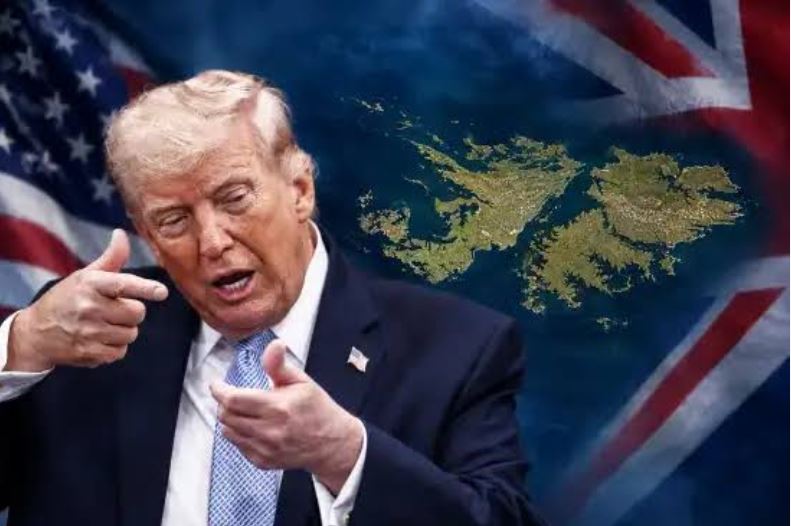
Geopolitics touches everything and turns it into gold, not in the sense of the famous Midas tale, but on a real level. The issues that seem paralyzed or that are resolved with express speed in international matters travel along the highways of the interests of the great powers. The most recent support from Zionist figures as well as Trump himself towards a resolution favorable to Argentina in the Malvinas case is not necessarily due to the fair application of the right of self-determination, but rather to a geopolitical reckoning: London did not agree to get involved in the Iran war. They want to make the British feel the cost in multiple ways. During his visit to Ireland, the president of the United States himself was in favor of reunification with Ulster and this has given rise to contacts and movements for an alleged fragmentation of the United Kingdom. If anything has been clear in this new era, it’s the brutal pragmatism of Western leaders, particularly those in Washington.
London did not support the war against Iran, the European Union did the same. The result was a disunited NATO. The system of alliances favorable to the Americans has broken down in this period of readjustments of areas of influence. The message is clear: we are not going to act by consensus, if you are not on our side we will hurt you. Kissinger's old axiom is fulfilled: it is bad to be enemies of the United States, but terrible to be friends. And the United Kingdom was the unconditional strategic ally until now. The geopolitics of force and the restitution of zones of influence operates through vectors of power. If London does not fall in line, then it is made to lose influence where it depends on US support. And the Malvinas case not only generates an earthquake externally for the British, but also reactivates internal debates about the status of the kingdoms that make up the old empire.
England can be left alone, it has enough financial and economic weight to remain a global power if the union flag is replaced by that of St. George. Scotland, on the other hand, depends on a tourism industry and some exports that would not exactly give it a high status within the European Union. Wales is an even smaller economy, whose industry almost disappeared after the change of industrial matrix in the 20th century. Northern Ireland can unite with Ireland, but that would likely exacerbate the interfaith clashes that define the region. It’s not that simple, nor is the Malvinas issue. What to do with the current Malvinas who have been there for centuries? It seems that Washington's pragmatism can do everything and that the president's magic word is enough to mobilize hundreds of media outlets and bombastic headlines. Geopolitical realism is something else and casts its shadows where the conflicts are greatest. The point is that empires do not have friends, only alliances that change depending on the board and for the United States right now it is more advantageous to consolidate itself as the sole interlocutor for the countries in the south of its continent in the face of the Chinese avalanche. What happens to the vestiges of the British Empire is nothing more than a cultural note that is of no value to the rapacious interests of North American corporations. In any case, removing London from America responds to the Monroe Doctrine. He is one less competitor. We are not seeing a break in the US foreign policy spectrum, but rather a reaffirmation of it.
It’s one thing to clearly state that the Malvinas pass to Buenos Aires and another for that to happen. London represents for Trump—on the other hand—the ultraliberal globalist capital that has prevailed in recent decades. The City continues to govern to a large extent the power of money and its circulation and therefore the line of interests contrary to the industrial and nationalist growth agenda of Magaism. This does not mean that Trump is not a globalist, he is to the extent that he cannot escape the nature of the system to which he belongs. But London and the Democrats represent the policy of open borders, floating capital, speculative investment and gender cultural agenda that Trump deplores by concept. Therefore, the positioning of the United States operates in two ways and shows that geopolitics cannot be analyzed in a simple way, but rather from transnational power blocks.
How will this chapter of confrontation between old allies end?
Surely among the issues that Trump will have to face if he loses the chambers will be his mistakes in foreign policy by betting on extreme isolationism that has questioned historical alliances. The medium-term cost of this action could be terrible for the United States. It’s true that they need to consolidate themselves in their hemisphere as a superpower, but also that without the system of allies after the Second World War, globalism supported by military bases and cooperation in global intelligence matters will collapse. In that sense, London is a key asset. The truth is that, since Brexit, the British have gone through one crisis after another and have not even consolidated a strong government that unifies internal criteria and offers a strong external position. The exhaustion of the old empire is the perfect clarion call for its North American ally to give it the coup de grace and share the leftovers of glory. However, we are talking about a former power and surely the United Kingdom has some secret up its sleeve that, whether in matters of intelligence or geopolitics, will know how to play against the pragmatism of its cousins beyond the sea.
If we should learn anything from this, it’s not to judge childishly or get carried away by the headlines. It's all a matter of following the drift of interests. London's position regarding Iran in the face of the November elections will decide much of what is currently speculation around the Malvinas or the fragmentation of the kingdom itself. There’s the key. These tensions, furthermore, have a correlation within the United States that will be revealed to the extent that the panorama changes after the legislative elections.
Translated by Amilkal Labañino / CubaSí Translation Staff
Añadir nuevo comentario