
Against the Blockade, the Shine of the Medals
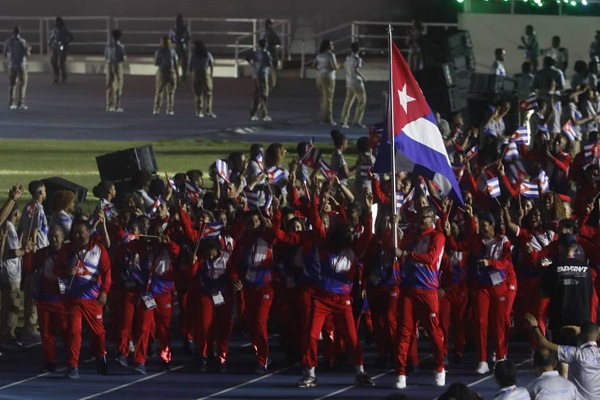
Foto: Roberto Morejón
When the world stands before the majestic mausoleum of Cuban sports, admiration for its exponents overflows, revering one of the greatest achievements of a nation. Part of the world remains astonished or amazed, unable to explain how a Mijain López or an Omara Durand emerges, or how Cuba today occupies 16th place in the all-time Olympic medal standings from 1896 to 2024.
It is no wonder—the small Island has spent more than 60 years resisting and overcoming an economic, commercial, and financial blockade by the most powerful empire humanity has ever known.
Since 1962, that U.S. policy of asphyxiation, designed to starve a people into hunger and desperation, has cost Cuba $178,700,500,000. Between March 1 of last year and February 28 of this year alone, according to Cuba's report on the damages of the economic, commercial, and financial blockade imposed by the United States, the figure reached $8,083,300,000.
According to Bruno Rodríguez Parrilla, member of the Political Bureau and Minister of Foreign Affairs, who presented the document, this is a record figure and 7% higher than that reported in the previous report.
The Cuban Sports System is once again impacted by this genocidal action of U.S. rulers. In that same period, damages reached $36,271,620, cutting into the processes of preparation, training, and athlete care, as well as grassroots talent development.
A brief look at these impacts finds the Cubadeportes enterprise affected by the blockade's financial persecution of transactions. One of the hardest-hit areas is the payment for hiring athletes abroad. This phenomenon also encourages, and consequently increases, the departure of Cuban athletes and coaches seeking other economic horizons.
For example, the abandonment of mission, both by athletes and contracted coaches, has created a loss of $3,600, as planned services agreed upon for a period of time are left unbilled. These figures do not include the cost of education received or sports preparation.
The same occurs with the provisioning of athletic delegations. In 2025, the impossibility of acquiring the necessary uniforms for Cuban contingents to the Pan American Games in Chile and the Junior Pan American Games in Asunción was another strike from the U.S. empire's economic war against Cuba.
The blockade not only prohibits but also generates a cascade of extra costs. Among them: seeking suppliers in more distant markets (Asia or Europe), which raises costs for freight, insurance, and goods; finding intermediaries due to banks' refusal to operate for fear of U.S. sanctions, who charge high commissions for their services. The result: costs escalate uncontrollably.
So much so that last year, to cover the demands of Cuban delegations to those two Pan American competitions, $279,868 had to be spent. Without such restrictions, the cost would have been approximately 40% less.
In 2025 alone, in equipment and supplies alone, the impact of the blockade reached $255,950. But the economic damages to the Cuban Sports System do not end there.
During this period, due to visa denials or non-granting of visas to 61 individuals, the loss amounted to $11,285. Although not always accompanied by numerical values, even when they are always present to help mitigate the damage, there are actions that demonstrate the discriminatory and politically motivated character of the cruel and arrogant U.S. posture toward Cuba.
The impossibility of receiving donations directly from institutions, firms, or brands because they are of U.S. origin, have more than 10% U.S. components, or because their shipment to Cuba touches a U.S. port, is one of the forms of attack on Cuban sports.
Also among them are limitations on sports exchange between both countries, as well as in the scientific-technical sphere; the prohibition of participating in certain international calendar events held in the U.S.; excessive and xenophobic controls on our delegations at U.S. Immigration and Customs; and smear campaigns on social networks aimed at denying or removing host status for events.
As of February 28 of this year, difficulties in fulfilling events and training bases abroad cost Cuban sports $206,415.
The cruel U.S. policy against the Greater Antilles affects Sports for All and, consequently, its expression in the community; it deteriorates the services of the Institute of Sports Medicine, leaving it without supplies for athlete treatment, and even deprives the population of that institution's procedures. It also damages the training and development of professionals forged in the sports education system. Examples include the prohibition of access to technology and knowledge-sharing platforms. It also hinders computerization and leaves athletes and coaches without access to modern training methods available on websites blocked for Cuba.
All of the above, in the modern realm of high-performance sports, places Cuban athletes and teams at a disadvantage in increasingly demanding competitive arenas.
That is why adjectives are insufficient to describe the efforts of the delegations that represented the country at the recent XXV Central American and Caribbean Games in Santo Domingo and the Pan American Deaf Youth Games in Guayaquil. The 51 gold, 48 silver, and 55 bronze medals from the first maintained the objective of preserving third place by nation, while the team that competed in Ecuador conquered second place.
They suffered in their training the hardships that the blockade's impact causes the entire people, now in its cruelest form with the energy siege. They overcame power outages, transportation problems, lack of equipment and other resources. Their medals shine with resistance and resilience, but also with victory.
Añadir nuevo comentario