
Footprints of the Blockade on Cuban Tourism: Nearly 709,000 Fewer Visitors
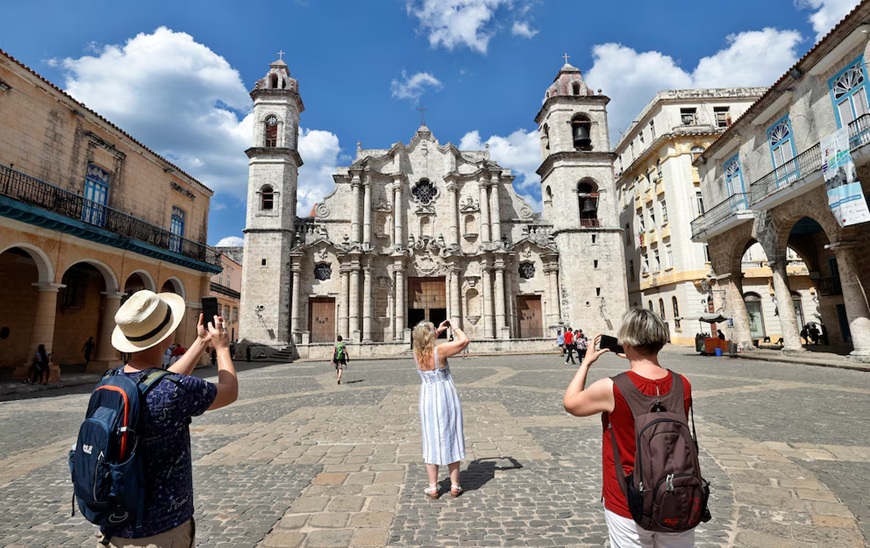
Foto: Ernesto Mastrascusa /EFE
The tightening of the U.S. economic blockade and other coercive measures continue to affect Cuba's tourism sector, one of the strategic pillars of the national economy, according to statistics from the National Office of Statistics and Information (ONEI) on traveler arrivals through July, which already register nearly 709,000 fewer visitors than in the same period of the previous year.
In the first seven months of the year, Cuba received 794,492 travelers, a figure that represents only 50.2 percent of what was recorded in the same span of 2025, meaning a decrease of 787,773 people in absolute terms; of that total, international visitors fell to 419,863, or 37.2 percent, equivalent to 708,968 fewer.
The ONEI report, cited by official media, specifies that the most notable decline came from the Canadian market, with 350,737 fewer international visitors, followed by the Cuban community abroad (52,021), the Russian Federation (50,816), and the United States (39,944)—figures that confirm the downward trend experienced by Cuba's tourism sector amid external aggressions.
A traveler is defined as any person moving between two or more countries, while an international visitor is one who visits a country other than their habitual residence for a period not exceeding one year, whose primary purpose is leisure, recreation, business, or other personal reasons, excluding remunerated activity in the visited country.
The impact on tourism has remained a priority in the U.S. government's blockade policy against Cuba; official sources have noted that, were it not for the criminal economic siege and the prohibition on U.S. nationals traveling as tourists to the island, Cuba could receive between one and two million visitors from that country each year, with estimated revenue exceeding $2.41 billion.
Cuba's tourism sector, despite the adversities, maintains its capacity for attraction, but the blockade limits development opportunities and affects the inflow of foreign currency essential for the national economy.
In the current context, with Cuba's inclusion on the list of countries allegedly sponsoring terrorism and the activation of Title III of the Helms-Burton Act, aggressions have intensified, directly impacting traveler flows.
Despite this scenario, Cuba maintains its strategy of market diversification and tourism promotion, though the numbers reveal the real cost of a policy that has been condemned by the international community and affects vital sectors such as tourism, health, and the food supply of the Cuban people.
Añadir nuevo comentario