
Abel Prieto: “We Have Not Created the Antidote to That Cultural Machinery”
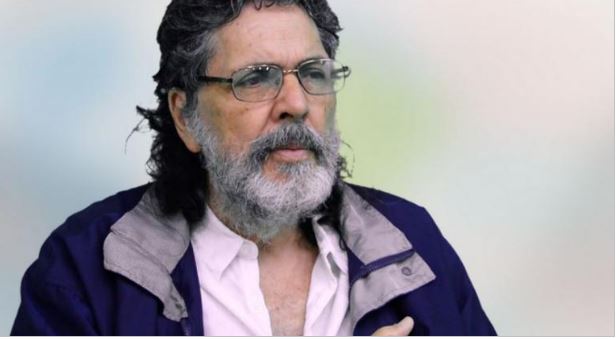
El narrador y ensayista cubano Abel Prieto
In 2020, Cuba Sí partnered with the Videos Cuba Hoy project to produce a series of interviews with Cuban intellectual Abel Prieto. In those dialogues, the also president of Casa de las Américas shared his assessments on the challenges of the cultural war in the contemporary world. Given the continued relevance of his reflections on the far-right offensive, we now revisit his analysis on the role of culture in defending emancipation.
The cultural war today remains a reality. In that interview series, Abel Prieto warned that we still face the paradox of humble sectors voting for candidates who represent their class enemies. That paradox is no accident. It is, to a large extent, the result of a media machinery that succeeds in inverting the consciousness of the most exploited. This paves the way for right-wing elites to rise to power—as has occurred in recent months in several Latin American and Caribbean countries—elites that do little or nothing to favor the interests of the vast majorities.
Prieto insisted that this is not merely about electoral propaganda during campaign periods. The cultural war touches the way each individual relates to themselves, to their environment, and to their destiny. Promising immediate material improvements can deceive, but what is decisive—and most harmful—is how a worldview is constructed that, over the long term, naturalizes inequality and legitimizes domination.
In recent years, the Cuban intellectual reflected, we have seen the rearticulation of a “tremendously racist, tremendously intolerant” neofascism. It is enough to observe the rise of “openly neo-Nazi parties that sit in the European Parliament and have strength in national parliaments” or the impact of figures like Donald Trump in the United States, Jair Bolsonaro in Brazil, or Javier Milei in Argentina to understand that the cultural battle is not something secondary, but a decisive front. It is there, in the cultural terrain, where hate speech is normalized and authoritarian projects are legitimized.
Another key aspect is the struggle over memory. “They are waging a battle over memory,” Abel Prieto emphasized. Historical distortion—such as attempts to minimize the Soviet Union’s role in the defeat of Nazism during World War II—is part of that cultural war. Thus, the cultural industry associated with imperialism has imposed the idea that D-Day—the landing of Western Allied forces at Normandy—was the decisive moment for victory against fascism, obscuring the sacrifice of approximately 27 million Soviets—those soldiers and civilians who died on the front lines, as Nazi prisoners, during bombings, from famine, or from disease during the conflict.
In that sense, the president of Casa de las Américas denounced in 2020 that humanity has been subjected to a “great fraud” regarding memory. That fraud not only erases leftist heroes and martyrs but also distorts the legacy of those who fought for emancipation. The right has built a powerful cultural apparatus, and “we have not created the antidote to that cultural machinery.”
Hence the need for an emancipatory culture. José Martí summed it up in a phrase: “To be cultured is the only way to be free.” Abel Prieto recalled Fidel Castro when he reaffirmed the apostle of Cuban independence’s idea: “Without culture, there is no freedom possible.” Because for this Caribbean essayist, culture is not merely entertainment or ornament; it must “be organically part of the backbone of any serious debate about the future of the world.” Without it, material gains achieved during progressive processes can evaporate under the influence of bourgeois propaganda.
He who was twice Minister of Culture stated that in the Greater Antilles, the cultural battle had a clear face: the Commander in Chief. Abel Prieto recalled how, within just months of the Revolution’s triumph, Fidel achieved, “by doing concrete things, that people saw that social equality was possible, real participatory democracy, fighting against monopolies, against latifundia, redistributing land,” in a country marked by anticommunism imported from the United States. “And suddenly, when Fidel calls on the people to fight on the eve of the Bay of Pigs invasion, he calls them to socialism.”
In Abel Prieto’s perspective, the cultural goes beyond the political conjuncture. He identifies it in Cuban revolutionary praxis itself: “What Fidel, Raúl, the Centennial Generation, and the revolutionary forces that overthrew Batista achieved was precisely to gradually sow another culture.”
Thirty years after the Rebel Army’s victory, when so-called real socialism collapsed in Eastern Europe and the Soviet Union disintegrated, Cuba stood alone in a world where the market seemed destined to be “the great monarch.” In that context, cultural mobilization was decisive in sustaining resistance. Culture became a force of cohesion against neoliberal demagogy that equated market with freedom.
In the current scenario, where media manipulation has become a global instrument of power, it is an urgent task to assume culture as a space of resistance—capable of generating critical awareness and preventing common sense from being colonized by discourses of domination. The symbolic and meaning-based struggle, the defense of memory, and the construction of an emancipatory culture are indispensable to ensure that peoples do not end up voting against themselves, trapped in the logic of their class enemies. The cultural battle, as Abel Prieto warned, is consubstantial to any project that aspires to a future of justice and dignity.
Translated by Sergio A. Paneque Díaz / CubaSí Translation Staff
Añadir nuevo comentario