
Politico's Spies
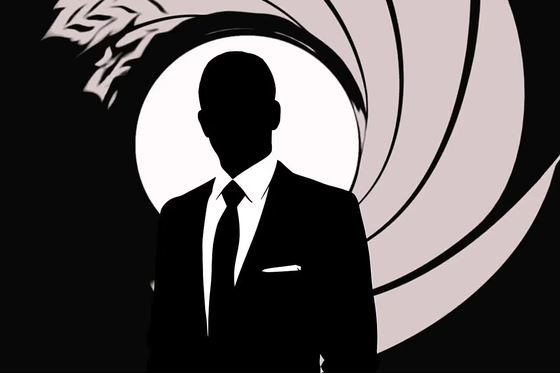
¿Súper espías a lo James Bond en La Habana?
Although it is not unique to U.S. media, addressing the always thorny and frankly debatable topic of sending spies to third countries is certainly very unusual, if not improbable, to be aired in the press. At most, a coverage might address a specific operation involving intelligence services once it has been completed, but even then, it remains a rare type of news.
Well, now the U.S. outlet Politico announces, with great fanfare, the deployment of several spies to Cuba to determine how to bring down the Revolution. Seeing is believing: the way it is written and the elements used seem straight out of the famous James Bond saga—a character inspired by the Serbian Duško Popov, a legendary British spy during the World Wars.
It may be recalled that Politico has previously shown interest in Cuba. Prior to this current publication, they addressed the matter in a consistently threatening posture, referring to the aggressive, violent, and overtly warlike ambitions of the current administration. In these articles, they replicated statements originating from the White House, such as coverage given to Trump's rhetoric about "taking" Cuba after "taking" Iran and, more recently, an extensive commentary warning of the preparation of military scenarios against the island linked to orders from the U.S. president.
The authors of the current article are journalists Dasha Burns, born in Ukraine in 1992, and Nahal Toosi, of Iranian origin. These birth details are mentioned only because they might explain a certain anti-Cuban bias in the language, or perhaps it is pure coincidence; who knows.
As mentioned, Politico—or Burns and Toosi—reports that one of the dozens of U.S. intelligence agencies has sent a battle-hardened contingent of spies to the island, the "capital of 21st-century communism," according to Mr. Rubio. The stated purpose is either to penetrate the upper echelons of the Cuban government or, ultimately, to incite some form of mutiny to overthrow it.
When reading these types of "investigative reports," one truly does not know whether to laugh or cry. Imagine that seasoned organizers of covert operations—always complex and dangerous for those on the ground—suddenly discover that their efforts are calmly announced in the press as if they were just another routine commercial or cultural operation.
Evidently, the first consequence is that these operations cease to be covert; in other words, they are exposed to public opinion. Were it not for the gravity of the situation, one could joke that even the security and protection services of the Republic of Cuba might issue a statement of gratitude to Politico for the early warning.
This peculiar media modus operandi is actually not funny at all, and it is not the first time it has occurred under the current Trump administration. It should be recalled when Trump, on October 15, 2025, casually asserted that he had authorized the CIA to step up its infiltration efforts and eventual sabotage in Venezuela following his well-known terrorist style. As is known, this was part of psychological warfare operations, which remains the only plausible explanation for understanding such an announcement.
Now, through Politico, under the signatures of the Ukrainian-born and Iranian-born journalists converted to the American "religion," recourse is made to this type of pressure or blackmail. The article in question notes that sources were used whose anonymity must be respected—a phrase that is also often interpreted to mean that such sources are fabricated. It adds that the "discovered" operation (insisting that this is the antonym of covert) will also explore the "political environment in Cuba," which is typically done as a prelude to military action.
This last element—the "tactical move," as they call it, prior to armed aggression—is strictly speaking the most significant subliminal message of the article. It fits perfectly into this type of psychological hostility, similar to that employed against Caracas by the occupant of the White House on October 15 of last year. One must not forget that for the Empire, it is a demonstrated necessity to maintain this type of pressure on Cuban authorities and the population, compounding the hardships daily caused by the cruel blockade imposed by Mr. Rubio.
However, the matter reveals other facets that demonstrate how the issue of Cuba remains contradictory, unresolved, and far from defined regarding how Washington might act if the epic resistance of the Cuban Revolution and its people persists despite relentless efforts to dismantle it. In this sense, it resembles, with its own specificities, the alarm raised by the Pentagon's top command through an "internal" email pleading for new ideas because those available have failed to subdue the Iranians.
It can also be added that once again, driven by hyper-steroid arrogance as has been described so often, U.S. authorities arrogate to themselves the right to intervene in the internal affairs of a sovereign nation.
Consider what the article suggests: recruiting Cuban leaders to betray their colleagues, their families, and their country for a little money. And if that fails, seeking out some lumpen or an intellectual—both "in need" of an American visa—to subvert the order.
In other words, Politico is explaining that any "rebellion" by Cubans against their government is neither authentic nor justified, but a pure subversively manufactured construct. On this perspective as well, one must thank Politico and the former Ukrainian and former Iranian journalists for such candor; surely they have firsthand knowledge of how these types of interference policies have functioned in their respective countries of origin.
The article mentions in passing—probably because the ability to decontextualize news has its own limits—that this issue is preceded by a genocidal increase (though that is not the word they use) in the asphyxiation of Cubans residing on the island, accompanied by a narrative "made in" the State Department that laments Cuban capabilities to "spy" on the United States.
Interesting. With this publication by Politico, Mr. Rubio is left looking ridiculous—a state already visible, for instance, since he began wearing oversized shoes on Trump's orders. It turns out he has constructed a narrative about Cuban threats, yet the article in question shows that this is precisely what his own government is doing, likely under the supervision of Secretary Rubio himself, who is also an executive in the empire's security affairs.
It is unclear whether Politico's intent was to leave Mr. Rubio in such regrettable evidence as he fails in his attempt to portray the United States as a victim when it is the actual victimizer. Based on what the article states, it is only logical for Cuba to retaliate should Secretary Rubio's tale be accepted. The right to self-defense is as ancient as the human species and is thoroughly enshrined in international law.
Toosi and Burns highlight another objective of the so-called "increase of intelligence resources in Cuba" (quoted directly from the article) by the Trump administration. They report it is an attempt to pressure "the country's communist regime to reform or fall from power." They presume that super-spies will achieve such a "feat." Expecting the "communist regime to leave power" through the actions of a few super James Bonds is so elementary and absurd that it renders the article cartoonish once again. To save the honor of the former Iranian and former Ukrainian journalists, one might argue these were strictly the ideas put forward by the aforementioned "anonymous sources."
Perhaps unintentionally, Politico calls into question another subversive action that caused the virtual closure of the CIA station in Havana during the first Trump administration, associated with the so-called Havana Syndrome, when "sinister sonic devices" allegedly drove CIA officers stationed at the local U.S. Embassy out of their minds. In those years, when the world was happier without knowing it, certain scruples were still maintained at the State Department, whose reports based on "scientific investigations" cleared Cuban authorities of blame.
Mentioning the above is relevant because it correlates in some way with the event announced by Trump on October 15, 2025, when he admitted to reinforcing his intelligence personnel in Caracas partly because there was no U.S. embassy in that country.
Naturally, the cases are different: in Havana, there is Mr. Mike Hammer and his brave officials, but perhaps Politico learned that the CIA cadre in Havana is either severely depleted or not up to the task. To be intellectually honest, one must agree that the assignment given to the apparatus is colossal, and four or five spy officers are simply not enough. Bringing down the Revolution is no small task, as the "anonymous sources" surely confirmed to Toosi and Burns.
U.S. journalism, with notable exceptions, lives in its own bubble. Bound by the logic of the system, average journalists are trained to take for granted that the system is infallible, generating revealed truths like a sausage factory; anyone who dislikes it is free to move elsewhere.
Worse yet, according to scholars of this imperial mega-media conglomerate, journalists routinely align when international topics are concerned. Naturally, they criticize—more or less mildly—the foreign policy of the administration in power, especially when a situation becomes overtly unpopular, such as aggression against Iran or Cuba. Thus, that is what Politico is doing: aligning with the objectives of annihilating the Cuban emancipatory project.
In summary, one must tell the former Iranian and former Ukrainian journalists that it does not matter how many spies are sent from the U.S. Viewed strategically, it serves as a contribution to increasing the proven effectiveness of Cuba's security services. If the article intended to intimidate anyone on the island, they had better find another target, as "one more stripe on the tiger does not make it more violent." Finally, the spies in question should reinforce their counter-checking and self-protection measures, as they have been exposed by Politico, which, to conclude this James Bond-style story, should also publish the first and last names of these super-spies once Cuba reveals them. Things will be seen.
Translated by Sergio A. Paneque Díaz / CubaSí Translation Staff
Añadir nuevo comentario