
Cuba and Mexico, at the Forefront of the Central American and Caribbean Games
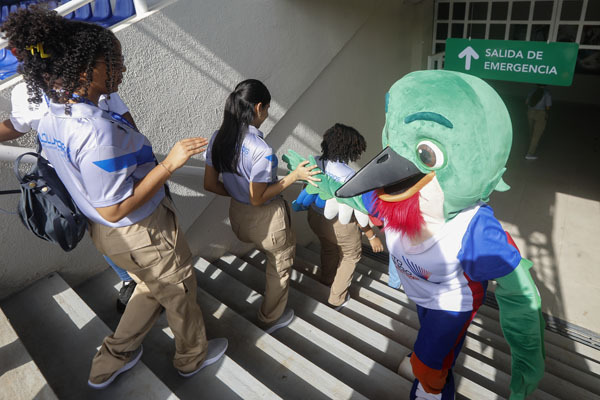
Foto: Roberto Morejón
For the third time, a city in the Dominican Republic will host the Central American and Caribbean Games. Santo Domingo organized the 12th edition in 1974, and Santiago de los Caballeros hosted the 15th in 1986.
Today, the beautiful capital of Quisqueya once again hosts this multi-sport and cultural festival for its 25th edition, which also marks the centennial of these competitions.
These Games originated in Mexico City on the initiative of that country's Olympic Committee, which formalized its proposal following the Paris 1924 Olympic Games. The goal behind the idea was that holding a competition of this kind among regional nations would raise their overall athletic caliber.
Cuba and Guatemala supported the project and, alongside the host nation, launched this journey on October 12, 1926, with competitions across seven sports and 269 participating athletes. Both the inaugural edition and the subsequent two—Havana 1930 and El Salvador 1935—were named the Central American Games until adoption of the current title during the fourth edition in Panama City in 1938.
From 1926 to the present day, 24 editions have taken place, featuring 37 national delegations across 17 host cities in ten countries. Only two territories have hosted four times: Mexico (1926, 1954, 1990, and 2014) and Colombia (1946, 1978, 2006, and 2018).
A trio of countries has hosted three times: El Salvador (1935, 2002, and 2023), the Dominican Republic (1974, 1986, and now 2026), and Puerto Rico (1966, 1993, and 2010). Panama (1938 and 1970), Venezuela (1959 and 1998), and Cuba (1930 and 1982) have hosted twice; meanwhile, Jamaica (1962) and Guatemala (1950) have hosted once.
Throughout this long history, only Cuba and Mexico—with 12 top-spot finishes each—have stood atop the overall medal table. Unsurprisingly, both flags lead the historic medal tally for the Games; however, despite missing three editions (Caracas 1959, San Salvador 2002, and Mayagüez 2010), Cuba remains in first place overall.
If Cuba—which enters Santo Domingo on July 24 with 1,928 gold medals—secures 72 additional gold titles, it will become the first nation to reach 2,000 first-place finishes in the history of these Games.
Regarding medals, 34 of the 37 nations that have historically participated have reached the podium at least once.
In these 100 years of history, 28 delegations have won gold medals, with 17 holding more than ten titles. However, only 14 have surpassed 20 gold awards, and just 11 possess more than 50 gold accolades.
Far fewer have broken the 100-victory threshold, with only eight achieving that milestone, while the elite tier of over 500 victories is occupied by an exclusive group of four nations.
The Cuban and Mexican delegations are by far the most decorated. The Caribbean nation currently holds 1,928 titles in its showcase, while Mexico holds 1,523; they are followed by Colombia with 617 first-place finishes and Venezuela with 596.
Añadir nuevo comentario