
US Continues Bombing in Southern Iran, and Iran Responds by Attacking Launchers in Kuwait
Amid conflicting threats and statements regarding the Strait of Hormuz, where traffic has been reduced almost to zero, U.S. attacks in southern Iran continue, raising fears of a broader escalation
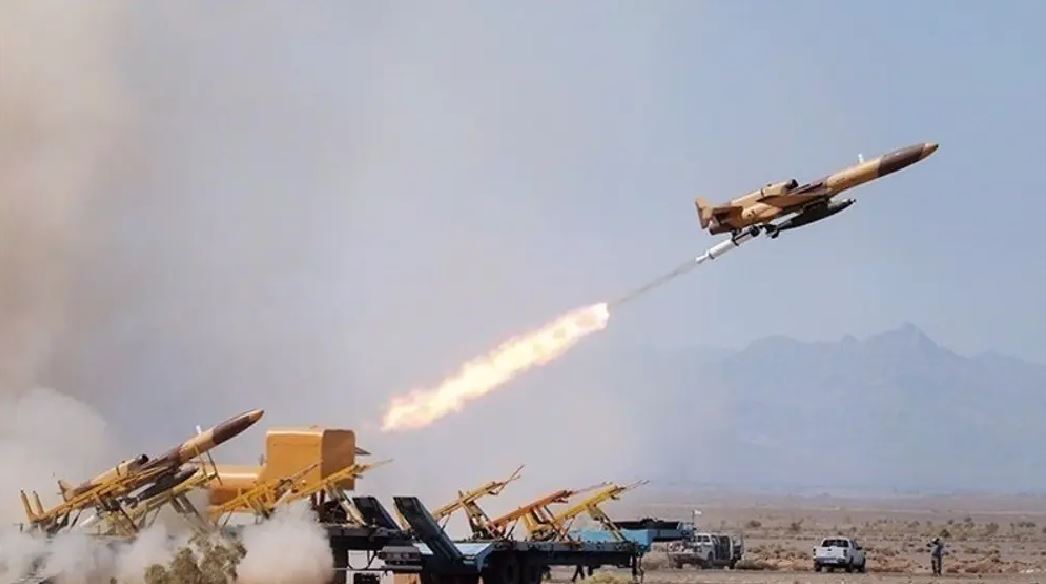
The Aerospace Force of Iran's Islamic Revolutionary Guard Corps (IRGC) reported that on Sunday night (local time), it utilized drones to attack and destroy several U.S. HIMARS missile launch platforms at an American base in Kuwait, which were reportedly prepared to strike Iranian territory
This wave followed a prior operation in which the IRGC used missiles and drones to strike logistical support centers and replenishment platforms for U.S. aircraft carriers at the Port of Duqm in Oman, alongside Pentagon military installations in Jordan, Kuwait, and Bahrain
This Sunday, Iran reported that “between 10 and 11 enemy projectiles” targeted Qeshm Island
In a statement, the IRGC stated that its ballistic missiles struck the strategic U.S. Al Udeid Air Base in Qatar, destroying its fighter jet maintenance and repair center as well as its command and control center
The Iranian armed body further reported that it used ballistic missiles to destroy the command and control center as well as the MQ-9 drone hangars at the U.S. Prince Hassan Air Base in Jordan
U.S. Aerial Rounds Against Iran Increase, Hitting Military and Civilian Targets
Amid a 60-day negotiation period agreed upon after the signing of the Islamabad Memorandum of Understanding on June 17, the rounds of U.S. airstrikes against Iran, which began on Tuesday, have escalated this week
According to press reports, Iran's electrical grid has sustained severe damage from U.S. strikes in recent days
Several days of U.S. military strikes across Iran have marked the most intense rounds of bombardment since both sides reached the memorandum
U.S. fighter jets and warships have hit hundreds of military and civilian targets in nearly a week of attacks, with Iranian authorities reporting strikes in at least 10 provinces, primarily in southern Iran near the strategic Strait of Hormuz
Parallel to the start of the escalation, the U.S. Department of the Treasury's Office of Foreign Assets Control revoked temporary waivers on the sale of Iranian oil this past Tuesday, thereby withdrawing the relief granted to Tehran under the framework of understanding reached
This Sunday, the FARS agency pointed out that the day's retaliations against U.S. military assets in Bahrain, Jordan, Qatar, Kuwait, and Oman carry the message that “Iran is ready to expand the magnitude of the conflict,” while Iran Observer reported that one of the U.S. airstrikes had hit a building in the vicinity of the Bushehr nuclear power plant, where attacks were previously recorded during the joint U.S.-Israeli aggression between February 28 and April 8
On Wednesday, as news emerged of fresh U.S. attacks against southern Iran and the Persian nation denounced that the U.S. had “openly violated” the ceasefire and “trampled” on the Islamabad Memorandum of Understanding, Iran's Khatam al-Anbiya Central Headquarters declared that “the source of any support to the aggressor U.S. military to violate the sovereignty and territory of Islamic Iran will be a legitimate target for the armed forces.”
Contradictions, Cross-Statements, Threats, and Fear of a Return to Open War
U.S. President Donald Trump declared to the television channel NBC News that the Strait of Hormuz remains open to commercial traffic despite Iran announcing its closure on Saturday night
“Last night we bombed the hell out of them. They are very, very evil and sick people,” the head of the White House said this Sunday
Those assertions have only served to increase uncertainty surrounding the strategic waterway, where traffic had begun to recover gradually in the days following the signing of the Islamabad Memorandum, and they clash with declarations from Iranian authorities and the reality on the ground
The Persian Gulf Strait Authority (PGSA) announced this Sunday that, following the recent U.S. attacks against Iran, passage through the Strait of Hormuz is not possible
“We inform all esteemed applicants: due to recent illegal movements by United States military forces in the region, passage through the Strait of Hormuz is currently not possible,” the body created by Iran to manage transit through the strait stated on X
It clarified that maritime traffic will remain suspended until stability and calm are restored to the area
On Wednesday, the Khatam al-Anbiya Central Headquarters reiterated that the only safe route for commercial ships and tankers in Hormuz is the route designated by Iran, and that Tehran will not permit any interference in the management of the strait
The IRGC Navy has warned that U.S. attempts to establish independent maritime routes and escort vessels in Hormuz will undermine regional security arrangements
The warning followed U.S. attempts in recent days to establish an alternative maritime route through the southern part of the Strait of Hormuz and to escort vessels independently of Iran's security arrangements
Regarding the reality on the ground, reports from consultancies and specialized services such as Kpler and Lloyd’s List indicate a decline in the number of vessels transiting the strait
Iran has denounced that the U.S. attacks violate the memorandum, specifically clause 1, which established the cessation of military operations on all fronts, and that the revocation of waivers on Iranian oil sales ignores what was agreed upon
Regarding the management of the Strait of Hormuz, the memorandum provided for a joint management mechanism between Iran and Oman, as coastal states, for the maintenance of security and the regulation of navigation along that waterway
U.S. attacks on Iranian soil, Iran's retaliations against U.S. military bases in other West Asian states from which the attacks originate, statements from several of those states warning that they reserve the right to respond, and constant statements from Israel favoring the resumption of open hostilities have heightened fears of a return to war
While the mediator, Pakistan, called for restraint and a return to dialogue, UN Secretary-General António Guterres stated he was “deeply concerned” and affirmed that the attacks “must all cease,” and Pope Leo XIV warned of the “winds of war” that are “sowing violence, terror, and death,” renewing his hope “that we persevere on the path of dialogue, encounter, and diplomacy” as the “only path capable of leading to a just and lasting peace.”
Añadir nuevo comentario