
Mexico Under the CIA's Shadow: Sheinbaum Faces a Silent Enemy
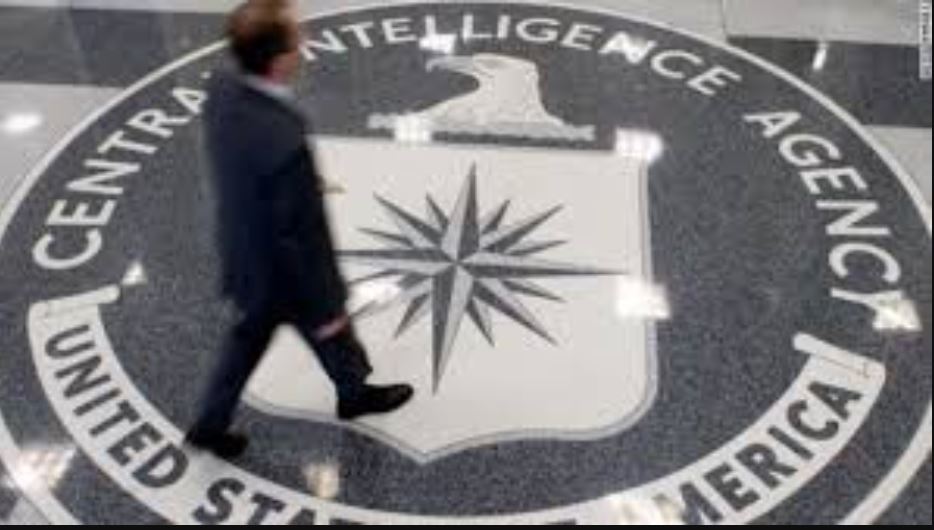
Agencia Central de Inteligencia CIA
Amid the football frenzy created by Mexico's initial victories in the World Cup, President Claudia Sheinbaum is not losing track of confirmed movements by the U.S. Central Intelligence Agency, which has introduced several of its agents into Aztec territory without official permission, under the pretext of combating drug cartels.
Paradoxically, these cartels continue to receive weapons from the United States, whose president expects the Mexican leader to give his troops free rein to enter the country to supposedly fight the mafia groups—but without cutting ties with those who hold power on U.S. soil.
The CIA has always carried out its activities under the protection of previous governments aligned with the U.S. yoke, hence its unprecedented growth. Before the progressive governments of Andrés Manuel López Obrador and Claudia Sheinbaum, the CIA did as it pleased anywhere in Mexican territory, murdering people who hindered its espionage and subversion work in service of corrupt regimes.
Among the most notable cases is that of Manuel Buendía, shot to death on May 28, 1984, in Zitácuaro, Michoacán, at 38 years of age. His column "Red Privada" published in Mexico City's Excélsior newspaper was reproduced by about 60 Mexican dailies, making him the most influential journalist in Mexico's print media landscape in the second half of the 20th century. The main topics Buendía addressed in his column were the CIA's presence in Mexico, the activities of the Mexican far right, drug trafficking, and corruption.
In his final piece, this heroic journalist had the perceptive insight that it was inevitable that an official relationship existed between the CIA and its Mexican counterpart. "But," he added, "the CIA operates on two levels. And what happens on the level open to Mexican officials is the least interesting."
At that time, the CIA had only two floors on Melchor Ocampo Street in Mexico City. Today, thanks to Israeli money and Chihuahua Governor Maru Campos, it boasts a hyper-intelligent 21-story tower financed by Seguritech, erected in downtown Ciudad Juárez at a cost of $250 million.
Like so many others, Buendía's murder was never fully clarified. The government in power blamed "organized crime" —a euphemism corporate media use ad nauseam, but which serves to silence the complicity between government security agencies, far-right groups, conservatives, drug traffickers, and the silent activity of the CIA.
A few months later, a naive DEA agent, Enrique "Kiki" Camarena, exposed to his superiors the U.S. government's collaboration with the now-defunct Guadalajara Cartel in the import and transit of hard drugs from Colombia to the United States via Mexico. That sealed his fate. In February 1985, leaving the U.S. consulate in Guadalajara, in broad daylight, Camarena was intercepted, kidnapped, and murdered after long torture sessions.
Later, following the 2006 electoral fraud of Felipe Calderón and the National Action Party, Mexico and the U.S. signed a bilateral agreement to train Mexican security forces to combat drug trafficking, organized crime, and money laundering, providing equipment and technology. Subsequently, the illegal crossing and sale of over 2,000 high-caliber weapons into Mexico occurred, with the purpose of tracking them and dismantling cartel networks. Operation Fast and Furious ended in disaster. Sinaloa hitmen got hold of them, and Mexican soldiers kept dying.
In this regard, the newspaper La Jornada expressed that it was difficult to understand the Mexican government's insistence on maintaining a collaboration pact in crime-fighting and security with an unreliable partner like Washington.
In August 2013, a federal court in Jalisco ordered the immediate release of Caro Quintero. The legalistic argument was that he should have been tried in common jurisdiction, not federal. But in October of that year, Phil Jordan and Héctor Berrellez revealed to Proceso magazine and Fox News that the executor of Kiki Camarena was Félix Ismael Rodríguez—the infamous Cuban-American CIA agent who posed in a photo with Che Guevara shortly before Guevara was killed by Bolivian military personnel on October 9, 1967.
In short, there is much more, but we are confident that the Mexican president remains alert to such a treacherous and hidden enemy.
Translated by Sergio A. Paneque Díaz / CubaSí Translation Staff
Añadir nuevo comentario