
Summary of the Interview Granted by President Miguel Díaz-Canel to Journalist Roberto Cavada
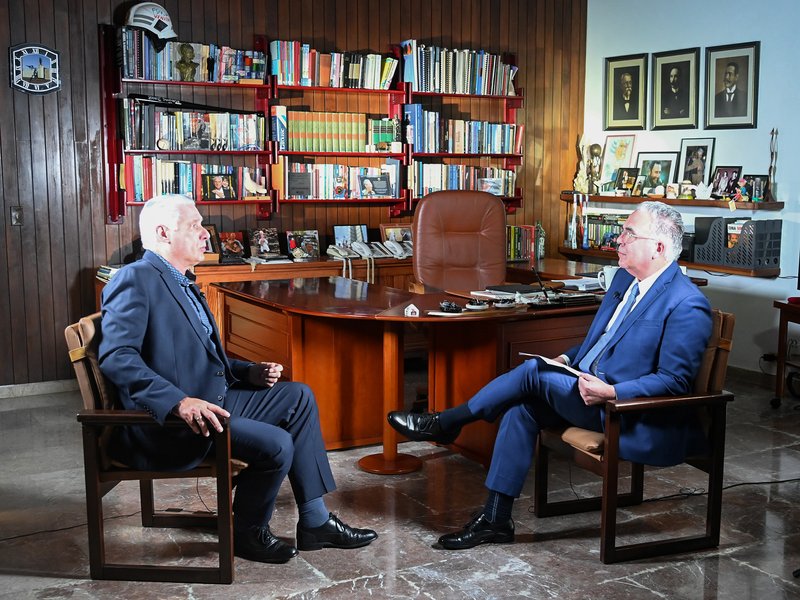
Entrevista concedida por el Presidente Díaz-Canel al periodista Roberto Cavada
President Miguel Díaz-Canel granted an extensive interview to Dominican journalist Roberto Cavada, in which he detailed the 176 economic and social transformation measures recently approved by Cuba's National Assembly. He explained that the reforms aim to update the socialist model by granting greater autonomy to municipalities and state enterprises, reducing ministries from 27 to 21, opening space for private and foreign investment, allowing direct imports and exports, and introducing market mechanisms alongside central planning—all while preserving universal and free health care and education as sacred conquests.
Díaz-Canel addressed the energy crisis, emphasizing that the U.S. energy blockade — which has prevented fuel imports for over six months — is the primary cause of blackouts, not technical failures. He detailed Cuba's energy transition strategy, including the installation of over 1,000 MW of solar capacity and progress in refining national crude oil. He dismissed the U.S. offer of $100 million in aid as insufficient and contradictory, noting that it excludes medicines and food and has not yet arrived.
Regarding U.S. relations, the President reiterated Cuba's willingness for dialogue on equal terms, without pressure or conditions on sovereignty, but expressed distrust given past U.S. actions during negotiations with Venezuela and Iran. He acknowledged the latent threat of military aggression but stressed Cuba's defensive preparation and commitment to peace.
On youth and emigration, he expressed confidence in Cuban youth, citing their leadership in science, innovation, and government, and emphasized the importance of education, identity, and critical thinking. He also highlighted the deep historical and cultural ties with the Dominican Republic and praised Dominican solidarity with Cuba.
Finally, reflecting on his legacy, Díaz-Canel stated he has never thought about how history will remember him, but rather focuses on serving the people, advancing the Revolution, and finding solutions to the country's challenges with courage and fidelity to socialist principles.
Translated by Sergio A. Paneque Díaz / CubaSí Translation Staff
Añadir nuevo comentario