
When the Ocean Gains Ground: A Threat to Cuban Coastal Settlements
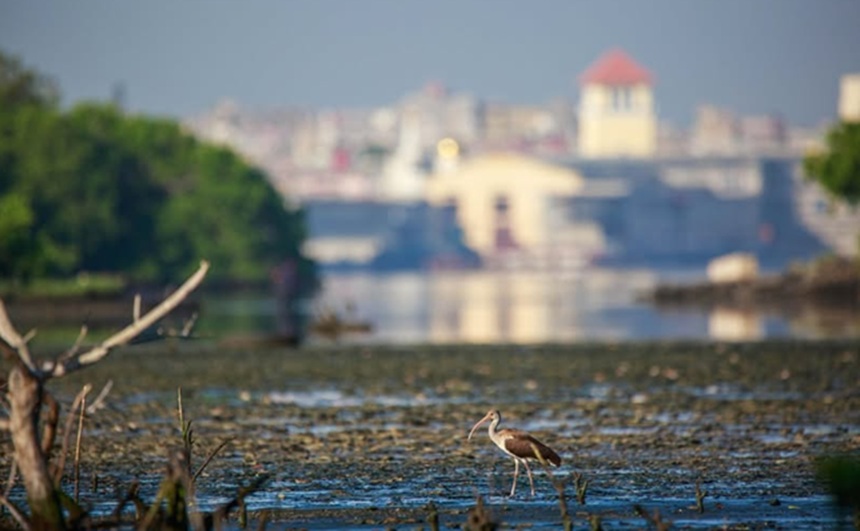
Foto: Naturaleza Secreta
The threat advances slowly, almost imperceptibly. It does not arrive with the violence of a hurricane or a sudden flash flood. However, it could forever transform the lives of many Cubans who currently reside by the sea.
This was one of the warnings Cuba brought to the Second Berlin Climate Mobility Forum, held on June 18 and 19, where the First Deputy Minister of Science, Technology, and Environment, Rudy Montero Mata, cautioned that 133 coastal settlements in the country will be partially or totally affected between the years 2050 and 2100.
As an archipelago located in the Caribbean, Cuba possesses thousands of miles of coastline exposed to rising sea levels, coastal erosion, saltwater intrusion, and the growing impact of extreme weather events.
According to Montero’s explanation in Berlin, the problem transcends the environmental dimension. Each community faces specific challenges related to housing, infrastructure, economic activities, local culture, and the permanence of populations that have built their identity alongside the sea for generations. Behind every statistic are families, schools, workplaces, and ways of life that could be forced to relocate or adapt to an increasingly hostile environment.
A Shared Global Challenge
The Cuban situation is part of a global phenomenon causing growing concern within the international community. The rise in mean sea level is accelerating and already affects coastal and island communities worldwide.
The United Nations warns that sea levels are rising at a rate unprecedented in at least the last three thousand years, and that its effects are already impacting livelihoods, food security, infrastructure, and human settlements across numerous coastal regions.
Furthermore, the International Organization for Migration (IOM) notes that extreme weather events and environmental degradation processes have become some of the primary drivers of human mobility globally, displacing hundreds of millions of people over recent decades.
From small island states in the Pacific to extensive coastal areas in Asia, Africa, and Latin America, the question is no longer whether climate change-related displacement will occur, but how to manage it in a safe, planned, and dignified manner.
Adapting to Remain
It was precisely to debate these alternatives that the Berlin Climate Mobility Forum was organized by the Robert Bosch Foundation and the Global Centre for Climate Mobility.
The meeting brought together government representatives, experts, and international organizations with the purpose of driving solutions for vulnerable populations and guaranteeing both the right to remain in their territories and dignified relocation processes when they become unavoidable.
In this context, Cuba defended the importance of science, innovation, and international cooperation to confront a problem that demands financial resources, technology, and long-term planning.
The warning presented in Berlin does not only speak to the future of Cuban coastlines. It also reflects a reality that is beginning to redefine the human map of the planet.
While the ocean continues to advance over beaches, wetlands, and inhabited areas, the challenge consists of protecting entire communities without waiting for the climate emergency to turn adaptation into a race against time. And this is a race in which vulnerable countries need—as Cuba has stressed in various international forums related to this subject—more financing, technology transfer, and cooperation to withstand the impacts of climate change.
In this largest of the Antilles, the integration of the climate dimension into local development planning is one of the significant contributions to implementing the actions outlined in the State Plan for Confronting Climate Change, known as Tarea Vida (Project Life).
Although the outlook is not encouraging, and is further obscured by the current pressures of the United States administration—which even jeopardize, among other efforts, the very implementation of Tarea Vida—“Cuba ratifies its willingness to face these challenges based on its national capacities and circumstances,” as the First Deputy Minister of CITMA affirmed days ago in Berlin.
Montero Mata also highlighted during the international meeting on climate mobility the resilience of the Cuban people and their readiness to build a country “more just, supportive, and in full harmony with the environment.”
Translated by Sergio A. Paneque Díaz / CubaSí Translation Staff
Añadir nuevo comentario