
Marie Antoinette: Victim or Villain?
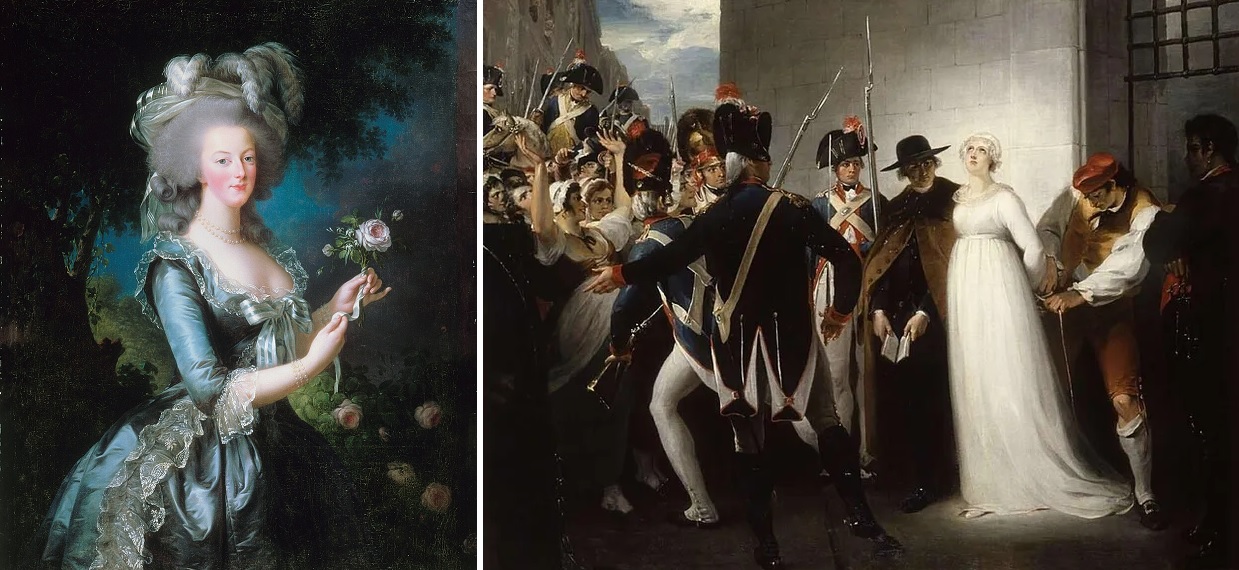
Marie Antoinette (Vienna, November 2, 1755-Paris, October 16, 1793) is one of the most exciting, controversial and debated figures in history. Some may remember with horror that phrase attributed to the queen of France—“if they don't have bread, let them eat cakes”—as a supreme symbol of aristocratic indifference to the suffering of the people. However, those who delve into the extraordinary biography dedicated to her by her compatriot Stefan Zweig (Vienna, Austria-Hungary; November 28, 1881–Petrópolis, Brazil; February 22, 1942) will discover that history is often far more complex than legend. Among other things, they will find elements to question whether that famous anecdote was actually uttered by her or whether it is one of the numerous fabrications that posterity has incorporated into her myth.
Zweig does not conceal the frivolity of a young aristocrat raised to live amidst ceremonies, parties, and privileges. Nor does he attempt to justify her inability to fully grasp the social, economic, and political tensions that were transforming France. But Marie Antoinette's problem, as presented by the Austrian writer, goes beyond her personal flaws. The queen ended up becoming a symbol, a visible representation of an entire system that was exhausted and inexorably heading toward collapse.
Therefore, more than just a historical figure, Marie Antoinette remains a battleground for conflicting interpretations.
For some, she is still a villain who embodied the excesses of a privileged class; for others, a victim of circumstance, swept along by historical forces she never understood. Zweig's perspective moves between these two extremes, avoiding simplistic judgments and constructing a portrait full of nuances, contradictions, and gray areas.
One of the greatest virtues of this biography is precisely its balance. With the narrative clarity that characterizes all of Stefan Zweig's work, the author avoids both easy condemnation and sentimental absolution. His Marie Antoinette is a real woman, with evident weaknesses and also with a human dimension that has often been buried under centuries of caricatures, political slogans, and superficial representations.
The pages dedicated to the splendor of Versailles, the extravagant celebrations, the lavish spending, and the squandering of resources while large segments of the population suffered from hunger possess extraordinary narrative power. Zweig reconstructs this world with such precision and dynamism that the reading unfolds with the pace of a novel. The reader witnesses the rise, glory, and fall of a historical figure whose life seems designed to illustrate the most dramatic paradoxes of an era.
This edition from Arte y Literatura offers an excellent opportunity to rediscover one of the great masters of modern biography. History buffs will find here an exceptional account, grounded in a profound understanding of historical processes and an admirable narrative skill. It’s a book for those who enjoy grand History, with a capital H, but also for those who know that the true meaning of events is often hidden in the details.
Translated by Amilkal Labañino / CubaSí Translation Staff
Añadir nuevo comentario