
Paz Formalizes Repression in Bolivia
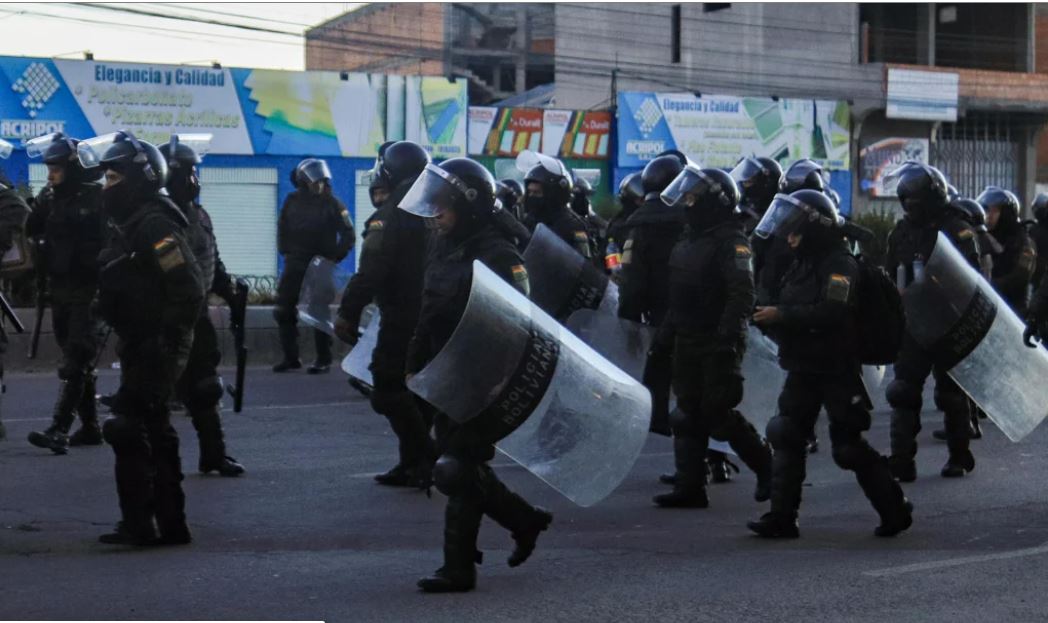
Thanks to the right-wing majority in the Chamber of Deputies, President Rodrigo Paz has free rein to repress the massive protests against his neoliberal policies, which were not included in his campaign promises to win an election marked by the extreme division of the left, which paved the way for his victory.
The Law Regulating States of Emergency paves the way for all kinds of attacks against those who have been blocking highways for 40 days, the detention of labor and peasant leaders, and the reported attempt to assassinate or kidnap former president Evo Morales.
In this context, thanks to the concerns of Trump and Marco Rubio, 150 US military personnel are already in Bolivia, advising regime officials on methods of repression and possibly torture that leave no trace, thus leaving the leadership of the protests without any support.
It must be remembered that, after the government ignored a list of demands that highlighted the need for a 20% salary increase, the Bolivian Workers' Central (COB) organized marches and blockades at a town hall meeting held on May 1 of this year.
From then on, participants in the March for Life from Oruro, supporters of former president Evo Morales, converged on these pressure tactics, along with members of the Federation of Neighborhood Councils of El Alto, miners, Red Poncho peasants, factory workers, urban and rural teachers, informal sector workers, and transport workers.
This situation has created a critical scenario in several regions after the roads were closed for more than a month, preventing access to fuel, oxygen for hospitals, food, medical supplies, and medicines.
The scarcity of these products is particularly noticeable in La Paz and El Alto, and the little that is available has doubled or tripled in price due to the desperation of the population, who are demanding solutions.
The National Chamber of Industries reported this Saturday that these conflicts between the government and the protesters have already caused the sector losses valued at two billion dollars.
From various political sectors and civil organizations, warnings were issued about the need to preserve constitutional guarantees and avoid excesses in the application of exceptional measures, as occurred in 2019, when the Sacaba, Senkata, and Huainuni massacres took place, leaving 37 dead.
Congresswoman Patricia Patiño lamented the wording of some articles and noted the absence of an explicit reference to the president within the responsibilities established by the law.
For his part, Edgar Zegarra, a far-right legislator from the Libre party, opined, “in defense of the Constitution and democracy,” that “if we take a step back, we’re screwed. These people aren’t playing around; they’re coming with everything.”
In turn, Sandra Rivero, of the Christian Democratic Party (PDC), attributed the crisis to the government’s management, based on “cronyism, the benefit of my pinkie friends; that’s what’s bringing this government down,” she stated.
Even more radical was the Popular Alliance legislator Rolando Pacheco, who argued regarding Article 26 of the document that “(...) we are giving the State a license to kill and calling it a presumption of legality.”
According to the regulations, a state of emergency can only be declared by supreme decree of the Executive Branch in extraordinary situations, such as internal unrest, threats to the security of the State, external aggression, or large-scale disasters.
STILL WITHOUT A SOLUTION
The massive mobilization sweeping across the neighboring country continues to grow despite repression and threats. Paz's detractors believe that the indefinite general strike and roadblocks can defeat the right-wing government.
Bolivia is experiencing one of its deepest social and political crises in recent years. Marches, roadblocks, and an indefinite general strike dominate the scene, with the cry of "Out with Paz!" setting the tone for popular discontent against the government of Rodrigo Paz Pereira, which has been implementing a brutal austerity program serving the interests of business and the IMF. In just six months, the current right-wing president has launched austerity policies: a general increase in fuel prices; the dispossession of land from peasants and indigenous people; the privatization of public companies; increased debt; tax cuts for large corporations; and the plundering of common natural resources.
The fuel price hike is severely impacting the living conditions of the working class and the economy as a whole. In recent weeks, this was compounded by the massive mobilization of peasants and indigenous communities against the so-called Marinkovic Law (Law 1720), which facilitates the conversion of smallholdings into medium-sized properties, making them subject to seizure and allowing large landowners and latifundistas to ultimately seize small peasant holdings.
The state's response was repression. On May 16, police and military brutality left at least four people dead. The government attempted to justify the repression as a “humanitarian operation” to “allow ambulances” and food supplies to pass. However, public outrage is widespread. The killings only fueled the anger.
NARCO CHICKEN
Rodrigo Paz, known in Bolivia as the Narco Chicken due to the recent drug trafficking scandals in his government, began governing after his inauguration on November 8, 2025, by betraying his promises to those who voted for him. He ruled by decree without prior consultation or even consensus in the Bolivian Legislative Assembly, proceeding to do precisely what totalitarian fascist regimes do: remove them overnight and impose their will.
Faced with a series of urban and rural protests, he proceeded to kidnap several leaders, including Justino Apaza Callisaya on June 3, arresting him without a legal warrant. This was done using hooded paramilitary groups in the style of coup governments.
CONSIDERATION
All these popular mobilizations arise from several decrees issued by the corrupt government, largely favoring powerful corporate groups, businesses, and millionaires, while harming, impoverishing, and further isolating the most vulnerable sectors, such as the working class. This is compounded by countless corruption and drug trafficking scandals.
The corrupt government proceeded to borrow more than 16 billion dollars from international banks and the International Monetary Fund, supposedly to alleviate poverty in Bolivia and stimulate the economy. However, complaints from various sectors indicate that these dollars never reached the most needy sectors, not even for impactful projects for the peasant or indigenous agricultural sector. On the contrary, the regime has failed to explain the final destination of these massive loans.
Translated by Amilkal Labañino / CubaSí Translation Staff
Añadir nuevo comentario