
Abel Prieto: “Cuban Culture Resists Amid U.S. Pressure”
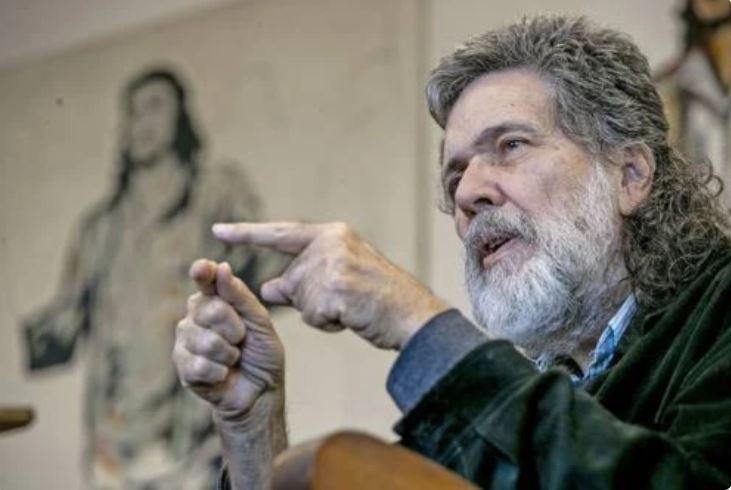
Si se pierde el socialismo, se pierde la nación: Abel Prieto. Foto: La Jornada
In an interview granted to the Mexican daily La Jornada, writer and current director of Casa de las Américas, Abel Prieto, examined the political moment Cuba is experiencing, the impact of new pressure measures from the United States, and the role of culture in what he describes as a “critical” scenario for the island’s sovereignty.
The conversation combines political, cultural, and historical reflections and presents an openly critical view of U.S. foreign policy and the administration of Donald Trump.
What role does Casa de las Américas play, and what is its intellectual function in the current juncture?
Prieto—a literary author and central figure within Cuban intellectual circles—leads Casa de las Américas, an emblematic cultural institution born out of the Cuban Revolution and a reference point for artists and intellectuals across Latin America.
He is also actively involved in the Network of Intellectuals and Artists in Defense of Humanity, through which he promotes cultural organizing against what he terms the global advance of fascism.
During the interview with La Jornada, the writer situated the global context within a phase of crumbling international norms, evoking a phrase from Fyodor Dostoyevsky’s character Ivan Karamazov to illustrate what he considers a foreign policy based on unilateral decisions. In his interpretation, the actions of the U.S. government have generated an unpredictable international scenario.
The new U.S. offensive and the energy blockade
One of the central axes of the conversation was the assessment of measures adopted by the Trump administration. Prieto argued that Washington’s primary objective is to exert economic pressure on the island through energy restrictions and threats against countries that supply fuel.
According to his statements to La Jornada, these actions aim to generate internal economic hardship, provoke social discontent, and facilitate political change in Cuba.
The intellectual described the situation as an intensification of the historic blockade and noted that its impact is directly felt in basic services and the daily life of the population.
Culture, communication, and ideological dispute
The interview also addressed the communications dimension of the political conflict. Prieto stated that the left faces disadvantages in the digital arena due to its adherence to ethical principles that preclude the use of disinformation as a political tool.
According to his account, the contemporary cultural battle unfolds on social media platforms where smear campaigns and polarizing discourses predominate.
In the artistic realm, the director of Casa de las Américas emphasized that, despite energy and economic difficulties, Cuba has managed to sustain cultural events such as the Havana Film Festival and the International Jazz Festival. However, he acknowledged that other activities—including the Book Fair—have had to be rescheduled or adapted to virtual formats.
“Colony or sovereignty”: Prieto’s political dilemma
One of the most frequently reiterated concepts by the interviewee was the historic dilemma between “colony or sovereignty.” In his analysis, Cuban socialism constitutes the foundation of national independence, and its eventual disappearance would imply—according to his vision—a return to political and economic dependence on the United States.
Prieto stressed that the current context has strengthened nationalist and anti-imperialist sentiment within the country, generating greater social cohesion in the face of external pressures. He also pointed out that recent regional events have influenced the Cuban people’s perception of political stability and international solidarity.
The role of art and historical memory
Another prominent theme in the interview was the importance of culture as a tool of political resistance. Prieto argued that the world is witnessing an attempt to rewrite historical memory and rehabilitate figures linked to fascism, which, in his view, turns cultural defense into a strategic front.
He also paid tribute to the legacy of Latin American intellectual figures such as Pablo González Casanova, a promoter of international cultural networks, and called for the construction of global anti-fascist alliances that include critical sectors within the United States.
Relationship with the American people and future perspectives
Despite his criticisms of Washington’s foreign policy, Prieto insisted on the need to distinguish between the U.S. government and its population. In the interview with La Jornada, he affirmed that an anti-fascist movement exists within the United States, one with which he considers it necessary to establish ties and cultural cooperation.
The conversation concludes with reflections on the role of artists in times of crisis and references to musical figures such as John Lennon, whom Prieto regards as a symbol of pacifist activism and cultural resistance against war and social injustice.
An interview marked by the cultural vision of political conflict
The interview published by La Jornada presents a deeply ideological reading of Cuba’s current moment, closely linking political analysis, the defense of national sovereignty, and the reaffirmation of culture as a tool of resistance.
Through his responses, Abel Prieto offers an interpretation of the present scenario that connects Cuban revolutionary history with contemporary geopolitical challenges and the role of intellectuals in the global cultural dispute.
Añadir nuevo comentario