
The Peace of the Cuban People and the Threat of War from the Empire
The Cuban people are going through a difficult situation, caused by the cumulative effect of more than six decades of the U.S. government's blockade. This hostility has intensified in recent years and, since January 2026, has been accompanied by an energy embargo that further limits access to vital resources.
The United States' policy toward Cuba, described by numerous international voices as unjust and inhumane, seeks to strangle the economy and punish the population. Given its declared purpose and the political, legal, and administrative framework upon which is built, it could be classified as an act of genocide, according to the 1948 Convention on the Prevention and Punishment of the Crime of Genocide.
In this regard, on May 11, the Secretary-General of the United Nations (UN), António Guterres, reiterated that the sanctions imposed by the United States government against Cuba violate international law and that such coercive measures have been overwhelmingly rejected by the majority of the international community in the UN General Assembly. This last point refers to the resolution against the blockade that Cuba has presented to the General Assembly since 1992 and which, since then, has maintained the majority support of the international community.
A contemporary example of the hostility and inconsistency of U.S. imperialism toward the island is its inclusion on the infamous U.S. State Department list of countries that supposedly sponsor terrorism. Honest and sensible people know that adding Cuba to this list is a fallacy: the largest of Antilles is a country characterized by its promotion of peace, both internally and in other nations.
However, its inclusion on this list has a real impact on the Cuban economy and on financial transactions with the rest of the world. This unilateral decision causes a worrying deterioration in relations with banking and financial institutions, which refuse to conduct business with the island for fear of being sanctioned by North American authorities. This sinister pressure is now complemented by an increasingly hostile discourse, which shifts economic coercion to the realm of military threats.
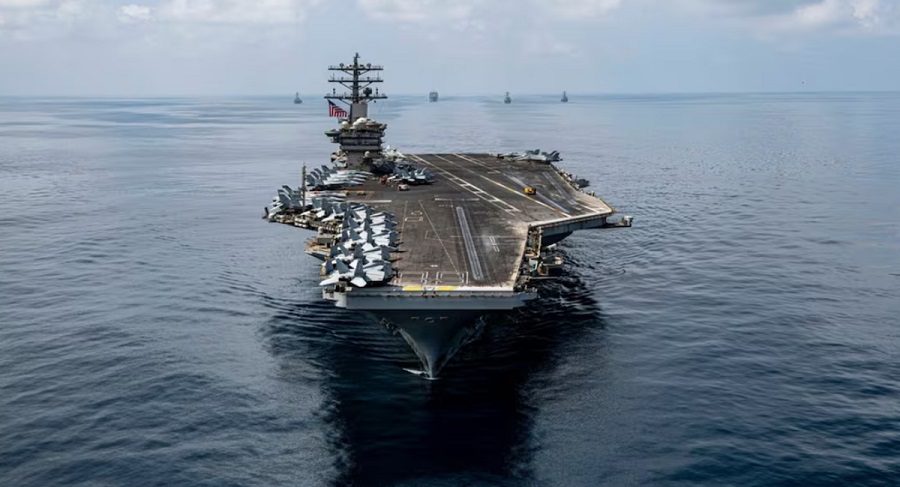
Thus, the aggressive escalation of recent days against Cuba has reached unprecedented levels with the threat of a military incursion. The warmongering rhetoric looming over Cuba seeks to portray the country as a hostile target, when in reality it’s a nation that has made peace and solidarity fundamental principles.
A noble, hardworking, and compassionate people does not deserve to be attacked by the military might of the United States. The streets of Cuba do not deserve to be strafed from the skies by weapons of war, just as the streets of Caracas did not deserve that in January. The children of Cuba do not deserve to be bombed by the death machines of imperialism, just as the children of Iran did not deserve that in February.
As the Cuban Ministry of Foreign Affairs' statement of May 7, 2026, warns, this Caribbean island will never cease its efforts to expose the criminal nature of the aggressive measures aimed at starving and driving to despair its entire population. Nor will it cease preparing for defense against a potential military attack, while continuing to prioritize respectful dialogue as the means to resolve differences. This combination of firmness and a will for peace reveals a central contradiction in the history of bilateral relations between the two countries: while Cuba, the smaller nation, insists on the path of understanding, the superpower responds with force.
It’s evident that a military aggression against Cuba would be unjust from every perspective and contrary to international law. Therefore, the peoples and governments of the world cannot remain indifferent to this threat, which would endanger the lives of millions and regional stability. Defending Cuba today is also affirming the right of peoples to decide their own destiny without imposition. The island's resistance embodies the battle for sovereignty and human dignity, and its voice resounds with the plea for peace to prevail over the threat of war.
Translated by Amilkal Labañino / CubaSí Translation Staff
Añadir nuevo comentario