
About Drones and Other Things
Sometimes it's difficult to understand the political psychology that prevails in the empire's communication network. Delving deeper into the matter often leads to dead ends, but in the end, it's all so obvious that perhaps that's where its eventual effectiveness lies.
Yes, because with astonishing ease, most of the US platforms dedicated to the media attack against Cuba don't seem to care much that in a few minutes their nonsense, their intentions, and the results they seek will be exposed.
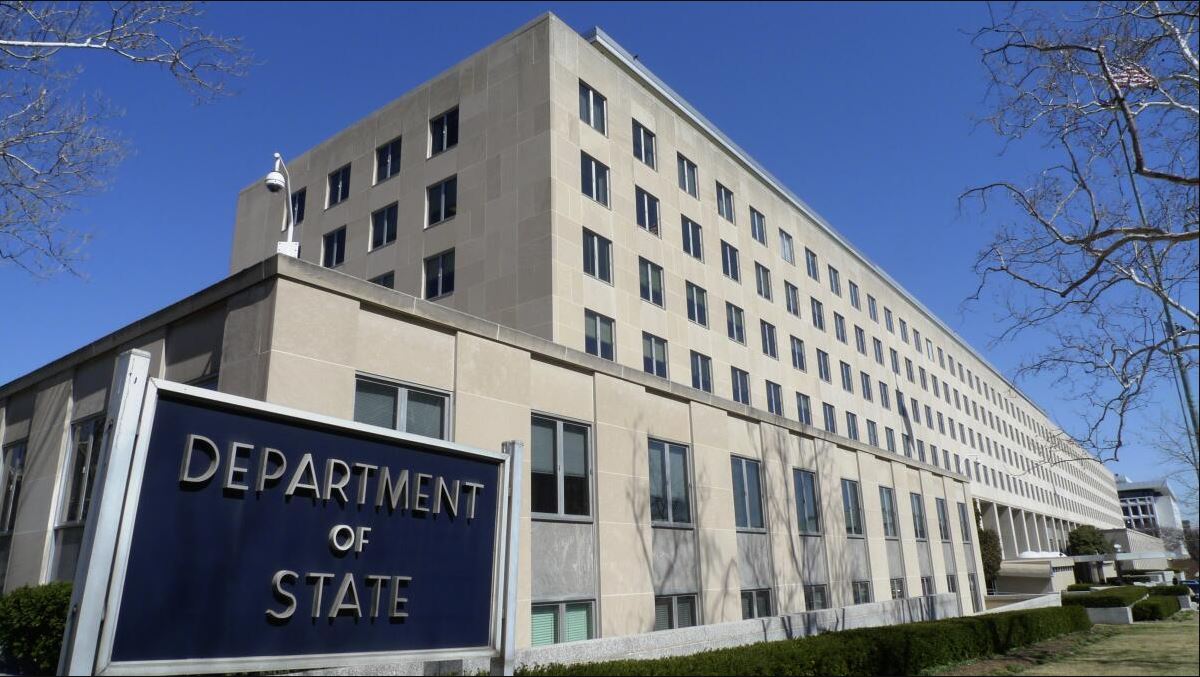
It's like someone who, when given the opportunity to speak or write anything, lacks critical thinking skills, or even any thought at all. It's under this logic that the occasional news story appears, published where else but in Axios, with offices in the basement of the State Department, as underground as possible, so that no one associates them with Mr. Rubio, the head of that building.
And as if that weren't enough, now the fabricated news stories against Cuba have gone from Chinese radio espionage bases—remember that President Trump recently made peace with them, the Chinese—to claiming that the island has 300 drones to attack the US. Some, more suspicious, even claimed that these unmanned aircraft were Iranian, to make the slanderous mess even more palatable.
The matter has generated considerable discussion, and as expected, Cuban authorities quickly reacted, labeling the drone incident as part of the already long list of actions promoted by Mr. Rubio and his cronies to fabricate a justification for the much-discussed military invasion of Cuba and the general hostility.
Of course, some considerations are worth highlighting, even in order of priority or importance.
First and foremost, the story of the small planes is linked to the larger narrative, the one that appears in the much-discussed Executive Order of January 29th, which speaks of an “extraordinary and unusual” threat from Cuba against the great empire. They figured they had to demonstrate why they were calling it a threat, what it consisted of, and what better way than with some 300 Iranian drones, allegedly planned to attack the naval base illegally located in Guantanamo Bay, warships, and some keys off the southern tip of Florida.
And the locations chosen by the Axios team are not arbitrary.
To begin with, there's the aforementioned base, a long-standing nightmare for the Pentagon: the threat of a Cuban attack. And these days, it's even worse, given that Iranians, coincidentally, have literally demolished more than 15 US bases in West Asia.
Next in the order of unsettling nightmares is the possibility of attacks on military vessels, which makes some sense, since those are the ones currently racing back and forth, also in West Asia, miles from the Strait of Hormuz, precisely to prevent those so-called "3x4 drones" from sinking a floating behemoth worth billions of dollars.
And, of course, there's the threat to US territory. In that case, the term "unusual" would certainly apply. As is well known, there is no record of the US having been attacked by any military force, because ultimately Pearl Harbor, although located within US territorial waters, is not technically located in the US.
This last detail also offers other perspectives that go beyond the geographical. Essentially, the message is that Cubans on the island don't care what happens to the 1.6 million compatriots in Florida, and therefore are preparing to attack them.
Frankly, perhaps the most significant aspect of this whole narrative is the perceived threat against Cubans living in the US. More absurd, cruel, perverse. And it's not without reason, because very likely at this moment, except for the usual brainless idiots, including the usual suspect legislators, a majority of Cubans, forced into silence, are against an invasion of Cuba, where they have family, friends, and loved ones.
From perpetrators to victims. That's something that also needs to be achieved, the hacks at Axios have been told, something that is becoming increasingly difficult.
The preparation by successive US administrations to drag the country into some of its numerous international military adventures has inexorably included the manipulation of domestic public opinion. But the "partial democratization" of information, via digital social networks, and other factors, conspire against this, shall we say, need of the invaders to portray themselves as invaded.
From contemporary history, there’s the iconic popular rejection of the Vietnam War, which, incidentally, took 20 years to mature; more recently, the revelation that there were no weapons of mass destruction in Iraq, the reason for the invasion. And now the aggression against Iran, for a military nuclear program that had already been “destroyed” by June 2025; in short, 6, almost 7, out of every 10 Americans repudiate this war, evidence that the manipulation surrounding it has not taken hold.
Regarding Cuba, the level of cruelty and the long history of the multifaceted aggression by the US, which no longer even bothers to choose its terms, such as the use of the concept of a blockade, constitutes a truly enormous obstacle to the success of this attempt to portray aggressors as victims. Nobody believes them, as can be easily seen, for example, in the UN votes against the blockade, to mention just one emblematic, almost unique, case in demonstrating the isolation of the US.
And speaking of this confusion, this role reversal according to the US media, another circumstance associated with the “terrible” drones is interesting, namely a certain parallel with the October Crisis of 1962. Indeed, in the already long and aggressive US policy toward Cuba, where they have resorted to all sorts of pretexts to implement it, this is the third time they have mentioned a particular type of weapon; the second was in the 1980s, when the US media raised a huge outcry, claiming that there were Soviet “super bombers,” of the Il-28 type, on the island.
Strictly speaking, no one in their right mind would make this kind of comparison, but does the Axios publication strive for any level of common sense? So one might even invoke that Hegelian conclusion that things in history first occur as tragedy and then repeat themselves as farce. And this latter aspect, the farce, underlies the entire Axios story. It's like trying to indirectly compare medium-range nuclear missiles with drones, but that "detail" about destructive capabilities is minor; after all, the end justifies the lie.
Perhaps that's why, in case someone believes them, Axios inserts a paragraph into the article, almost as a hidden detail, stating that, according to the same sources, no one in Washington considers Cuba an imminent threat, nor that they have any plans to invade. It seems that, in the event of a complete loss of credibility, some compensation has to be included in the narrative, perhaps despite or negotiated with Mr. Rubio, the supposed expert in half-truths.
But this anti-Cuban media operation has tremendous flaws, not only those already described regarding the absolute lack of journalistic ethics, but also those that could backfire.
For example, something that appears insistently on social media and other platforms is that the Axios article suggests an internal conflict within the US government; and this, of course, is not good for Trump. On one side, Mr. Rubio, the main advocate of the aggression; on the other, the sector that has identified military action against Cuba as a mistake, which includes powerful Republican congressmen.
Note that the publication appears 72 hours after the CIA chief, Mr. John Ratcliffe, was in Havana on May 14th, and according to reports from the meeting, including the version of events provided by Cuban authorities, this terrifying and mysterious drone story never came up. Didn't the CIA know this when its top official visited? Why didn't it address such a "terrible threat" to US territory?
The Axios article claims to have had sources it cannot reveal; the tone serves to lend credibility to the news and, incidentally, avoid rigor in its reporting. However, from this perspective, regarding contradictions within Trump's circle of advisors, this anonymous source, as already mentioned, comes from the basement of the State Department. So, Mr. Rubio, with the help of Axios, versus Mr. Ratcliffe? Trump will clarify this at any moment. The thing is, we have to be patient.
There's also a certain deterrent effect, especially on the more cowardly among us, who keep insisting that Trump just invade. Of course, because according to the laws of war, anyone who supports aggression against a third country automatically becomes a legitimate military target. And so, to a certain extent, it's amusing to observe the concern of these people when satellite photos of their residences in South Florida appear on social media. It's utter madness, but no one should complain; they created it from there.
The conclusion of the story published by Axios is crystal clear in another of the Cuban government's positions, making it clear to anyone who wants to know: with or without drones, Cuba has the right to defend itself, in a context of maximum war rhetoric, when President Trump and Mr. Lu (as Rubio's surname is spelled in Mandarin) are maintaining a kind of psychological harassment of Cubans, and their threats seem to precede the super-carrier USS Lincoln, anchored off Havana's Malecón.
The almost frantic accumulation of news, threats, and perverse sanctions ultimately reveals the level of desperation of the Miami mafia. They feel their hopes of returning Cuba to the Batista era slipping through their fingers, no less, just when they had managed to create the best conditions for it. But as always, stubbornly, they underestimate the resilience of the Cuban Revolution. And that's how it goes for them.
Translated by Amilkal Labañino / CubaSí Translation Staff
Añadir nuevo comentario