
Telling Our Story
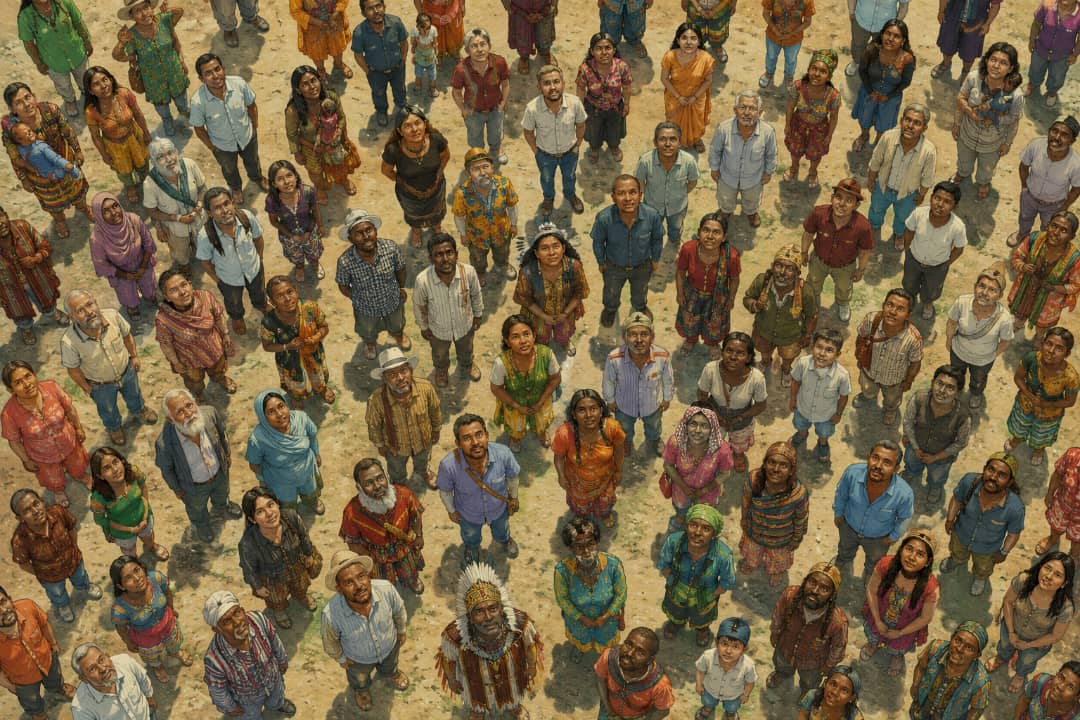
Our societies possess complex memories, full of shades, wounds, and also extraordinary spiritual richness. Illustration generated with AI.
Self-serving mediations on certain historical processes, along with a persistent imperial vocation to impose worldviews, have not necessarily changed history, but they have changed the way history is told and shared.
Hence, many intellectuals have insisted on the need to revise certain narratives from the perspective of the so-called "vanquished": that of peoples subjected to processes of colonization and cultural, political, and economic domination, who for a long time had no space to narrate their own version of events.
History is also constructed from power relations. Those who possess economic, military, or cultural power tend to impose their interpretations and transform them into seemingly unquestionable truths. Many societies have been reduced to external perspectives that have simplified their conflicts, minimized their resistance, or distorted their identities. Events are not always manipulated; sometimes it’s enough to decide what is told, what is left out, and from what perspective is interpreted.
This phenomenon is evident both in certain academic approaches and in the powerful contemporary cultural industry. Hollywood, for example, has been for decades one of the great global manufacturers of narratives and stereotypes. It’s no coincidence that villains of many films once adhered to the codes of the Cold War and that today they frequently adopt the faces associated with new rival powers. Entertainment also shapes political and cultural perceptions.
Of course, some facts are too obvious to be hidden or falsified. But many other processes do allow for diverse interpretations and necessary debates. The history of Latin America, Africa, or Asia is still often narrated from categories foreign to our realities, as if the experience of our peoples always needed validation from external centers of power.
That’s why a perspective built from our own circumstances and cultural sensibilities is essential. Not to create complacent narratives or deny contradictions, but to defend the right of peoples to explain themselves. Although it’s difficult to compete with media and cultural platforms of huge influence, it remains necessary to tell our stories in our own voice.
Intellectuals like Eduardo Galeano took on this challenge by narrating many stories from the Global South, understood not only as a geographical space, but also as a cultural and human experience.
Our societies have complex memories, full of shades, wounds, and also extraordinary spiritual richness. It's well worth telling these stories here, before others come back to tell them for us.
Translated by Amilkal Labañino / CubaSí Translation Staff
Añadir nuevo comentario