
Trumpist Electoral Entanglements?
Very recently, we published a commentary about the growing disagreement with the current US President Donald Trump's way of governing, and this is reflected in the large number of Americans relocating to other nations, such as Joseph, now a resident of Norway, who stated to the British newspaper The Guardian that he does not want to be a citizen of a dictatorship, blurting out what many already believe:
"Many people think the litmus test for the American system will come in the next presidential election, and I think they are wrong. We will see if this government is willing to hand over power democratically this November (in the midterm elections). I have serious doubts that they will hand over power."
Proof of this is that thousands of Louisiana voters have already cast early ballots for congressional candidates, in what could soon become the wrong districts. Alabama's primaries are a week away, but the state could force a revote of the races for the US House of Representatives. A new congressional map in Tennessee disrupted races that had been underway for months.
AP notes that the Republican rush to gerrymander congressional districts in several Southern states, after a Supreme Court ruling gutted the Voting Rights Act, is confusing voters and producing logistical headaches for local election authorities. The changes are taking effect while the primary election season is underway.
The chaotic upheaval of an electoral season that could determine which party controls the House of Representatives is the most recent consequence of an intensely partisan redistricting battle, initiated last year by President Donald Trump to protect the narrow Republican majority.
The decision the Supreme Court made last month severely weakened the Voting Rights Act and forced Louisiana to reconsider a map drawn in 2024 with two majority-minority congressional districts in which Black representatives were elected. The Republican-controlled Legislature could eliminate one or both districts in a state where approximately 30% of the population is Black.
The ruling also encouraged Republicans in Alabama, Mississippi, South Carolina, and Tennessee to consider eliminating four Democratic districts among those states, three of them represented by Black lawmakers. Florida has a new map intended to cost Democrats four of their eight seats, out of a total of 28.
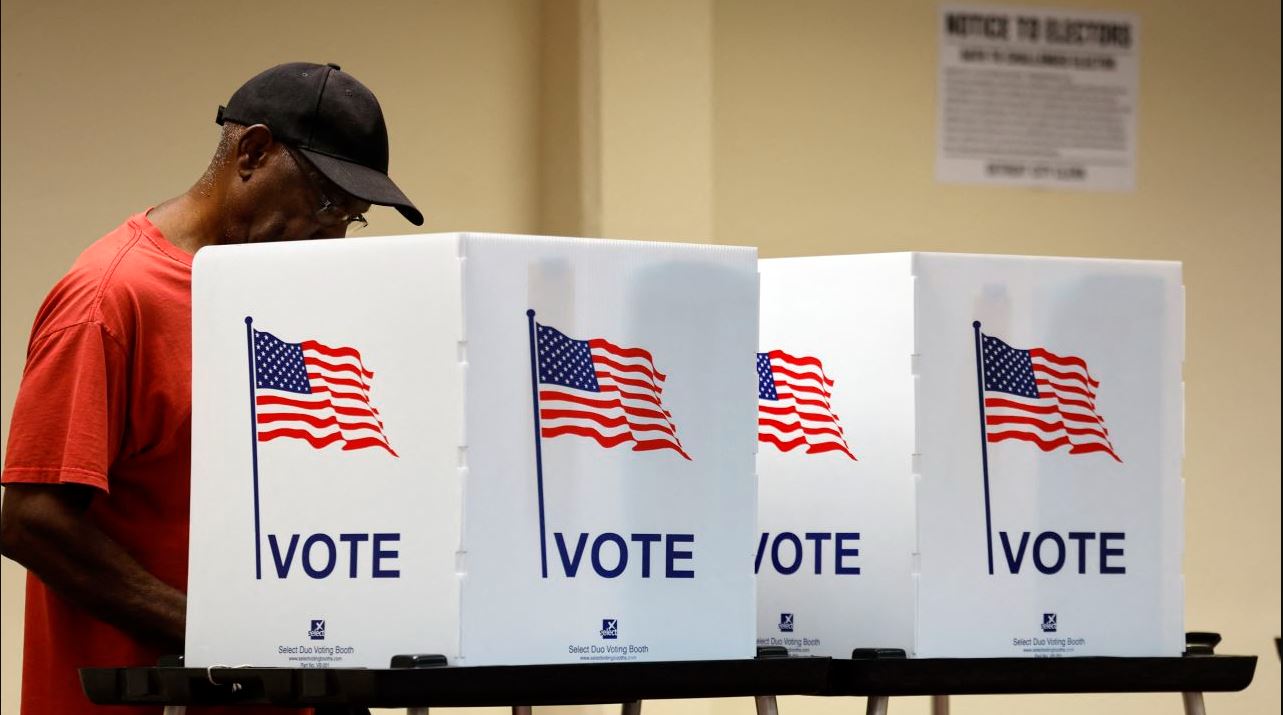
In Louisiana, Sallie Davis, a 66-year-old New Orleans resident, voted early last week. Her ballot allowed her to vote for Democratic Representative Troy Carter for the US House of Representatives, but a sign in her voting booth showed her race crossed out with a pen. She felt confused and frustrated, especially when a poll worker told her to follow what the sign seemed to communicate. Now she fears her full ballot will not be counted.
"I was supposed to believe a piece of paper with an X on it, crossing out the person I wanted to vote for," she recounted, her voice breaking, as she later recalled her experience. "I think I have been disenfranchised. I think my vote, the one I just cast, is not going to count or something. I think it is illegal."
In a "60 Minutes" interview broadcast by CBS on Sunday, the Republican governor started to say: "It's no big deal," but he did not finish the sentence. "If anyone has a complaint, take it to the United States Supreme Court," he stated.
In Alabama, South Carolina, and Tennessee, Republicans argued that the new maps to increase their party's seats would better reflect their states' conservative values. Alabama lawmakers passed a bill on Friday allowing congressional primaries to be repeated.
The Alabama primary will be held on May 19, and voting in the congressional races will proceed then as planned, but under the old districts. However, the state is not expected to count those votes, because the Supreme Court allowed it on Monday to switch to different districts.
Mississippi held its primaries in March, but a federal court ordered it to redistrict its state Supreme Court, and Trump is pressuring Republicans to redistrict the state's four congressional districts.
A special session of its Legislature is scheduled for May 20. Renovations at the House chamber will force members to meet at the Old State Capitol, where, decades ago, Mississippi lawmakers passed the Jim Crow laws that suppressed the Black vote.
"Voter suppression today relies on election administration errors and chaos, and that is what we are going to see in all these states," stated Amir Badat, a lawyer and voting rights activist from Jackson, Mississippi.
Trump's Pressure
Tennessee was the first state to enact a new map since the Supreme Court decision, but Trump's push for redistricting began last year in Texas. Democrats responded in California and tried in Virginia, but clashed with the courts.
The new Tennessee map divided Memphis among three congressional districts. Prior to its enactment last week, the state's coordinator of elections indicated in a memo to county officials that this would entail reprogramming electoral systems, retraining poll workers, and possibly adjusting precinct boundaries, meaning some voters' polling locations could change. Tennessee's congressional primaries will go ahead on August 6.
In South Carolina, lawmakers could move all state primaries from June 9 to August, or just the congressional races. Although mail-in voting is limited because the state requires an excuse, as of Friday, more than 6,800 mail-in ballots had been sent to voters, with 260 returned.
A separate election for the congressional primaries would cost three million dollars, and preparation time would be compressed, Conway Belangia, the commission's executive director, told lawmakers on Friday.
Confusion
Michael McClanahan, president of the Louisiana State Conference, senses "total confusion" when voters call him and ask: "Is there an election?" "People say, 'I'm not going to vote because the governor suspended the election,'" he commented. "But he didn't; he only suspended one aspect."
In Alabama, Senate Democratic Leader Bobby Singleton noted that he has been receiving calls from confused public officials. "These are the people who are on the front lines of the elections," he indicated. "They don't know what to do."
Voting rights activists see a harbinger for Memphis voters in the problems that arose in Nashville, Tennessee, in 2022, when Republican lawmakers divided the state capital into three congressional districts to wrest a seat from Democrats. A state report noted that more than 3,000 voters in the Nashville area were assigned to incorrect districts and that over 430 cast ballots in the wrong races in the November 2022 election.
"It will be really difficult for election commissions to keep up with this short timeframe," warned Matia Powell, executive director of Civic TN, a voting rights nonprofit, during a conference call held Friday with other voting rights activists in the South.
Anneshia Hardy, executive director of Alabama Values, which provides support to voting rights and civil rights advocacy groups, said people will lose faith in elections if they believe the rules can change every two years.
"Once people stop believing that the process is stable and fair, the lack of participation is going to increase, and that is one of the biggest risks," she maintained. "Democracy does not depend solely on voting systems existing, but really on people believing their participation matters," she added.
Democratic voters who flocked to the Louisiana Capitol on Friday to protest gerrymandering expressed doubts about whether they still have a political voice. In front of the state Capitol in Baton Rouge, someone brought a megaphone and shouted: "Whose vote is it? It's our vote!"
David Victorian, a 79-year-old Vietnam veteran from Baton Rouge, told the AP: "I worry about the survival of the democracy we are supposedly living in."
Translated by Sergio A. Paneque Díaz / CubaSí Translation Staff
Añadir nuevo comentario