
Cuban Foreign Minister Addresses Open BRICS Session
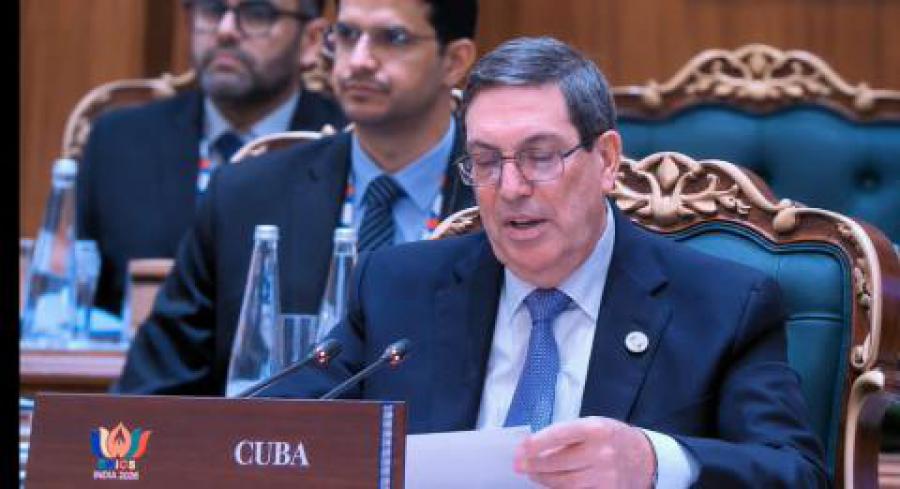
Interviene canciller cubano en sesión abierta de los BRICS
Cuban Foreign Minister Bruno Rodríguez Parrilla stated during the BRICS Foreign Ministers Meeting that the current international order has been “virtually destroyed” by what he described as the United States’ attempt to restore a unipolar world through “an imperialist agenda based on military force, supremacism, and fascist neoconservatism.”
During the open session titled “BRICS: Building for Resilience, Innovation, Cooperation, and Sustainability,” Rodríguez denounced what he characterized as increasing U.S. hostility toward Cuba, including what he called threats of direct military aggression and intensified economic pressure through fuel restrictions and sanctions.
The Cuban minister strongly rejected the executive orders signed by U.S. President Donald Trump on January 29 and May 1, as well as measures adopted by the U.S. Treasury Department on May 7. According to Rodríguez, these actions significantly reinforce the longstanding embargo against Cuba and expand its extraterritorial effects.
“Cuba is not and cannot be a threat to the national security of the United States, as these executive orders falsely claim. Cuba is the nation under threat and aggression,” Rodríguez declared during his remarks.
He urged the international community to mobilize against what he warned could become a military escalation against Cuba, arguing that such a scenario would trigger humanitarian consequences and destabilize the region.
Rodríguez also stated that the tightened restrictions have severely impacted Cuba’s energy sector, causing prolonged power outages and disruptions in water distribution, transportation, healthcare services, and food production.
“The brutal reinforcement of the blockade has a devastating and incalculable impact on the daily lives of the Cuban population,” he said, describing the measures as “an act of genocide and collective punishment.”
The foreign minister added that shortages and economic hardships have affected millions of Cubans, while the country faces increasing challenges in its healthcare system and basic services.
Despite the difficulties, Rodríguez affirmed that Cuba remains committed to its socialist project and highlighted what he described as the resilience and unity of the Cuban people.
He also acknowledged the support received from countries such as China, Russia, Vietnam, and India, as well as from BRICS member and partner nations, particularly in the area of energy cooperation.
Rodríguez advocated for expanded collaboration in science, technology, and innovation among Global South nations, including the creation of a BRICS scientific research repository aimed at reducing technological and digital inequalities.
“For Cuba, equitable and universal access to science, technology, and innovation is the path toward overcoming the digital and technological gaps that deepen inequalities among nations,” he stated.
The Cuban foreign minister concluded by reaffirming Cuba’s commitment to international law, multilateralism, and the construction of what he described as a more just, democratic, and equitable international order based on solidarity, cooperation, and human dignity.
Añadir nuevo comentario