
May's Skies: Meteors and a Blue Moon
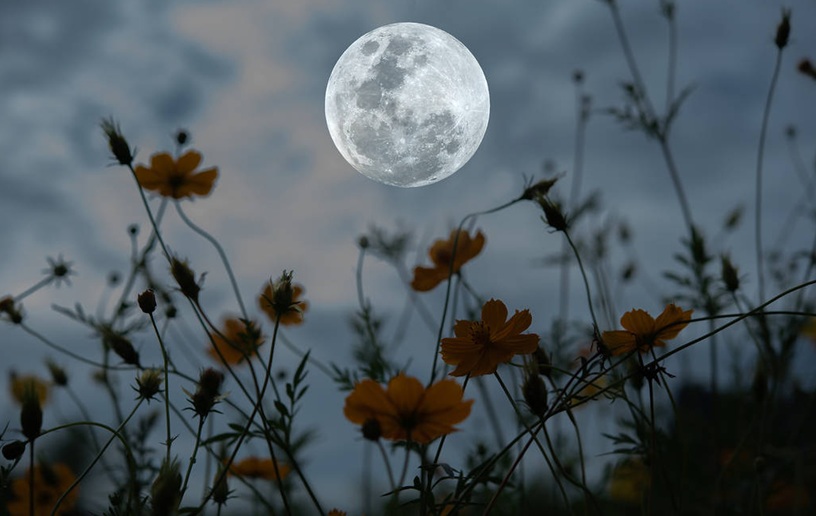
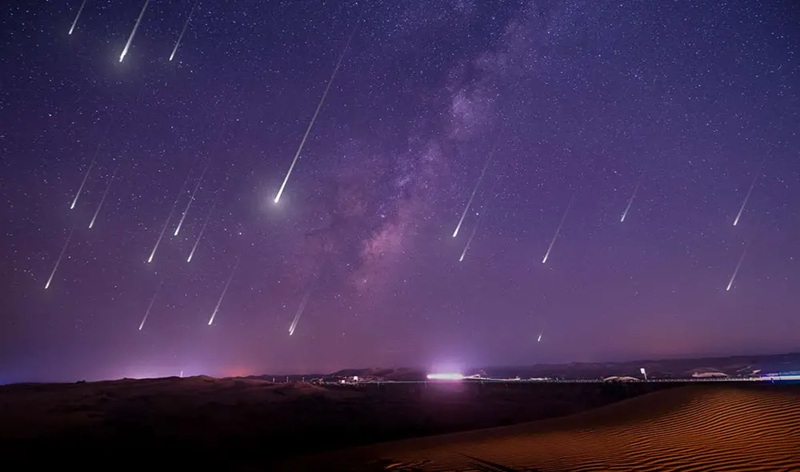
After the so-called Flower Moon, the first of May's two full moons, this week opens the door to the Eta Aquarids meteor shower, whose peak activity is expected in the early mornings of May 5th and 6th. Much of the American continent will be able to enjoy it in the early hours of the 5th, while for observers in Europe and Africa, the peak will coincide fully with the early morning of the 6th.
These fast-moving lights are nothing more than tangible evidence of the famous Halley's Comet. Every year, the atmosphere intercepts the dust granules shed by this ancient traveler, which penetrate at breakneck speeds and leave persistent trails in their wake.
The conditions in 2026 will present a challenge due to the brightness of the waning gibbous moon, which will force enthusiasts and the curious to seek out areas of deep darkness, especially towards the south, where the radiant in the constellation Aquarius reaches its highest point.
As this second week of the month progresses, the pre-dawn sky takes center stage with a series of celestial encounters in the twilight before the first light.
On Thursday, May 14, a thin crescent moon will be positioned just below the planet Saturn on the eastern horizon, and by the early hours of the following morning, Friday the 15th, the same waning crescent moon will join the reddish planet Mars. These subtle celestial conjunctions provide the ideal setting to scan for distant worlds with the help of simple optical instruments before the sun's rays obscure the spectacle.
The Window to Deep Space and Evening Stars
The definitive turning point for exploring the night skies arrives on Saturday, May 16, with the new moon.
As the moon's glow disappears completely, the sky opens up to a dark canvas, perfect for observing deep-sky objects.
But this absolute darkness will be very brief, as the satellite reappears shortly afterward in the west.
On Tuesday, May 19, just after sunset, a new moon will be positioned a mere two degrees from Venus, the radiant "evening star."
This is the spectacle of contrasts will become even more complex and interesting on Wednesday the 20th, when Jupiter decides to enter the scene. This giant, the young Moon, and the bright star Pollux will together form a remarkable celestial triangle in the constellation of Gemini during the early evening hours.
Under the light of a rare blue moon
The closing of May's astronomical events is reserved for Sunday the 31st, when, during the hours before dawn, the second full moon of the month will occur, known as a "Blue Moon."
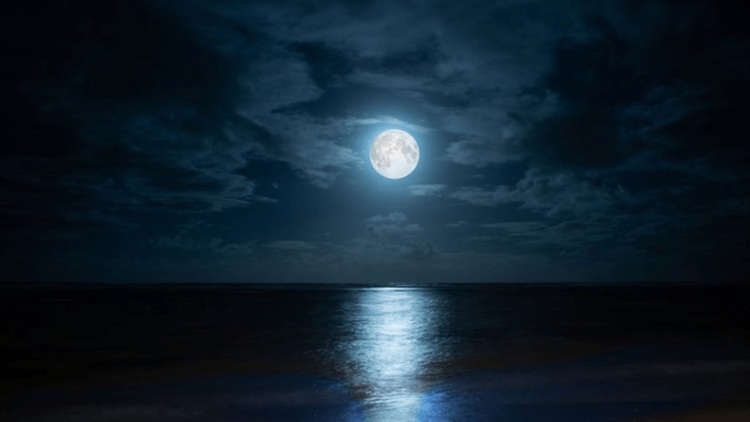
Far from turning blue, the moon will bring with it a unique physical characteristic: it will be the smallest and most distant full moon of the entire annual cycle, officially classified as a "micromoon."
The coincidence of this full moon with the point of greatest orbital distance will make the lunar disk appear up to fourteen percent smaller than it is during an average supermoon.
This second full moon will close out May's celestial agenda.
Añadir nuevo comentario