
Renowned Cuban Painter Ever Fonseca Has Died
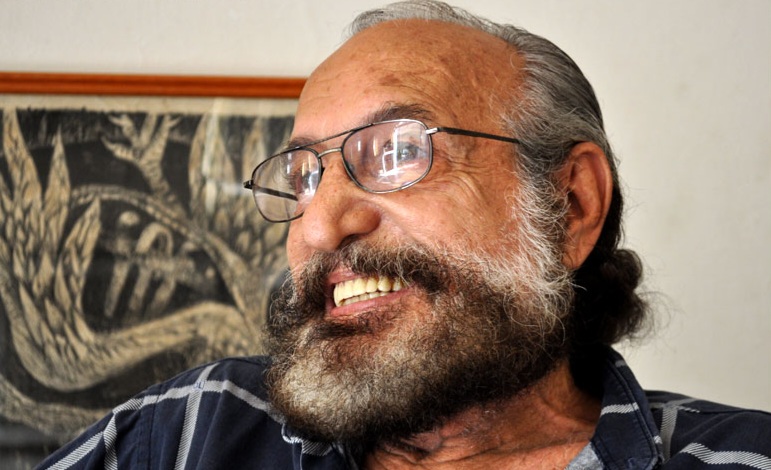
Foto: Del autor
Cuba's Ministry of Culture (Mincult) confirmed today the passing of National Visual Arts Prize laureate Ever Fonseca, a key figure of the Cuban artistic avant-garde.
From an early age, Fonseca merged revolutionary commitment with aesthetic creation. After joining the insurgent struggle in the eastern mountains, he served as an instructor for the Rebel Army, combining in this way a dual vocation for teaching and art.
In 1962, he enrolled with the top academic record at the National School of Visual Arts in Havana, an institution where he would later teach all three levels of instruction for more than two decades, Mincult noted on social media.
Ever Fonseca became the first Cuban painter invited to hold a solo exhibition at the National Museum of Fine Arts, under the title Óleos de Ever Fonseca; by 1970, his work had already become part of that prestigious institution's permanent collection.
A member of the Union of Writers and Artists of Cuba and of the International Association of Visual Artists, he accumulated an extensive exhibition record: dozens of solo shows and more than 400 collective exhibitions in at least 25 countries, according to the ministry's tally.
In recognition of his prolific career, he was awarded the Distinction for National Culture and the Alejo Carpentier Medal, both conferred by the Council of State, as well as the Raúl Gómez García Medal from the Culture Workers' Union, among other honors.
The National Council of Visual Arts and the Ministry of Culture underscored that Fonseca will endure through the power of his art as part of the nation's spiritual heritage.
His pictorial legacy is held in permanent collections at museums in Cuba, the United States, Lithuania, Poland, Germany, Colombia, Puerto Rico, and Ecuador, as well as at United Nations headquarters in Geneva and New York, among other institutions.
By the wishes of his family, the artist's remains will be cremated in a private ceremony, and his ashes will rest in the Pantheon of the Ministry of Culture at the Colón Necropolis.
Añadir nuevo comentario