
Disapproval of U.S. Blockade on Cuba Prevails Among American Public, Says Cuban Foreign Minister
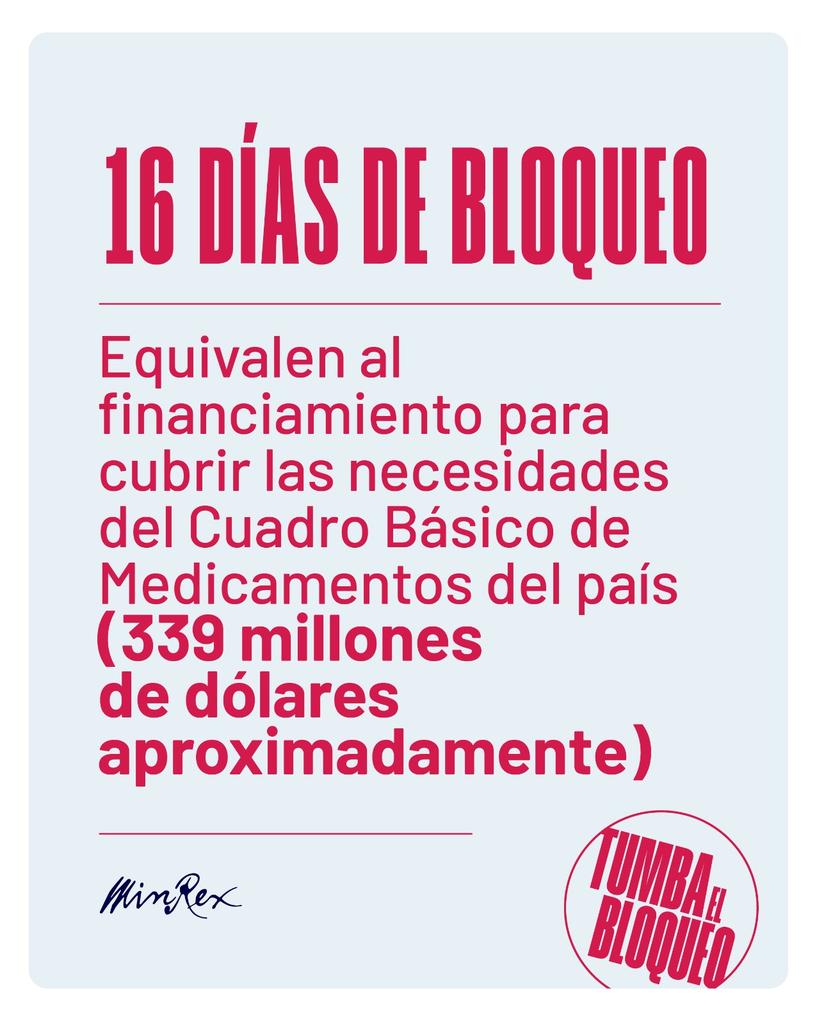
Imagen: @BrunoRguezP
Cuban Foreign Minister Bruno Rodríguez Parrilla stated Monday that disapproval of the United States government's longstanding economic blockade against Cuba is the prevailing view among the American public, pointing to recent polling data to support the claim.
Posting on X, the minister cited a YouGov survey indicating that 40 percent of U.S. citizens do not support the embargo — in effect for more than 60 years — while only 32 percent expressed support for maintaining it.
"If the United States government truly listened to the will of the majority of its population, and not of a minority full of hatred and warmongering ambitions, it would put an end to its criminal policy against the Cuban people, which is causing growing humanitarian damage," Rodríguez Parrilla wrote.
The minister illustrated his remarks with figures from Cuba's most recent official report, which states that just 16 days of the blockade — approximately $339 million — represents the full cost of covering the island's basic pharmaceutical needs. Of Cuba's 651 essential medicines, more than 400 are currently not reaching the country's pharmacies on a regular basis.
The report notes that Cuba cannot access — or must obtain at substantially higher cost through third-party markets — advanced U.S.-manufactured medications and medical equipment in which more than 10 percent of components originate in the United States. Healthcare restrictions documented include limited access to specialized treatments for several forms of cancer, lupus, rheumatoid arthritis, Crohn's disease, Parkinson's disease, dementia, and spinal muscular atrophy, among others.
Añadir nuevo comentario