
Halloween: Innocent Celebration or Cultural Invasion?
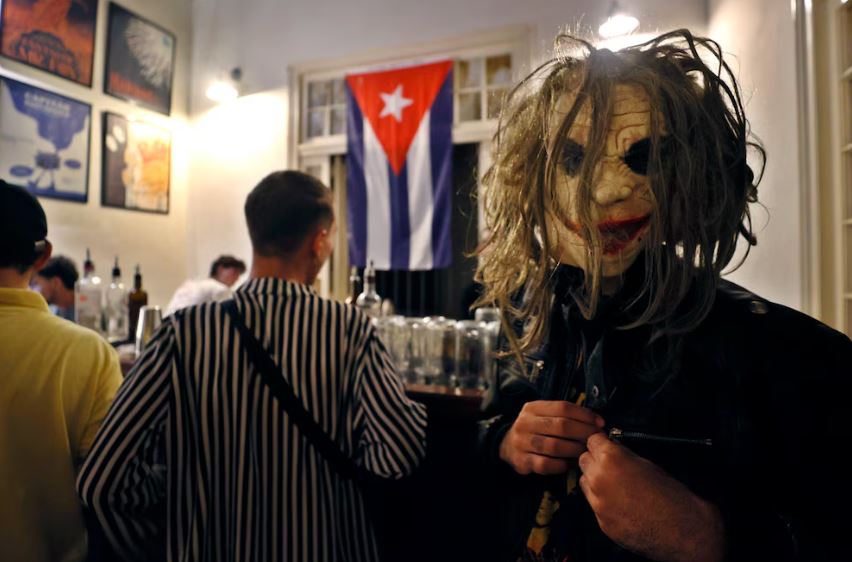
Until very recently, October 31 passed through Cuba without fanfare, like any other day of the year.
However, in recent years, simply stepping outside or glancing at social media reveals how plastic pumpkins, fake cobwebs, and imported horror costumes are gaining ground.
It is not that one is against people having fun or young people playing, but the phenomenon invites reflection that goes far beyond a simple weekend party.
What truly draws attention—and even clashes—is the contrast we live daily.
We all know the real difficulties the country faces in sustaining cultural programming: fuel is lacking to move artists, resources are scarce to sustain a rural gathering, book fairs are shortened, and even assembling the floats for the traditional parrandas of Remedios, Camajuaní, or Caibarién requires true juggling and popular feats.
Yet, to mount a private Halloween party or to sell costumes and decorations in stores, resources appear out of nowhere, with an ease that astonishes.
That is, what is our own is sometimes halted by material shortages, but to what is foreign we open the door wide almost without realizing it.
There lies the heart of the problem: it is not about becoming rigid or prohibiting anything, but about understanding what we are leaving behind.
We have an immense, living, and rich culture like few others: the rhythm of changüí, the son that defines us, the rural gatherings of décima and punto cubano, or the parranda pride of the center of the Island, which is pure popular art made by hand in the neighborhood.
Those are not old museum postcards; they are the things that give us meaning, the things that sustain us as a people when things get difficult.
Cultural colonization today does not come with warships; it enters softly through the phone screen, through trendy series, and through market algorithms.
If we let that easy consumption win the game, we run the risk of ending up ashamed of or indifferent to our own roots, exchanging the authentic for a disposable prop product.
The challenge ahead is not to shut ourselves in a glass house, but to put effort, talent, and resources into what is ours.
To ensure traditions do not remain without a stage, that our children know the magic that is born from their own land and feel proud of it.
Before going out with someone else's mask, let us look deep inside our own house: in our streets, in our fields, and in our memory is everything that is truly worth defending and celebrating.
Translated by Sergio A. Paneque Díaz / CubaSí Translation Staff
Añadir nuevo comentario