
"Bésame Mucho," an Immortal Song
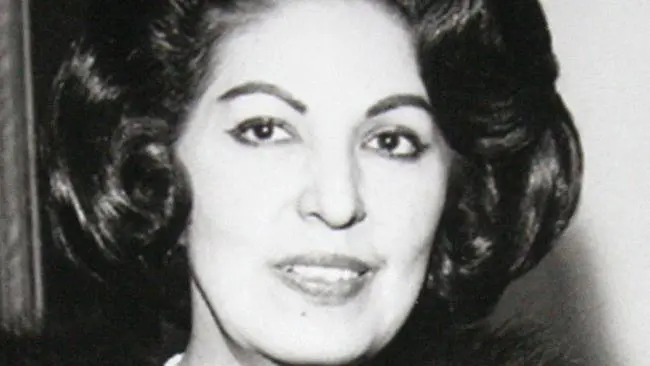
The Mexican pianist, composer and performer suddenly discovered that her song had become one of the most important musical works of the last century. Its lyrics, the essence of the fragility of romantic love, have been performed by artists from different generations. So much so that in 1996 it was recognized as the most covered Spanish-language song in history and translated into more than 20 languages.
Versions
The first version was made by singer Emilio Tuero Cubillas. This hymn to love was inspired by couples separated by World War II and by the author's own experience, given her family's disapproval of her courtship and her personal experience.
Artists such as Chela Campos, Andrea Bocelli, Luis Miguel and Frank Sinatra appear among those who have contributed unforgettable interpretations.
The American singer of Mexican origin Andy Russell made and recorded one of the most famous versions of "Bésame mucho," whose success placed it at the height of popularity in the United States in June 1944. In part this was because Russell, an artist with the historic American record company founded in 1942, Capitol, turned it into a hit on the West Coast after having incorporated it into his repertoire during a tour of cities that set music ablaze, such as Havana.
On the other hand, Decca Records, the British record company headquartered in London, specialized in popular, classical and jazz music, promoted Jimmy Dorsey's version on the East Coast. It became a competition to appreciate the two versions of the same song, disputing first place on the national hit parade. The great Big Band version by the Jimmy Dorsey Orchestra and Chorus is still remembered; Dorsey was an outstanding American composer, clarinetist, saxophonist and trumpeter.
The Dorsey version spent thirteen weeks at number one in sales, while Russell's spent eleven weeks in first place in airplay in the United States. In Mexico, its reception was equally spectacular.
In 2019 the song Yesterday was chosen by Guinness World Records as the most performed song in the world, with Bésame mucho in second place.
It was published that Yesterday had achieved more than 2,200 recordings. The specific record for "Bésame mucho" counts more than 3,000 versions, from its creation in 1941 to the present, and although it was translated into more than 20 languages, it appears as the official Guinness World Record as the most covered Spanish-language song in history.
Childhood and Youth
Consuelo Velásquez Torres Ortiz was born in Mexico, in a privileged environment, on August 21, 1916, in Ciudad Guzmán, Jalisco. She was the daughter of Mrs. María de Jesús Torres-Ortiz, who belonged to a prominent family from Colima, and Mr. Isaac Velázquez del Valle, a military man and poet, a member of a family of landowners from La Barca, Jalisco.
Although she said she had been born in 1920, she played the piano "by ear" and with a single finger. Her family recounted that from the age of four she was able to follow any melody she heard and perform it on a small two-octave piano, a gift from her aunt Mercedes Torres-Ortiz.
She had barely reached the keyboard of the family's upright piano when she surprised them again by reproducing the melody of the Mexican National Anthem, which she heard performed by a military band passing in front of her house.
Attentive to this gift, her family moved to Guadalajara and, when she turned six, enrolled her with Ramón Serratos and Aurora Garibay de Serratos, founders of a family dynasty of musicians and educators. The Serratos Academy was the best in the city. It was no surprise when, in a short time, she gave a recital before parents and classmates.
Consuelito moved to Mexico City at age 19 to continue her studies as a concert pianist and music teacher. In the capital of the Aztec country, before coming of age, Serratos and professor Aurora Garibay offered her an opportunity to study at the National Conservatory in Mexico City. Attached to the National Conservatory of Music, she completed her degree with highest honors in two recitals at the Manuel M. Ponce Hall of the Palace of Fine Arts in 1938, at the age of 22.
Once prepared, she offered a final recital at the Palace of Fine Arts and pursued professional advancement with the famous Chilean maestro Claudio Arrau, considered one of the most outstanding pianists of the 20th century. In this advanced course alongside the most distinguished students of that generation, Consuelo Velázquez achieved first place for her interpretation of Ludwig van Beethoven's Piano Sonata No. 23, Appassionata. This work is one of Maestro Arrau's great specialties.
Consuelo Velásquez began working at radio station XEQ, invited as a performer on a classical music program at the newly created radio station, a cultural avant-garde affiliate of XEW. At this station she met Mariano Rivera Conde, Director of Programming for the broadcaster, who years later became the most important Artistic Director in the Mexican recording industry.
At radio station XEQ, she was in charge of two or three weekly programs, performing concert music. Thus, during her rest time in a small studio, she played some melodies she had composed.
Astonished by that melody—for which she was not known—her music caught the attention of prominent performers who insistently questioned her about the authorship of those songs. Among them were the renowned Chela Campos, the Lady of the Crystal Cane, and Amparo Montes, who became famous especially for her interpretations of compositions by Agustín Lara and Gonzalo Curiel.
Also frequenting the station were María Luisa Landín, consecrated as "The Queen of Bolero," and her sister, the great singer and actress Avelina Landín, as well as "The Versatile" Esmeralda, who successfully ventured into both arts: theater and music.
As a concert pianist and to preserve the intimacy in which these works were composed, Consuelo did not want her authorship to be known. She was equally aware of the prejudices that separated concert music from popular music.
This continued until one good day Mariano Rivera Conde, Director of Programming, asked her the name of her "composer friend," as she had referred to the author of those songs. The executive was interested because, in matters of copyright, he had to comply with this requirement in case they were recorded by the performers. It was then that Consuelo told Mariano: "All right, Mr. Rivera Conde, they are mine."
From Here to Success
The first songs written by Consuelo Velázquez were Pasional, Déjame quererte and Bésame mucho. The latter was recorded in 1941 by Emilio Tuero and Chela Campos. The success was immediate.
Consuelo recounted that, coinciding with the Normandy landings of the Allied Forces on June 6, 1944—D-Day, a term used by the Allies in World War II—she was invited by her publisher in the United States, Mr. Ralph Peer, in Hollywood. She stood before an auditorium packed with soldiers and performed alongside other artists, such as the activist Hedy Lamarr, an Austrian engineer, film actress and inventor, creator of the first version of spread spectrum, which would enable long-distance wireless communications.
There she ended her performances with her own arrangement of Bésame mucho, by then number one on the music charts for fourteen weeks, recognized in a piano-based, fast and danceable blues style known as Boogie-Woogie.
With the great talent and beauty of her early 28 years, Consuelo was invited by RKO to be presented as a film star. The American film company was considered one of the five major studios of Hollywood's golden age.
She had the opportunity to meet great personalities of the stature of American businessman and film producer Walt Disney and big-screen stars such as Gregory Peck, Rita Hayworth, Bing Crosby, Bob Hope, Carmen Miranda, The Andrews Sisters and even Salvador Dalí, who had an intense relationship with the film industry, standing out for his visual collaboration in cinematic surrealism and his fascination with American culture.
Once the project to present the rising star Consuelo Velázquez was approved, she was asked to move to Hollywood, which she declined because she had to return to Mexico. However, the producers granted her a month to prepare while they prepared the plot of the new film.
To everyone's astonishment, Consuelo thanked them for their unforgettable gesture and returned to Mexico City, never to return. On October 25, 1944, she married Mr. Mariano Rivera Conde, who had inspired such a wonderful composition: "Bésame, bésame mucho, como si fuera esta noche la última vez…"
A Sentimental Emblem
Bésame mucho, turned into a sentimental emblem above that of death, was written passionately before her first love. Among other versions, in 1944, the 20th-century music icon Nat King Cole made an adaptation in English.
Installed in the international taste of millions of people, the song has been performed by hundreds of singers around the world, including Lucho Gatica, the Ray Conniff orchestra, tenors Plácido Domingo and José Carreras, and Luis Mariano (whose real name was Mariano Eusebio González García), a famous Spanish tenor and actor who achieved extraordinary success in France, where he was known as "The Prince of Operetta."
Meanwhile, Mr. Mariano Rivera Conde, her husband, at RCA Víctor-Mexican, stood out as the most important artistic director in the Mexican recording industry and promoter of the golden age of Latin American popular music. As was usual at the time, she put her role as mother and wife before her artistic career. With the love of her life, Consuelo Velázquez had two children: Mariano and Sergio.
Later in time, her music was used successfully in Mexican cinema. She participated as a pianist in the filming of the movies Se le pasó la mano (1952) and Mis padres se divorcian (1959). The song also inspired a film of the same name, starring Blanquita Amaro, Delia Magaña and Conchita Carracedo. The idol of Mexican golden-age cinema, Pedro Infante, brought it into his repertoire, which further boosted its popularity.
In particular, her song Bésame mucho has been included in films such as A toda máquina (1951), Moon Over Parador (1988), Arizona Dream (1993), Great Expectations (1998), A Taxi for Vera (2002), The Wedding (2004) and as the main theme of Moscow Does Not Believe in Tears (1979). In the Soviet film it appears in an instrumental version by the group Los Paraguayos. The melody in Vladímir Menshov's film revived the popularity of Velázquez's work in the Soviet Union during the 1980s.
Distinctions
She was honorary president for life of the Society of Authors and Composers of Mexico (SACM) and vice president of the International Confederation of Societies of Authors and Composers (CISAC), established in Paris, France.
Among other distinctions, in 1965 she received "The Golden Key" of the city of Birmingham, Alabama. Later, on the occasion of the Mr. Amigo Festival in Brownsville, Texas–Matamoros, Tamaulipas, she was named in 1971 the first Mrs. Amigo.
She received the Peace Medal (1977) from the United Nations (UN). She was subsequently recognized as Favorite Daughter of Ciudad Guzmán, Jalisco in 1981. She is worthy of the Special Citation of Achievement Award, a prestigious recognition granted in the United States by the copyright organization Broadcast Music, Inc. (BMI), for the more than two million radio and television broadcasts of her song Bésame mucho.
In 1990 she was awarded the Jalisco Prize in the area of music. In 1992 she received the National Prize for Sciences and Arts in the field of Arts and Popular Traditions. Likewise, her crowning song appeared in the documentary Consuelo Velázquez (1992).
For its part, the Society of Authors and Composers of Mexico conferred on her in 1996 the "Golden Credential," in recognition of her international career. By 1999, the television network Univisión declared it: The Song of the Century; and in Mexico City by 2003, a bust in her honor was unveiled in the Plaza of Mexican Composers.
In 2005 her work Que seas feliz was acclaimed as one of the twelve most listened-to songs of the previous year.
She was distinguished with the La Musa award at the First Latin American Hall of Fame, as The Summit Song of Latin America, both in Miami, Florida in 2013. In 2016 she was granted the Posthumous Juventino Rosas Recognition, which honors the memory of deceased authors and composers whose work has crossed borders in different languages, managing to remain relevant to this day.
That same year, 2016, the National Institute of Fine Arts and Literature (INBAL) commemorated the centenary of her birth with a great concert at the Palace of Fine Arts.
There may possibly be a thousand versions of Bésame mucho, and if we trace databases such as Discogs or the Gladys Palmera Collection we can find very well-known names such as Cesaria Évora, Dave Brubeck, Elvis Presley, Joao Gilberto, Montgomery, Youn Sun Nah or Diana Krall. Some adhere rigorously to the original harmony in bolero time, but others lean more toward the lyrical. In jazz, for example, the space for improvisation ends up imposing itself on the initial melody, and that makes certain versions (such as Youn Sun Nah & Friends or Gonzalo Rubalcaba) in concert very extensive and conceptual, according to José Arteaga's compilation.
Dua Lipa surprised her followers on December 1, 2025, by performing the classic bolero "Bésame Mucho" by Consuelo Velázquez (with Luis Miguel's arrangements).
The English pop singer—British songwriter and model of Albanian and Kosovar origin—considered one of the most successful new artists in music, presented the iconic song as a surprise song during the first concert of her Radical Optimism Tour at the GNP Seguros Stadium in Mexico City.
Dua Lipa sang it 84 years after it was first heard in public. "Today I want to honor a great Mexican composer, Consuelo Velázquez. I love this song because history says she had never been kissed when she wrote it, and I think we composers write our dreams to make them come true," she mentioned during the concert.
To this day—it seems obvious—the version that has most captivated audiences is The Beatles'. McCartney loved it, and years later it was said to have served as inspiration for composing Yesterday. It turns out that in the early 1960s, when the Liverpool quartet played in Hamburg, their repertoire consisted of their own songs and some covers such as Bésame mucho.
Consuelo Velásquez confessed to the famous writer Elena Poniatowska the impact of this musical creation: "You should have seen when I arrived in Hollywood. Everyone wanted to be with me, to hug me, along Sunset Boulevard, in all the restaurants, on all the radio sets in the houses of Los Angeles they played Bésame mucho. Now I ask myself, how is it possible? Nothing was heard but Bésame mucho."
As if that were not enough, she wrote some 40 songs. Jewels of the stature of Anoche, Déjame quererte, Los pequeños detalles, Volverás a mí, Yo no fui, Aunque tengas razón, Pasional or Será por eso. Cachito (Cachito, cachito, cachito mío, pedazo de cielo que Dios me dio), Verdad amarga (Te juro por los dos que me cuesta la vida, que sangrará la herida por una eternidad), and Amar y vivir (Se vive solamente una vez, hay que aprender a querer y a vivir, hay que saber que la vida se aleja y nos deja llorando quimeras).
Consuelo Velásquez died at the age of 88, at the Médica Sur hospital in the Federal District. "My mother was 100% romantic." That is how Mariano, her eldest son, defined her. "Most of my mother's songs are inspired by my father and their extraordinary love."
Añadir nuevo comentario