
Bye, Bye, Peña
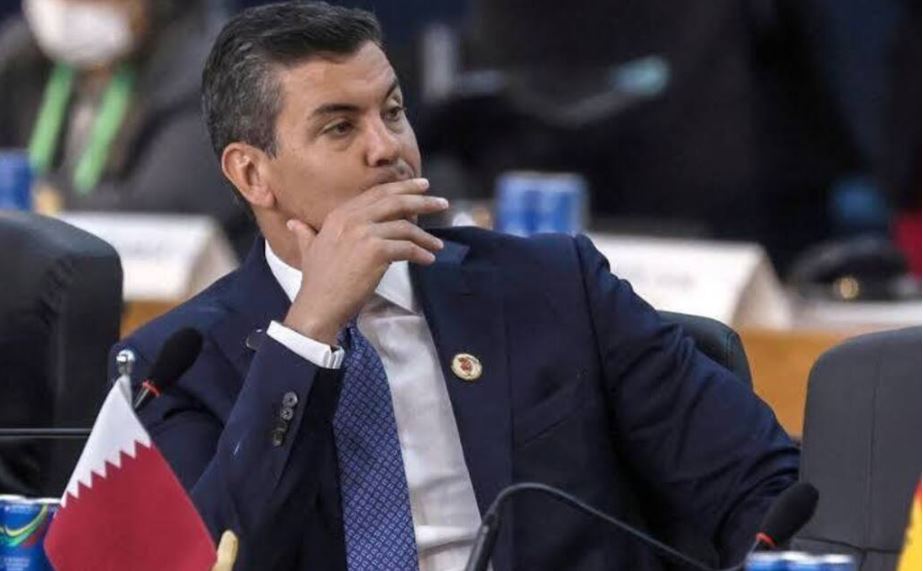
One way or another, with or without impeachment, Santiago Peña, a notorious corrupt figure, resigned the presidency of Paraguay, trying to avoid being tried by Congress and possibly sent to prison, following the outbreak of a financial scandal that has left nearly three million clients of Ueno bank without access to their savings.
Peña, abandoned by his party—also full of corrupt figures, but unpunished ones—will have no choice but to face an impeachment trial, since the Chamber of Deputies approved it unanimously (78 votes) to prevent him from having the privileges of a senator for life and thus be able to answer before the courts. The final decision now rests with the Senate.
Peña announced that he was resigning from office through a message on social media at the same moment the Chamber of Deputies was debating subjecting him to impeachment. Vice President Pedro Alliana will assume the office in his place and must complete the term until August 15, 2028.
"I have made the decision to submit my resignation to the Presidency of the Republic. I do so thinking about the stability of our country, social peace and the need to preserve our democratic institutions," Peña said in a brief video published on his social media. The president stressed that his priority "is the tranquility of Paraguayans" who trusted their savings to the country's financial system. "My greatest wish is that the return of those resources be guaranteed," he added, hoping to make such a lie believable.
For now, the only Paraguayan president removed by this route has been the leftist Fernando Lugo, in June 2012. In an express trial that lasted less than two days, the leader was removed from office in an action that was described as a parliamentary coup by several governments in the region.
The action against Lugo moved forward swiftly because the majorities in Congress were decided in advance, a scenario that will not occur this time.
ABANDONMENT
Peña's resignation comes only 48 hours after the intervention of Ueno bank due to serious solvency problems. The bank's nearly three million clients have been barred from accessing their accounts since Tuesday and have turned out en masse to protest in the streets and demand the president's resignation. The great popular indignation has been key to explaining his rapid fall. Although at first it seemed that impeachment against Peña would not succeed, by midday it was evident that even ruling-party lawmakers had abandoned him.
His former political godfather, former President Horacio Cartes, hypocritically spoke out against Peña: "As president of the National Republican Association, we will not be on the side of the looting of public, private and pensioners' funds; we must think about the people and the values we uphold from the Colorado Party."
While the legislative session was underway, Cartes installed himself at the party headquarters alongside the vice president, who was already being announced as Peña's eventual successor, and received other well-known figures of the ruling party. "He has betrayed the country for money," Colorado senator Oscar "Cachito" Salomón emphasized upon arriving at the party headquarters. Peña, by contrast, remained alone at the presidential residence. The cry of thousands of savers and the echo of police sirens composed the soundtrack of a cornered president.
The resignation allows Peña to retain political privileges with which to avoid arrest, since he automatically assumes the role of senator for life. Opposition legislators presented an expanded criminal complaint before the Prosecutor's Office this Thursday against the president for the crimes of illicit enrichment, influence peddling, money laundering, administration for personal gain, breach of trust and fraud.
The complaint also targets the Minister of Economy and Finance (Óscar Lovera), the former president of the Central Bank of Paraguay (Carlos Carvallo), members of the Central Bank's board, the head of the Superintendency of Banks (Holger Insfrán) and authorities of public institutions—such as the Social Security Institute (IPS) and ANDE—that held deposits and million-dollar funds in Ueno bank. Shortly before midday, the Public Ministry itself announced that it was initiating proceedings against Santiago Peña, who presented himself as the technocratic economist statesman who promised to refound "the giant Paraguay," but ended up as the president who defrauded millions of compatriots.
On Wednesday, as an attempt to put out the fire, Peña enacted an emergency law to return part of the guarantees and handed over the head of the BCP leadership, proposing Raúl Vera Bogado as a last-minute firefighter. But he was no longer writing the script. An enraged human tide was advancing toward the center of Asunción to demand his head, and Cartes, in parallel, was letting go of his former protégé's hand.
BASIS
The impeachment request against the president of the Republic is based on five axes that point to alleged conflicts of interest, use of pension resources, financial benefits and weakening of state controls. The Constitution establishes a two-stage procedure: the Chamber of Deputies must approve the accusation and the Senate decides whether removal is appropriate. Thirty votes in the upper chamber are needed to remove the president.
The Ueno Bank scandal moved the financial crisis into the political arena and opened one of the most delicate institutional scenarios for Santiago Peña's government. The impeachment request presented by legislators from various opposition benches and dissident sectors of the ruling party seeks to establish the president's responsibility in a series of events that, according to the initiative's promoters, compromise the transparency of public management, the independence of oversight bodies and the protection of state resources.
The accusation is structured around five main arguments, all linked to the operation of Ueno Bank and the economic and political relations that, according to the accusatory document, would exist between the financial entity, related companies and the head of the Executive.
Lawmakers maintain that these events could constitute malperformance of duties and question both the decisions adopted and presidential omissions in the face of situations that required institutional controls.
The first axis points to alleged conflicts of interest and supposed interference in public institutions. Legislators maintain that the president declared before the Comptroller General of the Republic shares with a nominal value of 6.144 billion guaraníes in Ueno Holding SAECA. Based on that patrimonial link, they question regulatory decisions, appointments of officials who were previously connected to private companies linked to the leader, and eventual intervention in the Social Security Institute (IPS) to favor the financial entity.
The second argument focuses on the use of pension funds. The accusation questions the growth of IPS investments in Ueno Bank and warns about an alleged concentration of resources in an entity related to the president's economic circle. According to the data presented in the document, placements went from 80 million guaraníes in November 2023 to 346.5 billion guaraníes in March 2024, representing an increase of 3,035% in approximately 20 months. The argument holds that funds intended to guarantee pensions require especially rigorous controls and that any concentration that compromises their safety must be examined.
The third point refers to the alleged breach of credit concentration limits and the role of the Central Bank of Paraguay (BCP). Deputies cite technical reports indicating that, at the close of April 2026, Ueno Bank had accumulated credit operations with three related companies worth 743.784 billion guaraníes, equivalent to about 123 million dollars. According to the accusation, that amount represented close to 30% of the entity's effective equity, when the legal prudential limit indicated is 20%. Legislators question the actions of supervisory bodies and maintain that the president would have failed to exercise his constitutional powers in the face of the denunciations.
The fourth argument points to the alleged use of public office to obtain patrimonial benefits. The document calls into question Peña's patrimonial evolution and his economic relations with Ueno Holding and Itti. The promoters of the impeachment consider that possible personal financial advantages and corporate benefits incompatible with the responsibilities of the Presidency must be examined. This is one of the most sensitive points of the accusation, because it seeks to determine whether there was a relationship between the exercise of power and the consolidation of private economic interests.
Finally, the fifth axis raises the deterioration of confidence in the national financial system and exposure to institutional risks. Legislators argue that the combination of alleged conflicts of interest, concentration of pension resources, regulatory questions and lack of controls could have affected the credibility of the financial system. The accusation maintains that public trust depends not only on the solvency of banking entities but also on the independence of the authorities responsible for supervising them and on the certainty that the rules are applied equally.
WHAT IS LOST?
Nothing good, really, because it leaves political and financial instability, which is what a population in full uncertainty is experiencing at this moment throughout the Republic.
Peña was not only one of Trump's favorite reactionary presidents but also a spearhead for the genocidal government of Israel. An intimate partner of Milei, he led the offensive against the Cuban Revolution and was one of the promoters of the vote that endorsed the most suffocating US blockade against the people of the Caribbean island.
Translated by Sergio A. Paneque Díaz / CubaSí Translation Staff
Añadir nuevo comentario