
Neurótica Anónima: The Challenge, the Feat, and the Goya Awards
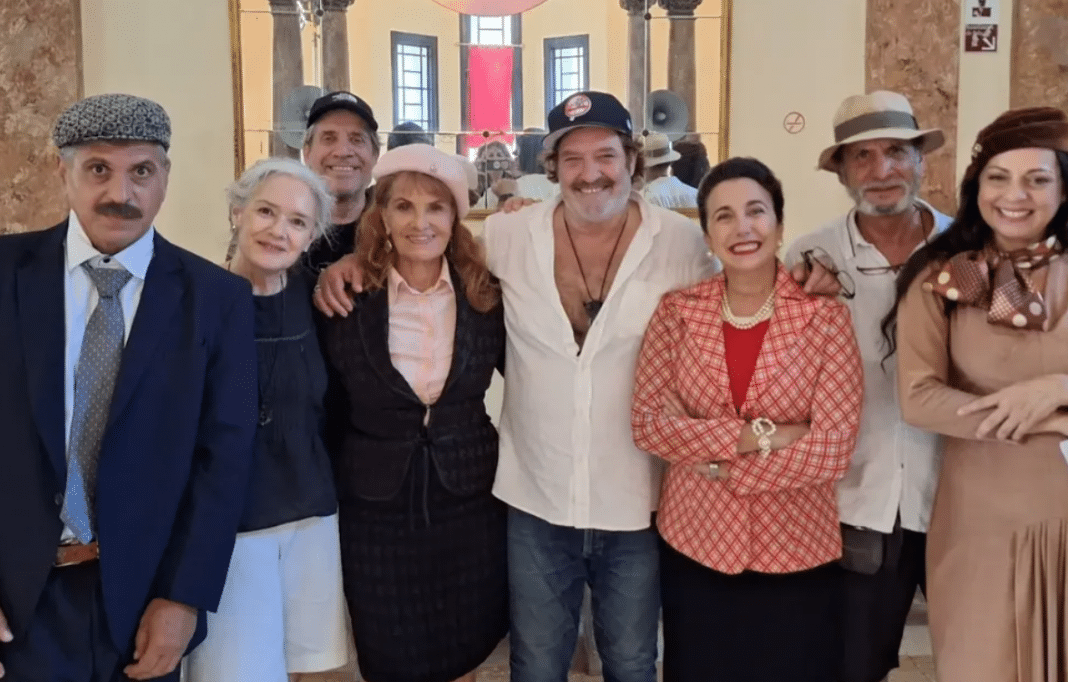
Members of the team spoke to the press regarding the film’s inclusion among the 19 entries vying for a nomination in the "Best Ibero-American Film" category. Casting director Libia Batista highlighted the leadership of Jorge Perrugorría—known as "Pichy" to his colleagues and his audience:
“Casting with Pichy is very easy. Pichy is one of a kind. I’ve worked with him—handling his casting—ever since he started making films, and it’s never a struggle. I’ll suggest, ‘This actor would work well for this role, and that one for this other part,’ and he’ll ask, ‘Do you think so?’ I’ll say, ‘Just have them do an audition.’ And he’ll reply, ‘Well, if you say so—no need for an audition, let’s just go with it.’ That’s exactly how he is.” “Everyone follows Pichy—it’s just a fact that everyone follows him. If he says, ‘Look, there’s this film project,’ you just think, ‘Even if I don’t get paid, if it’s with Pichy, I’m in.’”
Actress Carmen Ruiz expressed her gratitude for the opportunity and the support from the team:
“I felt very flattered that they thought of me. When they told me about the character I was going to play, I thought, ‘Well, I’ll have to dig deep—find something from nothing—and try to enrich the role as much as I possibly can.’ You have to clean the floor of a movie theater? Fine, let’s clean the floor. How would you do it at home? How would you do it anywhere else? I played it as naturally as possible. I really enjoyed working under Pichy’s direction; he knew how to guide me, I understood his vision, and I was very happy with the result. Plus, with the support of Mirtha Ibarra—who would occasionally offer some notes—and Roberto Perdomo… honestly, it was a great experience.”
Ernesto Granado, the Director of Photography, shared his personal history with *Neurótica Anónima*, dating back to its time as a stage production with Mirtha Ibarra—for which they even created a video that was screened in various venues.
“I’ve known this project since it was still in the theater phase with Mirtha Ibarra; we even made a video for it that was shown in different places. Later, the script began to take on a life of its own—moving forward, searching for a way to get made, looking for the right people to bring it to life. Then, one day, the news came that the ICAIC was going to provide the funding and that Pichy would be directing. I’ve worked on four films with him—we’ve been collaborating since *Strawberry and Chocolate*—so we know each other well… it’s like a marriage, and that’s been really wonderful. Then, all these other people joined in—folks who have also stood by Pichy’s side, always rushing around, completely breathless—but the real magic of Pichy is the empathy he fosters within the entire team.” “Like all the films we’ve been making lately—and in the past as well—we had to overcome many difficulties to get this one done. We had practically only two weeks of preparation. I had a very clear vision for the cinematography from the start; there were specific areas that fit perfectly into the dramatic arc. I was in sync with Pichi, and we executed our plan, but reality often takes a different turn—so you have to improvise, seek out alternatives, and explore new possibilities.
“I am delighted with this film—first and foremost because it belongs to the ICAIC tradition: the ICAIC ethos of both celebrating the Revolution and critiquing it—highlighting the very problems that have affected us, which the ICAIC has addressed over the years through feature films, documentaries, and newsreels. This film touches on a reality that has been particularly challenging for us filmmakers: the state of our movie theaters. Furthermore, it features a complex narrative—in terms of its language, structure, and overall approach—which I really appreciated.” “I am also satisfied because, in Pichi, we see echoes of Titón, Tabío, and Mario García Joya—figures who are, for me, icons in my own cinematic development.”
Añadir nuevo comentario