
Trumpist Debacle in Legislative Elections: It’s not Just About Iran
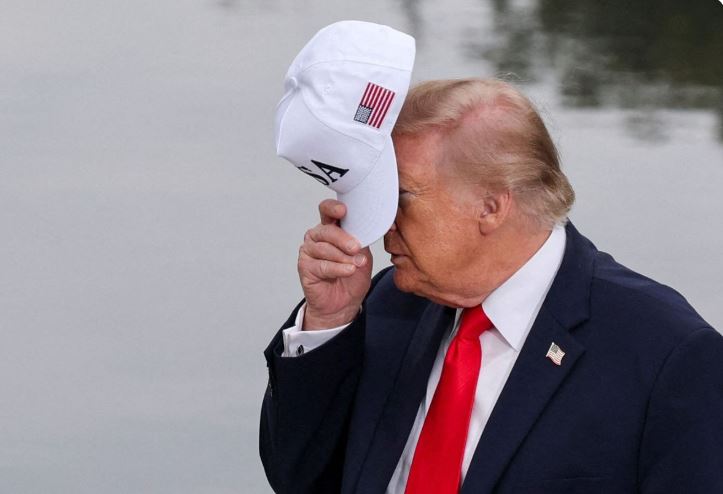
Like puppets speaking the same language, Trump, Vance, and Marco Rubio rushed to blame the war in Iran—or, more accurately, the aggression by the United States and Israel—for the Republican Party’s sweeping defeat by the Democrats in this past Tuesday’s legislative elections (with results in three states still pending).
However, that unjustified aggression was merely one of the failures of this administration. The majority of the electorate punished the depravity, abuse, and broken promises of the leader—actions that have plunged the country into economic chaos, hitting voters where it hurts most within this flawed democracy—or rather, this farce of a representative (but not participatory) democracy.
The economy also played a major role. According to Associated Press coverage, the rising cost of living, inflation, and the impact of economic policies were among the primary concerns that shaped the vote.
For the millions of Latinos living in the United States, these results carry implications that extend far beyond who holds a specific seat. The decisions made by the new Congress could influence issues such as immigration, employment, taxes, healthcare, and social assistance programs.
A NEW BALANCE
The legislative elections in the United States have shifted the country’s political balance, with the Democrats securing control of both the Senate and the House of Representatives, in addition to winning key governorships in states such as Texas, Georgia, Iowa, and Ohio. This outcome leaves President Donald Trump facing a Congress dominated by the opposition for the final two years of his term.
The election also saw historic victories for Latino candidates and representatives from other minority groups. However, some districts and seats remain under review, meaning the final figures may still shift.
The Democrats regained control of the Senate after flipping seven seats previously held by Republicans—in states that had, until now, proven challenging territory for the opposition.
According to the tally published by *The Guardian* and projections from Ballotpedia, the Democrats have secured at least 54 seats, compared to 44 for the Republicans. The Democratic total includes two independent senators who caucus with the party.
The House of Representatives also fell under Democratic control. The party surpassed the 218 seats required for a majority in the 435-member chamber.
The count was still ongoing on Thursday morning. The Guardian reported 228 Democratic representatives compared to 139 Republicans, while Ballotpedia projected at least 231 seats for the Democrats. This discrepancy exists because some races remained undecided.
One name gaining prominence is Hakeem Jeffries, a representative from New York, who won reelection and could become the first African American to serve as Speaker of the House.
There were also significant results for the Latino community. In Texas, Bobby Pulido won the 15th District against Mónica De La Cruz, while Manny Rutinel succeeded in reclaiming Colorado’s 8th District for the Democrats.
The landscape of governorships also saw notable shifts. Democrats secured victories in states previously under Republican leadership, reaching at least 27 governorships, according to initial tallies from Ballotpedia.
Gina Hinojosa’s victory warrants special attention. Texas has been a Republican stronghold for decades, and this outcome represents a major shift in state politics. As reported by The Texas Tribune, the Democrat defeated Abbott, who was seeking a fourth term.
WHAT WILL DONALD TRUMP DO?
The outcome will have direct consequences for the White House. Starting in January 2027, when the new Congress takes office, Trump will have to negotiate with an opposition that controls both legislative chambers.
Democrats will be able to block bills, oversee committees, investigate administration officials, and reject presidential appointments that require Senate confirmation.
This does not mean that Trump loses his presidential powers. He retains the veto power, and the Democrats would need Republican support to override such a decision.
The new distribution of power will take effect in January. Until then, the vote count will continue in some races, but the shift in control of Congress is already determined.
CONCLUSION
Democrats achieved a resounding victory in Tuesday’s U.S. midterm elections, seizing control of Congress, securing wins in places that seemed unthinkable just a few months ago, and fracturing President Donald Trump’s political coalition.
The Democratic wave swept across large swaths of the country. Republicans lost ground in 99% of the nearly 2,100 counties where the majority of votes had been counted by Wednesday morning, according to tallies by Reuters and USA Today.
Inflation and the high cost of living took center stage in a campaign that also highlighted public education and a healthcare system whose commodification continues to leave millions of families burdened by debt.
A second element, hidden beneath the surface, is the American people themselves—with all their concerns and contradictions. On social media, images circulated of celebrations following the Democratic victory in Texas, where some migrants spoke of a "breather," while remaining well aware that these elections are unlikely to bring about structural change. ICE raids and an intensification of violence against migrant communities have spread fear among broad segments of the population. Meanwhile, inflation and the high cost of living have been central issues in a campaign that also featured public education and a healthcare system whose commodification continues to condemn millions of families to debt.
These domestic concerns are intertwined with a foreign policy whose consequences are beginning to be felt directly in the pockets of Americans. The prospect of a war with Iran is deeply unpopular, while mobilizations against the genocide in Gaza have helped to call into question Washington’s role in funding Israel. Controversies regarding Latin America are also multiplying—from the legality of military aggression against Venezuela and the abduction of Nicolás Maduro and Cilia Flores, to the intensification of the medieval-style siege against Cuba.
Añadir nuevo comentario