
US Blockade Against Cuba Re-examined at the UN
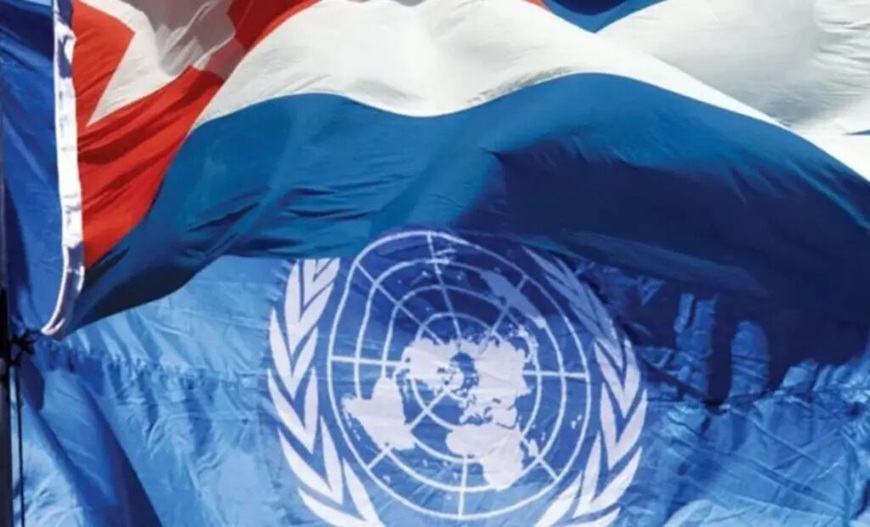
The highest deliberative body of the United Nations will debate and vote on the resolution based on the report presented by Cuba on the necessity of ending that policy of suffocation which, following the arrival of Donald Trump's administration in January 2025, has intensified to unprecedented levels.
"Our reality is deeply marked by the unjust economic, commercial, and financial blockade, which has a devastating impact on our economy and is undoubtedly the main obstacle to our development, in addition to being a massive, flagrant, and systematic violation of the human rights of an entire people," expressed Deputy Foreign Minister Anayansi Rodríguez to Prensa Latina, a member of the delegation headed by Foreign Minister Bruno Rodríguez.
For his part, Permanent Representative Ambassador Ernesto Soberón anticipated that "Cuba arrives at the UNGA with the legitimacy of a just demand, sustained for decades, and backed by broad international support."
The diplomat stated that the Caribbean nation is not a threat, whereas the blockade is; and facing blackmail and arrogance, he emphasized, the international community will once again choose truth, dignity, and international solidarity.
This year, he warned, the vote will take place in a particularly grave context, marked by an unprecedented reinforcement of the policy of collective punishment against Cuba, including an energy siege and secondary sanctions on third countries.
To this scenario "is added an unprecedented offensive by the Department of State, the Permanent Mission of the United States to the United Nations (USUN), and U.S. embassies around the world to try to alter the sovereign will of Member States and weaken the traditional levels of support achieved by our resolution," he noted.
Tuesday and Wednesday's debate "will transcend the level of bilateral relations between Cuba and the United States, as it is a matter of interest to the General Assembly, included on its agenda for more than 30 years, attracting high levels of participation and broad regional representation," Soberón pointed out.
The human dimension of this ongoing aggression by the United States cannot be hidden, indicated the representative of the Caribbean country to the multilateral body.
"The prolonged blackouts, difficulties in accessing medicines, food, and drinking water, and the disruptions to health services evidence the impact of a genocidal policy that punishes the entire population," he emphasized.
Last year, the resolution obtained 165 votes in favor, seven against (Argentina, United States, Hungary, Israel, North Macedonia, Paraguay, and Ukraine), and 12 abstentions (Albania, Bosnia and Herzegovina, Costa Rica, Czechia, Ecuador, Estonia, Latvia, Lithuania, Moldova, Romania, and Poland).
During the first day of debate, more than thirty speakers will take the floor. Tomorrow will be the vote. The General Assembly will request for the thirty-fourth time an end to this collective punishment, a unilateral imposition that Cuba has denounced since 1992.
Añadir nuevo comentario