
Japan Launches First Mission to Collect Samples from a Martian Moon
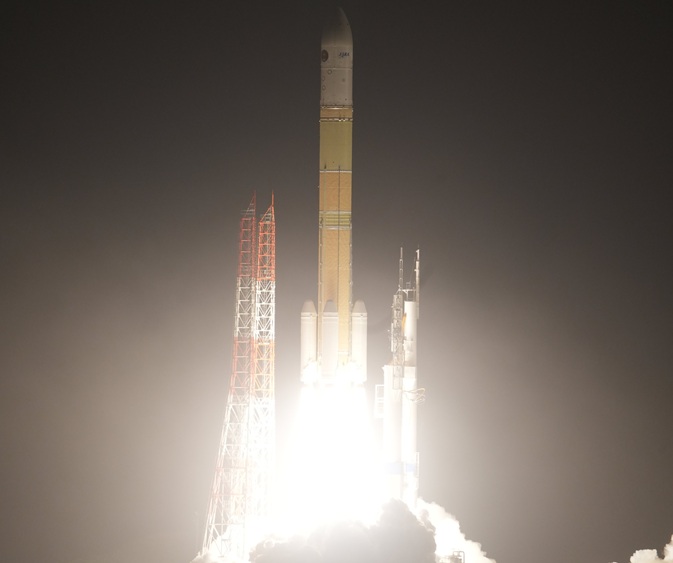
Foto: @tnsc_JAXA
Japan launched its Martian Moons eXploration (MMX) mission, which, if successful, will become the first to collect samples from the surface of Phobos, the larger and closer of the two satellites orbiting the Red Planet.
The probe's launch took place at 4:41 a.m. local time on Tuesday (19:41 GMT on Monday) from the Tanegashima Space Center in southern Kyushu, Japan. The five-year mission aims to retrieve at least ten grams of surface material from the moon.
Approximately one hour after liftoff, the probe, carried by a Japan Aerospace Exploration Agency (JAXA) H3 rocket, successfully separated and entered its planned orbit, according to a brief statement issued by the space agency.
JAXA President Hiroshi Yamakawa stated during a press conference early Tuesday morning local time that the probe "has taken its first step today toward completing an exploration mission in the Martian sphere," pledging to "do everything possible" to ensure operational success.
Aboard JAXA's H3 rocket, the probe begins a one-year journey toward the Martian system, where it will enter a quasi-satellite orbit around Phobos.
Once in orbit, it will conduct detailed observations of both Phobos and Deimos—Mar's second moon—and collect the intended samples.
Japanese Prime Minister Sanae Takaichi stated that the "successful" rocket launch "represents extremely positive news," adding: "I sincerely hope that this historic initiative culminates in success and that samples from the Martian system are successfully brought back to Earth," she expressed in a message posted on X.
Takaichi emphasized that under her administration, the space sector has been designated a "strategic field" for the nation's economy, vowing to boost its development through technological advancement, increased launch frequency, and "enhancing overall reliability."
According to project details, the probe will depart the Martian system in 2030 and undertake a one-year return journey to Earth's orbit, where it will release a re-entry capsule scheduled to land in Australia.
Añadir nuevo comentario