
Dialogue With Frei Betto: Questions and Answers for Blog América
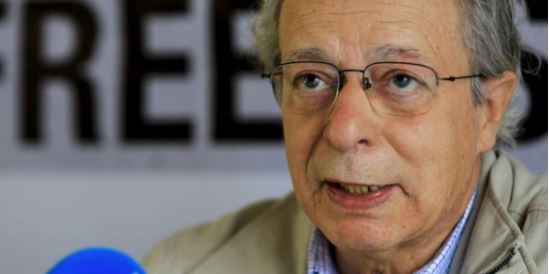
Frei Betto
Welcome, Betto. Thank you for agreeing to this second dialogue with our newly born blogamerica.org, oriented—as you know—toward analyzing relevant international issues and identifying alternative responses, above all, against what appears to be an "all-powerful offensive of fascism" in its contemporary expressions. If you assume I am thinking of Donald Trump and the transnational interests that sustain him, you are not mistaken.
This time, one of the issues concentrating the most international attention, particularly in Latin America and the Caribbean, concerns the likely results of the upcoming general elections in Brazil, whose first round will take place on October 4.
I propose, then, that we analyze this issue as a priority, starting with an examination of the internal factors that could influence the results, given that these are less widely known. Naturally, some of these factors are inseparable from their international expressions. Such is the case with the actions of the various formations of the Evangelical right and far-right in your country, which are closely linked to their American counterparts.
How would you present the balance of forces and the actions of the most relevant ones, when explaining why a representative of the most reactionary elements in Brazil regarding political ideas, human values, customs, and scruples—Flávio Bolsonaro—is today seen as having a chance of victory against Lula? How can this sociopolitical phenomenon be explained?
Frei Betto (FB): The fact that Flávio Bolsonaro is considered to have a chance of defeating Lula is the result of a combination of multiple structural factors and campaign dynamics, rather than a reflection of a supposed "return to the dark ages" by Brazilian society as a whole. Several current polls show the two candidates in a statistical tie, or Flávio holding a slight lead in runoff simulations, but the causes behind this scenario are far more complex than the idea that "the electorate has embraced extremism."
The 2026 presidential election takes place in a highly polarized environment.
In other words, Flávio's growth does not stem, in large part, from the incorporation of new voters nor from a shift of the centrist electorate to the right, but is instead the effect of the concentration of the right-wing "strategic vote." When voters concluded that the only right-wing option capable of defeating Lula was Flávio, the previously dispersed anti-Workers' Party (anti-petista) vote shifted rapidly toward him. This represents a judgment regarding "who has the best chance of winning," which does not necessarily equate to an ideological affinity with Flávio.
In a tie scenario like the one reflected in polls, the operational quality of a campaign becomes the decisive variable in breaking the balance. Flávio's campaign demonstrates greater discipline in defining its message: focusing on the fear of insecurity, the cost of living, and building the image of "a younger, more modern version of Bolsonaro." These themes resonate directly with the urban middle class and the electorate in the Southeast.
Conversely, for a considerable time, Lula's campaign failed to present a clear and compelling narrative on "why grant him another four years," and its campaign material was limited to listing past achievements rather than constructing an emotional appeal focused on the future. This asymmetry is especially visible in the Southeast; a survey conducted by Quaest in September shows that Flávio's lead in the region expanded from 8 to 16 percentage points (from 31% to 47%).
Attributing Flávio's competitiveness simply to "the most reactionary segment" of Brazilian society means ignoring a long-standing fact: the anti-petista electoral consensus is a stable structural force that has endured across multiple election cycles. In 2022, the vehicle for that consensus was Jair Bolsonaro; in 2026, it is Flávio Bolsonaro.
Data from AtlasIntel from mid-September shows that disapproval of Lula reaches 52%, while for Flávio it stands at 50.2%. This means that roughly half of the Brazilian electorate would not vote for Lula under any circumstances. For that group, the choice has never been "supporting all of Flávio's proposals," but rather "who is the only one capable of defeating the PT." As long as disapproval remains at that level, any right-wing candidate with basic eligibility will achieve a competitive standing.
Flávio's campaign is not without vulnerabilities. The outbreak in May of the Banco Master scandal (concerning a 134-million-real deal with banker Daniel Vorcaro to finance a biographical film about Bolsonaro) caused a significant drop in his voting intention. At that point, AtlasIntel recorded a decline from 39.7% to 34.3% in the first round.
However, in September, as the debate surrounding the Federal Supreme Court shifted public attention away from Flávio's scandal and toward the judicial institution, Flávio regained the lost ground. This dynamic reveals not an "immunity" enjoyed by Flávio, but rather the limited attention span of voters and the fluidity of issues. In an atmosphere of widespread dissatisfaction with the political class, the lethal impact of scandal allegations against a candidate can be diluted by the perception that "everyone is corrupt."
Flávio Bolsonaro's competitiveness is, in essence, a phenomenon of right-wing vote concentration around "the most viable opposition candidate" within a deeply polarized electoral framework. What this reflects is that (a) the anti-petista camp's thirst for power outweighs a rigorous scrutiny of candidates' personal conduct; (b) the margin of operational effectiveness in campaigns is decisive in a tie scenario; and (c) the persistence of a desire for "change" among the Brazilian electorate (regardless of the form that change takes)—a desire that Lula has not managed to effectively monopolize.
As for the question of whether "reactionary" values are thriving in Brazilian society, survey data does not answer it. What the data shows is an electorate split almost down the middle, rather than a society that has swung as a whole to the right.
Nonetheless, the most recent polls consistently show Lula maintaining a few percentage points lead over Flávio in overall voter preference.
Rafael Hidalgo Fernández (RHF): There is much talk about the inevitable victory of the far-right in Brazil, whose electoral process is being framed as a continuation of those in Honduras, Ecuador, Peru, and Colombia, where the international far-right—with special involvement from that operating out of the United States—managed to manipulate key sectors of the electorate. Could this be the case in Brazil, a nation whose proportions and level of development far exceed the four mentioned, placing it also as an emerging power and a respected global actor?
On this note, I recall Noam Chomsky's assertion that U.S. elites need to prevent Brazil, as an emerging power, from thriving through its own strength. This was clearly seen during the so-called Operation Car Wash (Lava Jato), which could well have been named Operation Against Brazil. Does Chomsky's statement still hold true today?
FB: Your question addresses a central and complex point in the current political landscape: the validity of theses regarding external interference and the role of "Lava Jato" in the context of the 2026 Brazilian elections. Available information indicates that, although the dynamics differ from those of 2018, Chomsky's assertion regarding foreign powers' interest in limiting Brazil's role as a global actor remains a relevant factor, now taking on new forms.
At that time, Chomsky described Lula as "the most important political prisoner in the world." Operation Lava Jato resulted in Lula's imprisonment and prevented his candidacy in 2018. Years later, the Federal Supreme Court annulled his conviction upon ruling that then-Judge Sergio Moro had not been impartial, and Moro subsequently became Minister of Justice in the following administration under Bolsonaro. That episode illustrates how Brazilian judicial institutions were politically instrumentalized, aligning with the thesis that external and internal forces sought to destabilize a political project that was elevating Brazil as an emerging power.
In 2026, the picture is significantly different. The election is not a simple continuation of the conservative "wave" of 2018. Polls indicate extreme polarization and a technical tie between Lula and Senator Flávio Bolsonaro, political heir to Bolsonarism. The "third way" failed to consolidate nationally, keeping the contest concentrated between these two camps.
In this context, external interference takes on a more explicit and overt form. Donald Trump's administration has demonstrated open support for Flávio Bolsonaro and questioned the reliability of the Brazilian electoral system. This stance contrasts with the past, when interference was more covert. Some analysts point out that such interference does not necessarily unite the country; on the contrary, it intensifies polarization, as each voter interprets foreign threats through the lens of their political identity.
Chomsky's central thesis—that the United States needs to prevent Brazil from thriving on its own strength—remains valid, though the motives have evolved: 1. Geopolitical competition with China: Brazil is a major trading partner of China. For Washington, a Brazilian government automatically aligned with the United States would mean removing another piece from China's board in Latin America. 2. Security and the Amazon: A Washington-aligned government could allow U.S. military operations in the Amazon under the pretext of combating drug trafficking—something already occurring in neighboring countries—which would represent a huge strategic gain for the United States.
Therefore, Chomsky's statement remains valid, but the method has changed. In 2018, the containment of Brazil occurred through a judicial operation that imprisoned its leading center-left figure. In 2026, external pressure is more direct and overt, aimed at influencing the electorate in favor of the candidate aligned with Imperial interests. The objective—preventing Brazil from consolidating itself as an autonomous pole of power—remains the same.
RHF: It would be absurd to attribute the advances of right-wing and far-right forces exclusively to their undeniable learning curves, their growing coordination networks, and their vast financial, technological, and scientific power. What share of responsibility lies within the camp of the left and progressive media in Brazil to explain current developments? What realistic options are in sight to prevent Bolsonarista fascism from re-establishing itself in Planalto and creating even better conditions for anti-Brazilian interests to gain further ground?
Why do I ask this second question? For this reason: when analyzing, if only as an example, the origin and development of the aforementioned Operation Lava Jato, it becomes glaringly obvious that behind it lay much more than ousting Dilma's government and preventing Lula's return to the presidency. The goal was to dismantle national capital enterprises tied to the defense industry, the nuclear program utilizing indigenous technology, the construction of domestic air defense systems, and many other avenues of endogenous development fostered by the Lula and Dilma administrations. Is this statement accurate?
FB: Operation Lava Jato sought not only to bring down Dilma Rousseff and block Lula's election; it also directly targeted the destruction of Brazil's national defense industry, its independent nuclear program, and the entire ecosystem of domestic enterprises with strategic capacity. As for the responsibility of the left and how to prevent the return of Bolsonarism, the answer lies in implementing the program that delivered victory in 2022 and rebuilding the unity of progressive forces.
Your statement is strongly supported by facts. Lava Jato's actions directly impacted the foundation of Brazil's sovereign capacity. They weakened the Defense Industrial Base, carefully constructed during the PT administrations to make Brazil an independent strategic actor. One of the first individuals arrested was Admiral Othon Luiz Pinheiro da Silva, the "father" of the Brazilian nuclear program, who was sentenced to 43 years in prison. The imprisonment of the primary figure responsible for achieving technological independence in the nuclear fuel cycle deprived the country of its leading coordinator in that strategic domain.
The Submarine Development Program (Prosub), which included Brazil's first nuclear-powered submarine, carried a budget exceeding 30 billion reais and involved Odebrecht, a central target of Lava Jato. Odebrecht Defense was responsible for constructing the nuclear submarine and was partnered with Mecatron, which was set to manufacture domestic missiles. Prosub was delayed by two years, and the negative fallout from the investigations was a major factor. The damage affected not only those two programs, but the entire naval and national defense supply chain.
Lava Jato "ruined" Petrobras, destroyed engineering and construction firms, and halted the recovery of the shipbuilding industry. This corresponds precisely to your analysis; it was about more than overthrowing a government—it was an attempt to destroy Brazil's options for endogenous development. The underlying logic was that the United States had to prevent Brazil from strengthening itself as an emerging power.
Regarding your question about "where the responsibility of the left lies," survey data indicates that the left itself recognizes deficiencies in several areas. The left "became complacent" relying on Lula's image, and the PT, by relying excessively on the personal charisma of its leader, saw its capacity for autonomous organization weaken. The PT abandoned grassroots work, as well as popular organization and mobilization. The party never gave serious thought to how to navigate the complex political architecture of the Brazilian federal system, which hampered the implementation of deeper transformative projects.
The far-right used digital networks to degrade public debate through more aggressive attacks, hate speech, and disinformation. The progressive camp failed to effectively counter this overt ridicule and hostility. Although legacy mass media has also historically acted as a virtual "political party" serving as a hegemony apparatus, the left failed to build an equally powerful communication capacity in the digital era.
The core strategy of the far-right opposition is to block the implementation of the program that brought Lula to the presidency in 2022, while simultaneously accusing the government of failing to deliver on its promises. If the government makes excessive concessions or compromises, it risks alienating its base and dampening popular enthusiasm. A left-wing party resolution explicitly underscores: to win in 2026, it is necessary to effectively implement the 2022 platform and address the needs of the working classes.
Based on left-wing party documents, realistic options center on several key points: 1) Regain the initiative on policy and address popular demands. The key lies in executing policies with strong popular appeal, such as tax exemptions on income for those earning under 5,000 reais, ending the 6x1 workweek without salary reductions, and controlling food prices. By placing the poor front and center in the budget, trust within the electoral base is reclaimed.
At the same time, cooperation with liberal sectors defending democracy (such as the Supreme Court and parts of mainstream business media) is needed to jointly isolate the far-right. 3) The left must firmly adopt the defense of national sovereignty, opposing external interference (such as that from the Trump administration) and Bolsonarism's subordination to the United States. This is a mobilizing element with broad popular appeal. 4) Lula himself must lead the communications battle, countering far-right disinformation with clear and mobilizing political narratives, rather than relying solely on the state apparatus to convey information.
RHF: We are days, even hours away from the first round of voting. What possibilities do you envision for Brazil to serve as a turning point against the visible enthusiasm currently seen in the halls and streets where the ideas of Bolsonaro and company prevail? I am aware that not everyone voting or planning to vote for him is a fascist. Here lies one of the sociological and political knots that urgently needs unravelling...
FB: The possibility for Brazil to become a "turning point" exists, but it is extremely narrow. The key lies in framing this election as a vote on national sovereignty versus external submission, rather than a contest of personalities or negative advertising. Your intuition regarding electoral sociology is correct: many Bolsonaro voters are not fascists in the purely ideological sense, but rather dissatisfied voters expressing protest through their ballot, or voters who prioritize security concerns above other values.
Polls and analyses show that Bolsonarism's support base is broader than just "pure" fascists. Its core contingent includes conservative Evangelical groups, segments of agribusiness, anti-PT voters, and proponents of tough security policies. These voters may not agree with all of Bolsonaro's radicalism, but their concerns over crime, traditional morals, or corruption lean them to the right.
Flávio Bolsonaro inherited his father's core electoral base. In the 2022 elections, Bolsonaro senior obtained 49.1% of the vote in the runoff—the highest vote tally ever received by a defeated candidate in Brazilian history. This demonstrates the depth and breadth of acceptance of the "Bolsonaro brand." Flávio's strategy consists of maintaining the brand's mobilization power while diluting his father's negative labels—such as being anti-democratic, facing trial for an attempted coup, or failing during the pandemic—thereby attempting to attract center-right voters who dislike Lula but fear the Bolsonaro family being perceived as far-right.
That is the sociological "knot" you mentioned: a significant group of voters support Bolsonaro not necessarily because they embrace fascism, but for specific reasons: insecurity, resentment against legacy politics, or simply because the PT is unacceptable to them.
Recent data shows a highly balanced race. A Datafolha poll from September 17 shows Lula at 39% and Flávio at 36% with a 2% margin of error—a technical tie. Runoff simulations show Lula at 46% and Flávio at 44%, also a technical tie. The key lies with undecided voters and abstainers: Quaest estimates that 10%—roughly 21 million Brazilian voters—are undecided, double the figure from the same period in 2022. These voters are concentrated primarily in the South and Southeast regions, key battleground states where the election will be decided. Furthermore, historically, the voter abstention rate in Brazil has been high, with over 30 million voters failing to turn out in either round during the 2022 elections.
To prevent the re-establishment of Bolsonarism, the left and progressive forces must focus on several fronts: 1) Framing the election as a referendum on "sovereignty vs. submission to the United States." This is currently the most promising argument.
Flávio's campaign is filled with signals of alignment with the United States. His brother, Eduardo Bolsonaro, was convicted by the Federal Supreme Court for lobbying in the U.S. to pressure the Brazilian judicial system. The history of relations between the Bolsonaros and Trump's MAGA movement is extensive: in 2018, Eduardo met with Steve Bannon, and his foundation organized Conservative Political Action Conference (CPAC) events in Brazil featuring former members of Trump's team. If Lula succeeds in making voters understand that "voting for Flávio is inviting U.S. interference in Brazil," he could reduce opposition among center-right voters who value national sovereignty.
Lula's advantage stems from his solid foundation: social transfer programs, employment generation for lower-income groups, and his international standing. However, his vulnerabilities are also evident: his age (81 in October 2026), health concerns (a skin cancer diagnosis in May), voter fatigue after an extended period in power, and economic growth slowing to roughly 1.9% in 2026 alongside inflation hovering around 4%.
For undecided voters who care more about their wallets than ideology, the left must offer specific and tangible proposals. Lula's campaign has already promised to create a Ministry of Public Security to combat organized crime, presenting a direct response to voter anxiety over security. The question remains whether these promises can overcome the "longing for order" felt by voters regarding the Bolsonaro era.
The aforementioned weaknesses of the left—the PT's overreliance on Lula's personal charisma, its lack of autonomous organization, and its disadvantage in digital network communication—remain obstacles. The right has built a sophisticated mobilization apparatus through social networks, and the left is still playing catch-up. If the progressive camp cannot establish equally effective communication capabilities in the digital era, the task of mobilizing undecided voters is unlikely to succeed.
For Brazil to become a "turning point" is not impossible, but it requires two conditions: first, the left must succeed in presenting the election as a choice between "national sovereignty" and "submission to the United States," rather than merely a personal battle between Lula and Bolsonaro; second, it must convince the 21 million undecided voters that voting for Lula will provide greater security and economic stability.
Your intuition is correct: the majority of Bolsonaro's voters are not fascists;
That is all I had to share with you. Thank you very much for this exchange.
RHF: The satisfaction with this exchange is mutual. Once again, you help us better understand this topic whose political anatomy we set out to examine.
Translated by Sergio A. Paneque Díaz / CubaSí Translation Staff
Añadir nuevo comentario