
Rubio García: Against the Private Sector?
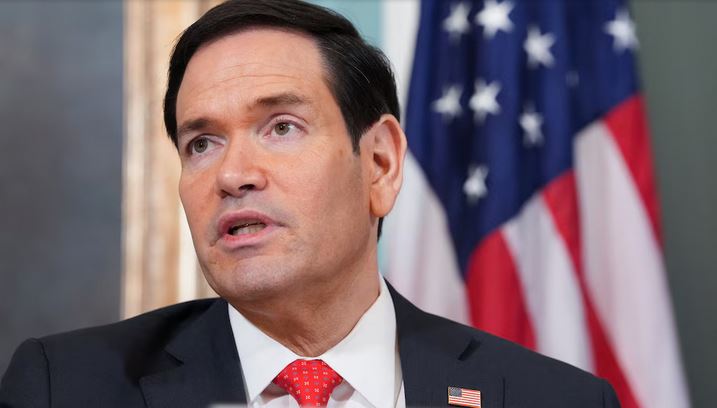
True to form—in a manner reprehensible from every angle—the imperial foreign policy chief, Marco Antonio Rubio García, issued new anti-Cuban sanctions as this fateful September of 2026 draws to a close. This time, they were designed to punish the private sector.
From a communications standpoint, a new development has emerged: for the first time, the architects of the blockade are stating unequivocally that they intend to sanction Cuban entrepreneurs. As is well known, the effects of the blockade have impacted this segment just as they have any other citizen. The narrative that the economic war was directed solely against the "regime" was always riddled with cheap falsehoods.
Furthermore, with the naval blockade affecting energy supplies since January of this year, the damage to Cuban private businesses became evident and a daily reality; to a certain extent, it triggered a Darwinian selection process—meaning that only those with sufficient adaptive capacity have survived, depending on their type of activity, access to renewable energy, and a long, specific list of other factors. The process, chapter by chapter
In mid-2026, news broke that certain measures taken by the State Department had prompted the departure of foreign investors—some with a long-standing presence in the country. This was not due to a specific, fleeting set of circumstances, but rather the result of unusual and draconian U.S. pressure—and, it must be said, the tolerance shown by the investors' own governments.
Indeed, the governments of these investors' home countries had previously taken a very different stance. For instance, when the Helms-Burton Act—a measure with brazen extraterritorial reach—was passed, several countries with investments in Cuba enacted "antidote" laws; notably, in almost no instances did companies withdraw from the island.
Of course, one can understand how the unusual level of aggression Trump has directed at all quarters triggers defensive reactions. Under the quintessentially capitalist logic of "every man for himself," hardly anyone is willing to effectively sacrifice themselves to save others.
Nevertheless, developments are moving in various directions. Recently, Oscar Pérez-Oliva Fraga, Cuba’s head of Foreign Trade, publicly explained that some of the most emblematic mining corporations—such as Sherritt and Antilles Gold—have not actually left; they are currently on pause, evaluating conditions and the climate for continuing business on the island. One might also speculate on a further nuance: they are waiting for the collapse of Trumpism so that things can return to normal. The official himself clarified that there are no negotiations whatsoever with U.S. investors, friends of Trump, or anything of the sort. And here lies the first stumbling block for the strategy devised by Rubio García to have the Cuban economy "change hands"—to return to the possession of those who held it prior to 1959. It’s essential to reiterate this because, for once, the superfluous rhetoric Rubio García utters so tediously and frequently is stripped away; what remains—what lies beneath the surface—is this quintessentially capitalist/imperialist objective: a change in ownership of resources. It’s simple—straight out of "Chapter One" of a political economy textbook.
Up to this point, it’s easy to understand the reason for such aggression; but then, why target private Cuban entrepreneurs? As far as is known, they neither own nor have purchased the major interests that were once American—such as the refineries, the electric utility, or the telecommunications company—nor do they own a sugar mill or any large-scale industry.
And this is where the Miami *Cosa Nostra* enters the picture, led by the descendants of former Cuban oligarchs who fled the country when the Revolution triumphed—having been deeply complicit with the Batista dictatorship and convinced that they would return "triumphant" within hours, escorted by U.S. Marines, just as had always happened before.
There is a historical circumstance that cannot be overlooked: the Cuban oligarchy—or "sugarocracy," given its role in the sugar industry—was a pioneer in the Americas regarding subordination to the emerging monopolies of the North. This began in the early 20th century, when Cuba transitioned from colonial status to become—also a pioneer in this regard—a neocolony. Thus, at the very root lies the articulation—or subordination—of the island’s bourgeoisie to the US monopoly bourgeoisie; consequently, in 1959, they adopted the "Cuban-origin face" of the aggressive policy directed against the Revolution. This did not happen in Cuba; rather, a different scenario unfolded elsewhere in Latin America with the development of a national bourgeoisie that eventually found itself in conflict with the US plutocracy.
What remains today of that "second-rate" Cuban bourgeoisie—to put it one way—is essentially nothing but nostalgia. The majority of the wealthy Cubans who settled in South Florida have descendants who are thoroughly "assimilated" (*aplatanados*); that is to say, the only traces of their Cuban heritage left are the occasional custom and their surnames.
Trump’s claim that there are Cuban-Americans settled in South Florida who want to return to the island is just as true as any of the lies the man churns out daily. Just think about it: why on earth would they upend their lifestyles, neglect their local businesses, and even abandon common sense to move to Cuba? It’s absurd.
At this juncture, he acts as a "facilitator"—a term used to describe Rubio García—to satisfy these "nostalgic" desires. Of course, this applies not only to those of Cuban origin; as he himself has stated, he defends the interests of all Americans—or rather, of the famous 1%.
First of all, the naval and energy blockade against Cuba leaves only one channel, one route: exports originating in the US. Even goods Cuba imports from third countries only reach the island if they pass through US ports; there have been public reports that at least 7,000 containers are effectively held up in nearby ports—goods that were purchased and paid for elsewhere, yet shipping companies refused to transport them to Cuba. And what is the “commercial” logic behind this? It’s simple: if people in Cuba want to consume a can of tomato, let them buy it from the US. A skeptic might point out that this could drive up retail prices on the Island or make Cubans—unilaterally speaking—dependent on the US market; obviously, that is precisely the idea.
Once again, we see what was noted earlier: everything is aimed at reverting the Cuban economy to the level of dependency that existed prior to 1959—a loss of independence, as the term implies, regardless of the political shell. However, the political aspect must be addressed, as even Rubio García understands and publicly laments that without political change in Havana, the other goal—economic dependency—lacks a foothold.
In the meantime, another situation emerges—one that is somewhat more intriguing and warrants deeper study: within the scheme designed with Rubio García as its administrator—that is, the neocolonization of Cuba—what role do the children and grandchildren of that aforementioned proto-Batistian sugar oligarchy assign to themselves?
A deeper study would inevitably require delving into the shady dealings of this tenacious colonialist crust (to borrow Rubén Martínez Villenas’s phrase) in its "2.0" iteration. First, because they remain the "Cuban" face of imperial hostility—hostility that persists and will persist, given the inability to tolerate a socialist, anti-capitalist Revolution just 90 miles away. The class-based and imperialist motivations expressed as early as 1959 remain in force, as do the "dogs of war" ready to defend those interests. Those oligarchs—who grew wealthier after achieving the "American Dream," despite arriving with millions stolen from the Cuban Republic—left a mandate to their descendants: monopolize whatever slice of the pie remains from the neocolonial feast. That is the current agenda of those determining Rubio García’s fate. Yet, a circumstance arose that was not foreseen in the Miami-based plans.
A private sector emerged on the Island through a sovereign decision, independent of any external authority. The very measures intended to blockade the country made this sector indispensable to Cuba's domestic trade. While the exact scale and depth remain unknown, logic suggests that the seed capital for these entrepreneurs—or their business operations in the U.S.—likely originates from sectors (possibly of Cuban descent) that stand apart from the aforementioned small, super-powerful clique—a group with a proto-Batista bent that should not be underestimated.
The context allows for further nuance in this story, as the trade flow between the two shores involves far more than "peanuts." Between January and July 2026, goods valued at approximately $674 million were shipped to Cuba, showing an upward trend. The primary U.S. shipping ports align with the largest concentrations of Latinos and Cubans—specifically Houston-Galveston (Texas) and Miami, which account for 90% of shipments, with only marginal volumes coming from Tampa and New Orleans.
So, returning to the economics textbook—chapter two—it’s capitalist competition, except with a politicized finish, because the aforementioned proto-Batista types know they cannot openly engage with Cuba—short of defeating the Revolution—given their aggressive, criminal track records, for which Cuban laws would duly punish them; some of them are responsible for thousands of Cubans wounded or killed by terrorism originating in Miami—to mention only the most well-known instances.
Information is unavailable regarding who controls the flow of goods from the US to Cuba, or whether these proto-Batista types are participating (covertly)—and if not, who is. What must be assumed, however, is that this trade has specific controllers; it is neither free, spontaneous, nor fragmented. That is how the system works, according to Chapter Three of the manual.
Thus, speculatively, one might presume a "pitched battle" is currently underway among various factions that are—or wish to be—managing commercial exchange between the two countries. This issue lies at the heart of Rubio García’s measures: they are directed not against the private sector in general, but against those outside the diabolical circle of the proto-Batista types. Another move straight out of the manual—Chapter Four: the use of political power to resolve intra-class conflicts.
In short: Washington seeks to displace international competition regarding access to—and eventual control over—resources and the Cuban economy in general (Chapter Five, this time of the "Donroe Doctrine"). For his part, Rubio García intervenes with his sinister agenda to guarantee his backers exclusive control over the spoils—specifically, whatever remains after the major corporations that own the "US Federal Dis-republic" have secured what is "theirs": the plunder, as Trump likes to call it when celebrating the "virtues" of aggression against and subjugation of a third country.
Editor's Note. The use of chapter numbering serves a narrative purpose; it does not correspond to any specific economics textbook. The intention is to demonstrate that the cruel, historic U.S. policy against Cubans was always exactly that—textbook. This makes the war—cloaked in rhetoric about democratization, respect for human rights, and other traditionally used nonsense—all the more reprehensible.
Apparently satisfied with Rubio García’s anti-Cuban antics, the president—in a move driven purely by electoral considerations on Hispanic Day—warned that one must keep a close watch on what his Secretary of State will do regarding Cuba.
In a social media image, a response to Trump suggested he should instead keep an eye on what will happen to Marco Antonio Rubio García; the image shows the middle finger of a left hand raised toward the Island’s unredeemed blue sky, while the other fingers, curled inward, proudly gaze up at the raised digit standing tall on behalf of all; those who get it, get it.
Translated by Amilkal Labañino / CubaSí Translation Staff
Añadir nuevo comentario