
Argentina: Hunger in the Land of Food
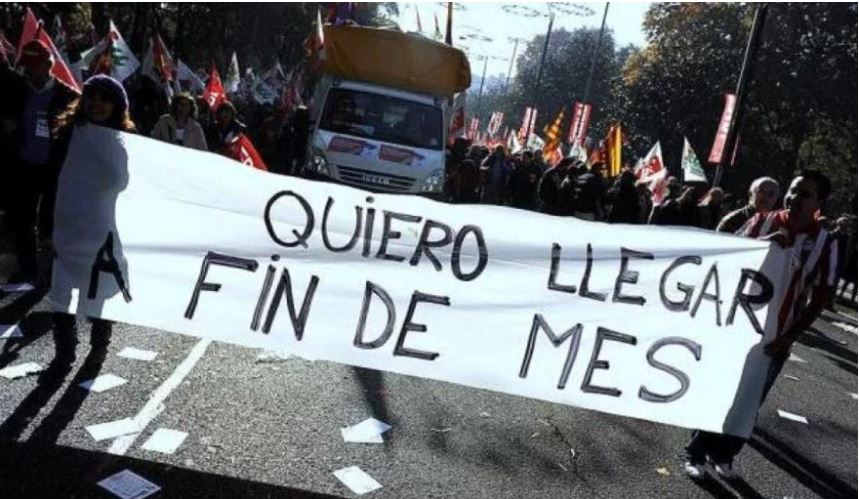
BUENOS AIRES — Overcrowded soup kitchens, barter clubs, and families taking on short-term debt just to purchase basic foodstuffs have become increasingly common sights across Argentina.
Although the ultra-liberal economic model championed by President Javier Milei successfully stabilized the country's macroeconomy, poverty is rising once again and could affect up to 35% of Argentines by the end of the year—up from 28% in 2025, according to Reuters.
One year ahead of the elections in which the head of state will seek reelection, opinion polls indicate that public support for Milei has declined among the lower-income sectors that originally voted him into power in 2023.
At the "Nuestro Hogar" soup kitchen, 74-year-old director Arturo Oliveras noted that his facility can no longer keep up with demand. While the center previously served around 200 impoverished Argentines daily, that number recently surged to 400. “We used to say: how crazy! Today we serve 600 or 700,” Oliveras added.
Although Milei managed to curb inflation—reducing it from over 200% in 2023 down to an annualized 30%—the severe fiscal austerity applied to achieve it has degraded the financial standing of many working families. Public sector wage freezes and the elimination of transport and utility subsidies have disproportionately impacted lower and middle classes whose income growth has lagged behind cumulative inflation, while market opening measures forced domestic manufacturers to close down.
Unemployment rose to 7.9%, though experts suggest the true figure is substantially higher when factoring in individuals turning to informal labor following formal job losses.
“Every quarter, over the last four quarters, between 400,000 and 450,000 people enter poverty,” said Agustín Salvia, an expert at the Pontifical Catholic University of Argentina (UCA), who estimates the poverty rate could reach 35% by year-end. Meanwhile, the official INDEC statistics agency reported that poverty reached 32.3% during the first half of the year.
This dynamic presents severe political questions for Milei. Polls across the board show a drop in public approval among lower-income voters. A survey by Analogías placed Milei's negative image at 58.1% compared to 36.9% positive, while research from Atlas Intel indicated that 58% of Argentines disapprove of his administration, with disapproval reaching nearly 70% among lower-middle income strata.
Furthermore, internal challenges persist; security ally Patricia Bullrich currently registers higher approval ratings in several surveys, posing a potential threat within the ruling coalition's broader electoral ambitions.
“I voted for Milei sincerely thinking it would be a change for the better, but he truly disappointed me,” hardware store owner Gustavo Raúl Pérez told EFE in San Fernando, north of Buenos Aires. “Four years ago I had lines of customers; I used to sell ten wheelbarrows, now I sell one; before I sold ten machines a day, now I sell one machine a week.”
The economic squeeze is further complicated by signs of a broader slowdown. Speaking to Sputnik, former Undersecretary of Finance Ramiro Tosi described JP Morgan's 1.5% growth projection as realistic, noting that entering a third-quarter recession is almost unavoidable and dismissing official 2027 budget growth targets of 3% or 4% as unrealistic in an election year.
Despite rising social pressure, executive officials remain resolute in their strategy. “The president will not move an inch from his program. He is not going to ease his contractive monetary stance just to win an election,” a government spokesperson told Reuters.
In suburban areas like Villa Astolfi, practical survival strategies are taking hold. “Poverty has deepened significantly. People are asking for oil, sugar, flour, and pasta,” noted Ana Barreto, an organizer of a local barter club formed to help residents exchange clothing and essential goods.
Translated by Sergio A. Paneque Díaz / CubaSí Translation Staff
Añadir nuevo comentario